
Shabu shabu is one of my all-time favorite Japanese winter dishes. It’s warm, comforting, incredibly healthy, and surprisingly simple to make at home. If you’ve never had it before, well then, you're definitely in for a treat!

Jump to:
🍲 What Is Shabu Shabu?
Shabu shabu is a Japanese nabe (hot pot) dish traditionally enjoyed during colder months. Thinly sliced meat and vegetables are lightly cooked in a clean kombu broth, then dipped into flavorful sauces before eating. It’s the kind of meal that’s meant to be shared, enjoyed slowly, and customized exactly to your liking, which is one of the reasons I love it so much.
The name comes from the swishing sound (“shabu shabu”) the thin slices of meat make when they’re gently swirled in hot broth.
Unlike heavier hot pots, shabu shabu uses a very light, clean broth, usually made with kombu (dried kelp). The flavor comes from the ingredients themselves and the dipping sauces rather than the broth being heavily seasoned.
It’s simple, interactive, and incredibly satisfying.
💖 Why You’ll Love This Recipe
- Healthy and light, yet filling
- Quick and easy to prepare
- Completely customizable
- Perfect for cold weather or family-style meals
- Great balance of clean flavors and rich sauces
Once you try shabu shabu at home, it’s hard not to crave it all winter long.
🥩 Ingredients for Shabu Shabu

Shabu shabu is very flexible. What I’m using here is fairly traditional, but feel free to swap ingredients based on availability or personal preference.
Broth
- Dried kombu
- Water (approximately 7 cups, depending on the size of your pot)
Meat
- Thinly sliced pork belly, beef, or a combination of both (approximately 1 lb / 450 g total for 4 servings)
I personally use pork belly most often because it's easier to find and more affordable than premium thinly sliced beef. But a good ribeye, chuck, or short rib works great too! About 1 lb of meat is a good starting point for four people, but feel free to adjust depending on everyone's appetite.
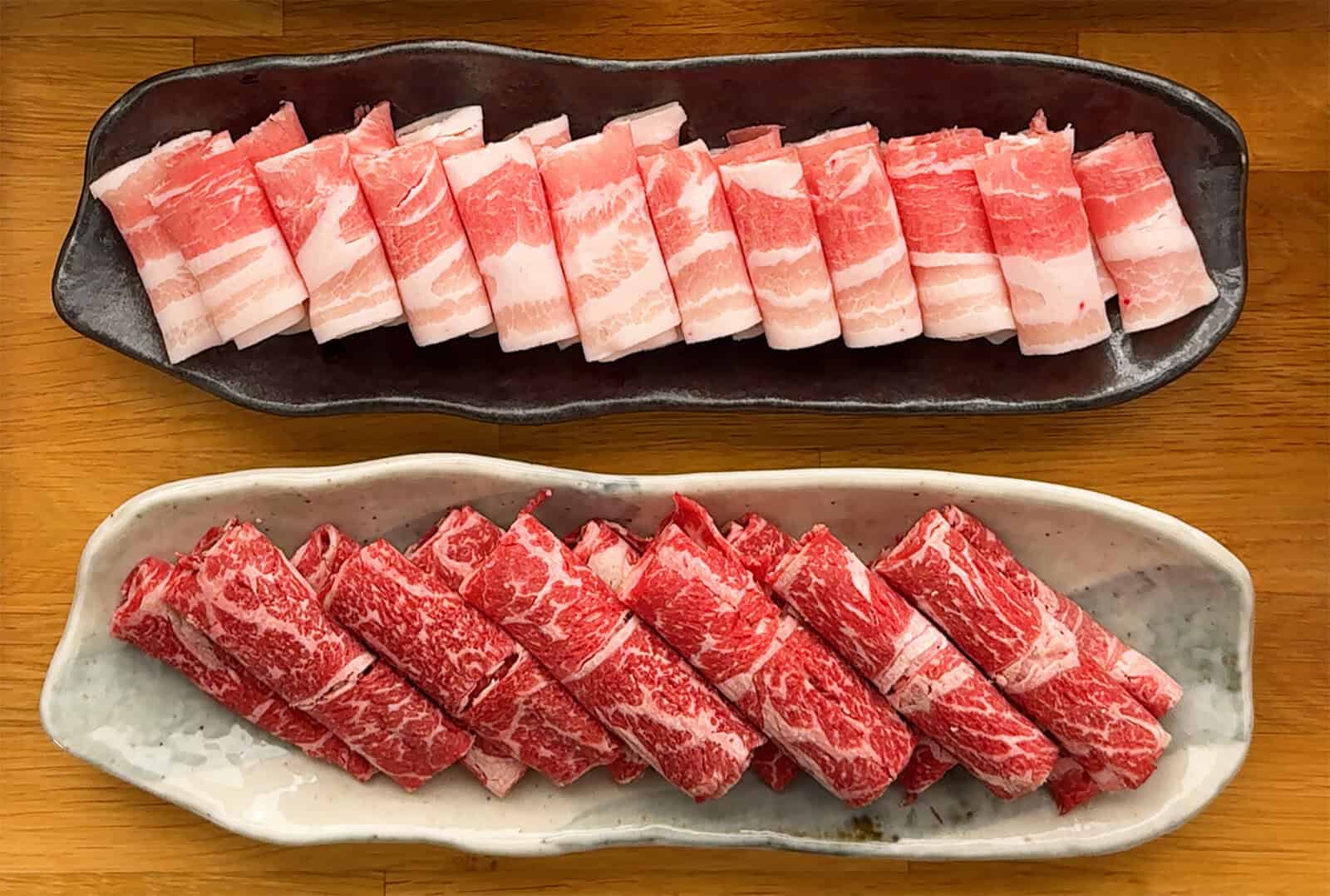
Most Asian markets carry pre-sliced shabu shabu meat, but you can also ask your local butcher to slice it thin for you. It’s possible to slice it yourself as well, though it takes a bit more time and a very sharp knife.
If you enjoy cooking with thinly sliced beef, you might also like my gyudon (Japanese beef bowl) recipe. It's another easy and comforting Japanese dish that's perfect for home cooking.
💡Tip:
Partially freezing the meat first makes it much easier to get clean, thin slices. And don't worry if you can't get it quite as thin as commercially sliced shabu shabu meat. Just keep in mind that thicker slices will take a little longer to cook.
Vegetables & Add-Ins
- Napa cabbage
- Spinach
- Green onions
- Enoki mushrooms
- Shimeji mushrooms
- Shungiku (chrysanthemum greens, optional)
- Tofu (soft or medium preferred, but any type works)
Carbs (Optional but Highly Recommended)
- Steamed rice
- Frozen udon noodles
Dipping Sauces
- Ponzu sauce
- Daikon radish (for grating)
- Gomadare (Japanese sesame sauce)
💡Tip:
You don’t need everything listed here. One protein, a few vegetables, and at least one dipping sauce is enough to enjoy shabu shabu.
🔪 How to Prep for Shabu Shabu
1. Cook the Rice (Optional)
If you’re planning on eating rice, start this first. Some people prefer noodles instead, but rice is very traditional and pairs beautifully with the broth.
2. Prepare the Kombu Broth

Fill your pot with approximately 7 cups of water (adjust depending on the size of your pot, leaving enough room for the ingredients) and add the kombu. Let it soak while you prep everything else.
Any large pot will work fine but I like using a traditional donabe (Japanese clay pot) because it retains heat well and cooks evenly. Here are a couple of my recommendations:
3. Prep the Vegetables for the Hot Pot
Napa Cabbage
- Cut along both sides of the thick white core of each leaf, forming a V-shape to separate it from the leafy green portions.
- Cut the leafy greens into roughly 2-inch squares.
- Slice the thick white portions into approximately ½-inch-wide pieces.

Separating the thicker white portions from the leafy greens helps them cook more evenly, since the white portions take longer to soften. I recommend doing this, but if you're short on time, you can simply chop everything together.
Green Onions

- Cut into about 2-inch lengths
- Keep the white and green parts separate
Mushrooms
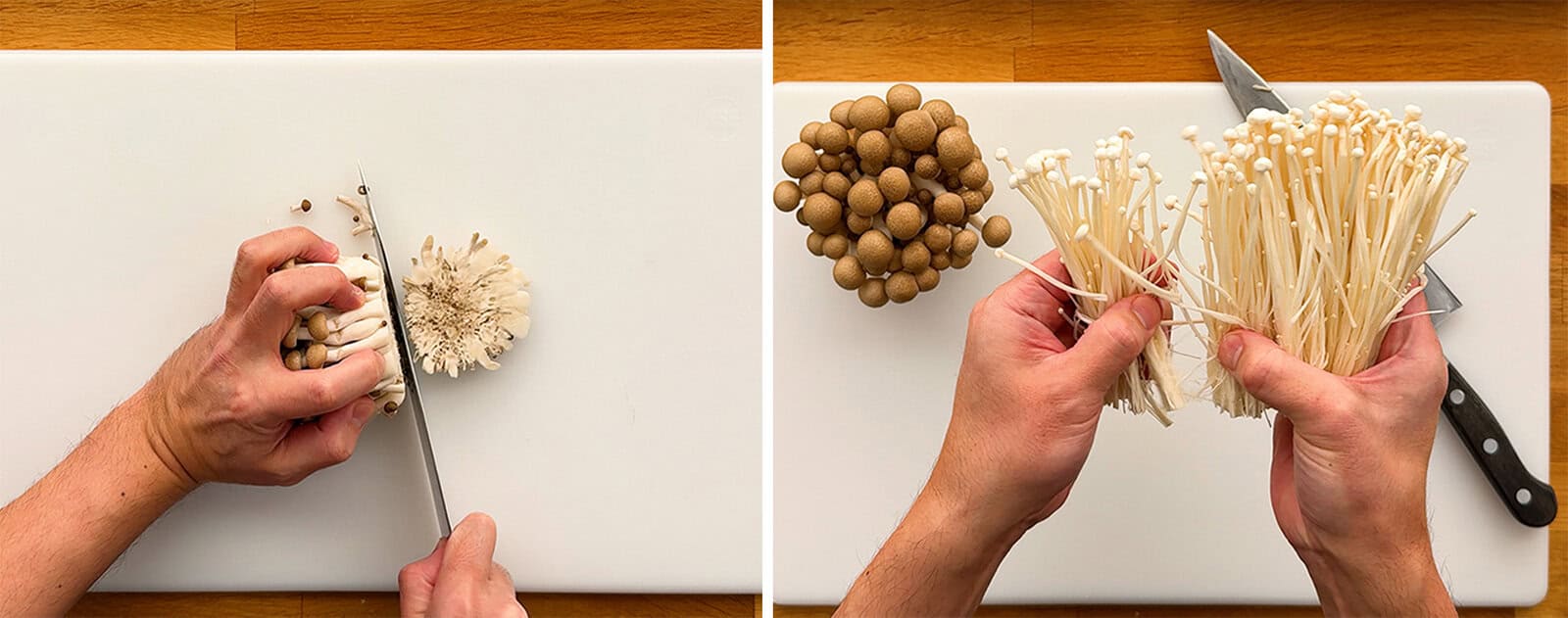
- Trim off the tough bases of the enoki and shimeji mushrooms, then gently separate them into smaller clusters. Rinse if needed.
Spinach & Shungiku
- Simply wash the spinach and shungiku (if using), then set aside.
4. Prep the Daikon

Grate the daikon to make daikon oroshi. Gently drain excess liquid, but don’t squeeze it completely dry.
5. Prep the Tofu

Cut the tofu into cubes or rectangles. I like to cut mine into roughly 1 x 2-inch pieces.
That’s it! Prep is done.
🧑🍳 How to Cook Shabu Shabu

- Place the donabe over medium-high heat with the kombu still in the water.
- Just before the broth reaches a boil, remove the kombu.
- Add the napa cabbage first, starting with the thicker white portions. Follow with the leafy greens, mushrooms, white portions of the green onions, and tofu.
- Cover and simmer over medium heat for about 5-10 minutes, or until the vegetables begin to soften. Add the spinach and shungiku (if using) toward the end since they cook quickly.
- Add the green portions of the green onions last, and you're ready to eat!
If you want to keep things super simple, you can add all the vegetables and tofu at once, which is how I demonstrate it in the video. Either way is totally fine, but adding the ingredients in stages gives you a little more control over how everything cooks. It really comes down to personal preference.
💡Tip:
Adding cold vegetables and tofu can significantly lower the broth temperature. If the broth stops simmering, cover the pot and let it come back to a steady simmer before cooking the meat.
🥢 How to Eat Shabu Shabu
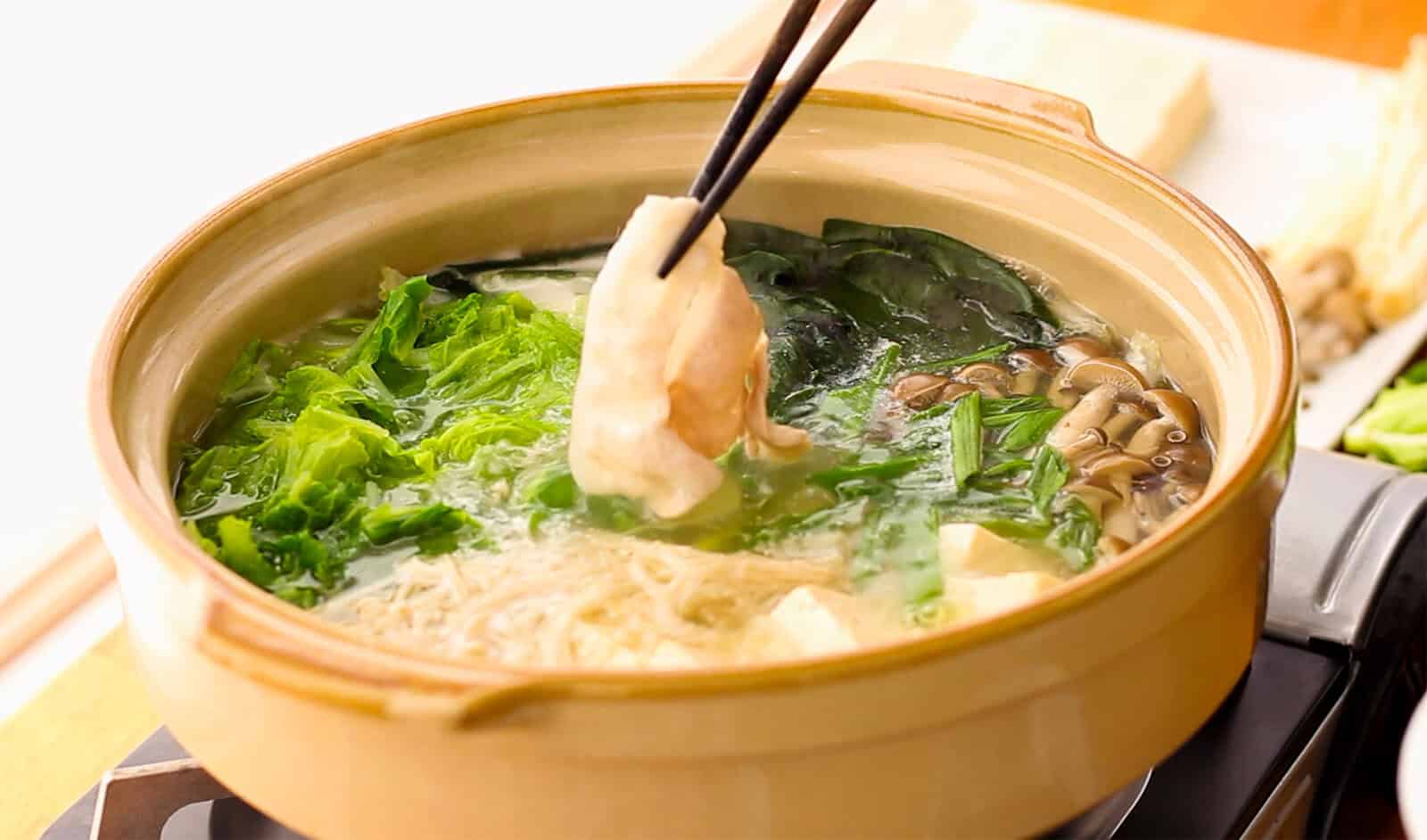
The fun part.
We usually serve both ponzu and gomadare so everyone can switch between sauces. Ponzu is our family's go-to, and I personally love adding some grated daikon oroshi to mine. Gomadare adds a nice richness, and adding a little finely chopped green onion to it gives it a refreshing balance. But honestly, ponzu alone is perfectly fine if you want to keep things simple.
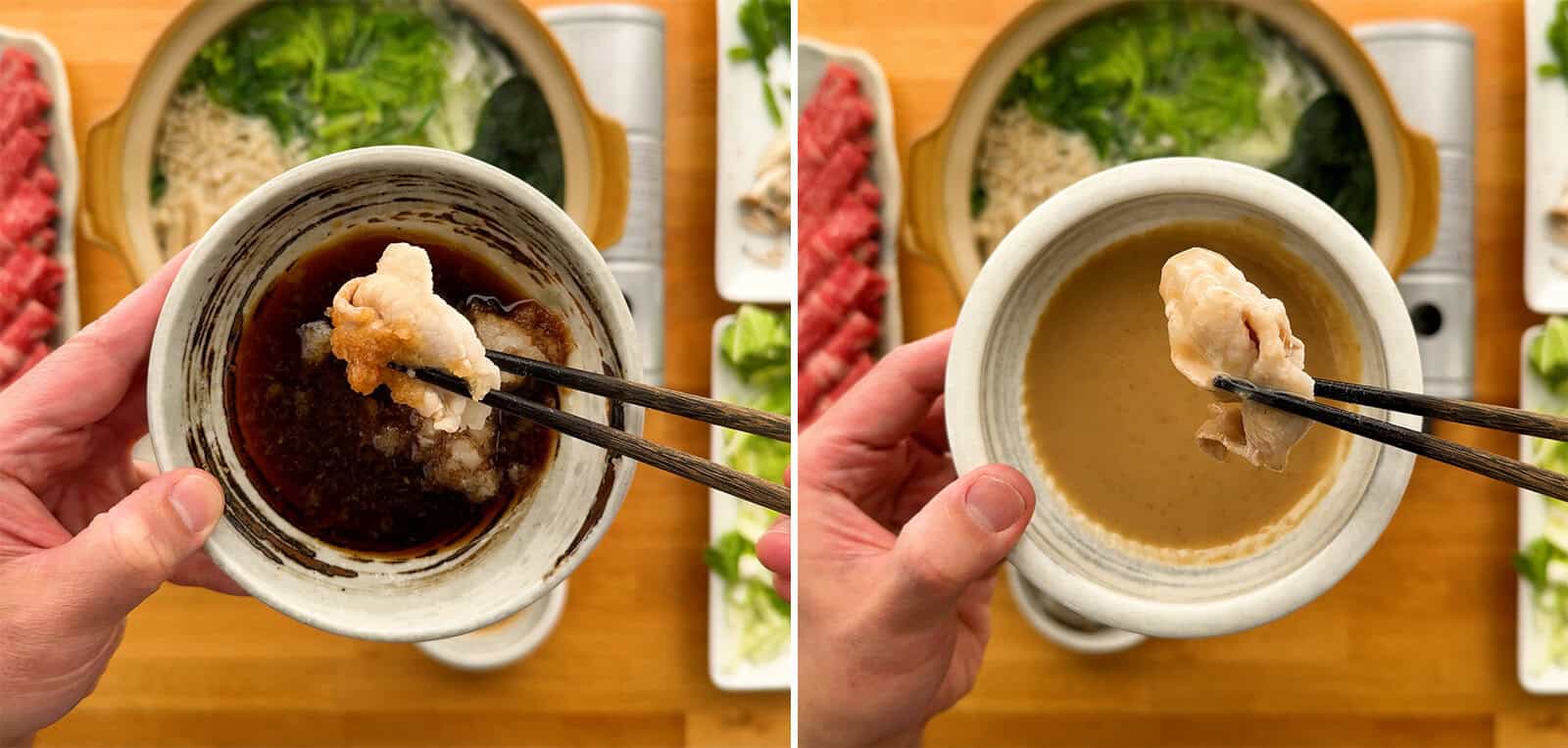
To eat:
- Use a separate pair of chopsticks or tongs to grab a slice of raw meat, keeping them separate from your eating utensils.
- Gently swish it through the simmering broth until cooked. Very thin, pre-sliced shabu shabu meat may cook in about 15-20 seconds, but thicker slices, especially those cut by hand, may take longer. Pork should always be thoroughly cooked and generally takes a little longer than beef.
- Dip the cooked meat and vegetables into ponzu or gomadare. Mix and match however you like!
- Enjoy immediately!
If you notice a bit of foam or scum forming as you cook more meat, just skim it off occasionally to keep the broth clean.
🍜 Finishing the Meal: Shime (Optional)

This is one of my favorite ways to close out a meal, especially when there’s a bit of drinking involved. It’s called shime, which translates to “closing,” and it usually means finishing with a comforting carbohydrate like rice, udon, ramen, or another type of noodle.
To wrap up our shabu shabu meal, we simply add frozen udon noodles directly to the broth and cook them until heated through, usually just a minute or two (check the package instructions). By this point, the broth has absorbed all the flavors from the meat and vegetables, making it deeply comforting and incredibly satisfying.
You can:
- Enjoy the noodles with the broth as is.
- Dip the noodles into your ponzu or gomadare for extra flavor.
Either way, it’s one of the best parts of the meal.
✍️ Final Thoughts
Shabu shabu is one of those dishes that looks fancy but is actually incredibly simple. It’s nourishing, interactive, and even more satisfying during the colder months. Once you try it, you’ll understand why it’s one of my favorite Japanese comfort foods.
And honestly, there's something special about gathering around a steaming hot pot with family and friends. The warmth of the broth, everyone cooking and sharing food, good conversation, and maybe even a nice bottle of sake to go along with it. Doesn't get much better than that.
🤔 Common Questions
Not necessarily. What matters most is that the meat is sliced very thin so it cooks quickly in the broth. Many Asian markets sell pre-sliced shabu shabu or hot pot meat, but your local butcher can usually do it as well if you ask. If you’re slicing at home, a sharp knife and partially frozen meat will make your life much easier. My personal favorite is thinly sliced pork belly, but a well-marbled ribeye is great as well.
Not long at all! The very thinly sliced meat typically used for shabu shabu cooks quickly in simmering broth, often in about 15-20 seconds. However, cooking times can vary depending on the thickness of the meat and the temperature of the broth. If you're slicing the meat yourself, your slices will likely be thicker and may take a little longer to cook. Pork should always be thoroughly cooked before eating.
Absolutely! We rarely have any meat left over since we cook it as we eat, but there's usually some broth, vegetables, and tofu remaining.
Refrigerate leftovers promptly, preferably in smaller, shallow containers so they cool quickly. They'll keep for about 2-3 days in the fridge. When you're ready to eat, bring the broth back to a boil and make sure everything is heated thoroughly.
Shabu shabu is best enjoyed fresh, but the leftover broth can be pretty delicious the next day too!
Shabu Shabu (Japanese Hot Pot)

VIDEO
EQUIPMENT
- 1 Cutting board
- 1 Sharp knife
- 1 Donabe (Japanese clay pot) or large pot
- 1 Portable Stove (butane or electric)
- 1 Daikon grater (optional)
- 1 Fine-mesh skimmer or small ladle (optional)
INGREDIENTS
Soup Ingredients
- 1 sheet kombu dried kelp, 6 x 6 inches (15 x 15 cm)
- 7 cups water approximately (adjust depending on pot size)
- 1 lb thinly sliced pork belly, beef, or a combination of both (450 g total)
- 19 oz tofu (soft or medium)
- 5-6 leaves napa cabbage
- ½ bunch spinach
- 4-5 green onions
- 1 pack enoki mushrooms about 5 oz (150 g)
- 1 pack shimeji mushrooms about 3.5 oz (100 g)
- Shungiku chrysanthemum greens, optional
- 3-4 cups steamed rice optional
- 1-2 packs frozen udon noodles
Dipping Sauce
- ponzu
- gomadare sesame sauce
- 2 inches daikon radish (5 cm)
INSTRUCTIONS
Before Starting
- Cook rice (optional)
Prepare the Broth
- Add approximately 7 cups of water to a donabe or large pot, adjusting the amount depending on the size of your pot. Leave enough room for the vegetables and other ingredients.
- Add the sheet of kombu and let it soak while you prepare the remaining ingredients.
Preparing Vegetables
- Separate the thick white portion from each napa cabbage leaf by cutting along both sides of the core in a V-shape.
- Cut leafy, green parts roughly into two-inch squares. Slice the thicker core section into thinner pieces (about ½-inch slices).
- Cut the green onions diagonally into approximately 2-inch lengths, keeping the white and green portions separate.
- Trim off the bottom of the enoki mushrooms and gently separate it into smaller clusters.
- Trim the base of the shimeji mushrooms and separate them into smaller clusters.
- Wash the spinach and shungiku (if using), then set aside.
- Arrange all the vegetables neatly on a serving platter(s).
Preparing Meat and Tofu
- Cut the tofu into cubes or rectangles. I prefer roughly an inch by two-inch rectangles.
- If the meat isn't pre-sliced, use a sharp knife to slice it as thinly as possible. Partially freezing the meat first makes it easier to cut thin, even slices.
- Arrange the meat and tofu on separate serving platters.
Dipping Sauces
- Grate the daikon radish and gently drain excess liquid. Tip: Do not squeeze the daikon or else it'll become too dry.
- Pour the ponzu and gomadare into separate small bowls.
Cooking Shabu Shabu
- Place the donabe or pot over medium-high heat with the kombu still in it.
- Just before the broth reaches a boil, remove the kombu.
- Add the napa cabbage first, starting with the thicker white portions, followed by the leafy greens, mushrooms, white portions of the green onions, and tofu.
- Cover and simmer over medium heat for about 5-10 minutes, or until the vegetables begin to soften. Add the spinach and shungiku (if using) toward the end since they cook quickly.
- Add the green portions of the green onions last. Once the broth returns to a simmer, you're ready to start cooking the meat.
Eating Shabu Shabu
- Have everything ready and laid out conveniently on the table.
- Use a separate pair of chopsticks or tongs to grab a slice of raw meat, keeping them separate from your eating utensils.
- Gently swish the meat through the simmering broth until cooked. Very thin, pre-sliced shabu shabu meat may cook in about 15-20 seconds, but thicker slices, especially those cut by hand, may take longer. Pork should always be thoroughly cooked and generally takes a little longer than beef.
- Dip into ponzu or gomadare and enjoy immediately! Tip: If you notice any scum forming on the surface of the broth, simply skim it off with a fine-mesh skimmer.
Finishing the Meal (Optional)
- Add frozen udon noodles directly to the remaining broth and cook until heated through, usually a minute or two. Follow the package instructions. Enjoy with the broth as is, or dip the noodles into ponzu or gomadare.


Leave a Reply