
Dragon Rolls may look intimidating to make at first, but when you break it down step by step, they're surprisingly doable at home.
In my version, I fill the roll with crispy shrimp tempura and cucumber, then top it with thin slices of avocado and broiled unagi. It's always a crowd favorite and is one of those rolls that'll make your sushi-making skills look seriously impressive!
So let's take a look at what a Dragon Roll actually is and, more importantly, how to make one at home!

Jump to:
🐉 What Is a Dragon Roll?
A Dragon Roll is an inside-out sushi roll that's commonly made with shrimp tempura and topped with thin slices of avocado. The avocado slices are overlapped across the top to resemble the scales of a dragon.
That said, there's really no standard recipe for a Dragon Roll, and the ingredients can vary quite a bit depending on the restaurant. You'll also see Dragon Rolls and Caterpillar Rolls used almost interchangeably since both are commonly topped with thinly sliced avocado.
I actually add thin layers of unagi on top of mine as well. But for me, the main difference between a Dragon Roll and a Caterpillar Roll is what's inside. A Dragon Roll should have shrimp tempura, while a Caterpillar Roll should have unagi. That's how I've always differentiated the two.
🥑 What's in a Dragon Roll?
For my version of the Dragon Roll, you'll need:
- Sushi rice: Properly seasoned sushi rice is the foundation of any good sushi roll. If you need a refresher, check out my sushi rice recipe.
- Nori: You'll need half a sheet of nori for one roll.
- Shrimp tempura: Honestly, for the convenience factor, I recommend using frozen pre-fried shrimp tempura for this recipe. It's easy to prepare, stays nice and crispy, and tastes great in sushi. I usually make my shrimp tempura from scratch, as you'll see in my video, but the frozen option is a great shortcut, especially for beginners.
- Cucumber: English or Japanese cucumber both work well. It adds a nice refreshing crunch to balance out the richer ingredients.
- Avocado: Look for an avocado that's ripe but still firm enough to slice thinly without falling apart.
- Unagi: Packaged cooked unagi (freshwater eel), which you can usually find frozen at Asian or Japanese grocery stores. We'll broil it before adding it to the roll.
- Unagi sauce: Adds that sweet and savory finish that works especially well with the unagi. You can use a bottled version from an Asian market or make your own using my homemade unagi sauce recipe.
- Spicy mayo: Optional, but highly recommended. The creaminess and slight kick pair really well with the sweetness of the unagi sauce and help balance out the roll. You can follow my spicy mayo recipe to make your own.
- Toasted sesame seeds: Optional, but I recommend grinding them first to bring out more of their flavor and aroma. I use a Zojirushi sesame seed grinder, and you can check out my full guide on how to use it here.
🛠️ Equipment You'll Need
You don't need much specialized equipment to make a Dragon Roll, but there are a few things that will make the process much easier:
- Makisu (bamboo rolling mat): Wrap it completely in plastic wrap before you start. This prevents the sushi rice from sticking to the mat when making an inside-out roll.
- Sharp knife: For preparing the ingredients and cutting the finished roll.
- Cutting board
- Plastic wrap: You'll also need some for shaping and cutting the roll once the avocado and unagi are on top.
- Small bowl of cold water: For lightly wetting your hands while handling the sushi rice.
- Clean damp towel: Helpful for wiping your knife clean between cuts.
Don't have a bamboo rolling mat? No problem. You can still make sushi without one. Check out my guide on how to roll sushi without a bamboo mat.
🍣 How to Make a Dragon Roll
Before you start making the roll, make sure your sushi rice is already cooked, seasoned, and ready to use. From there, I like to get the rest of the ingredients prepped so everything is ready to go once we start rolling.
1. Prepare the cucumber
For the easiest method, cut your cucumber into a stick roughly ½-inch thick and long enough to run across the width of the nori. If your cucumber isn't long enough, just use two shorter pieces placed end to end.
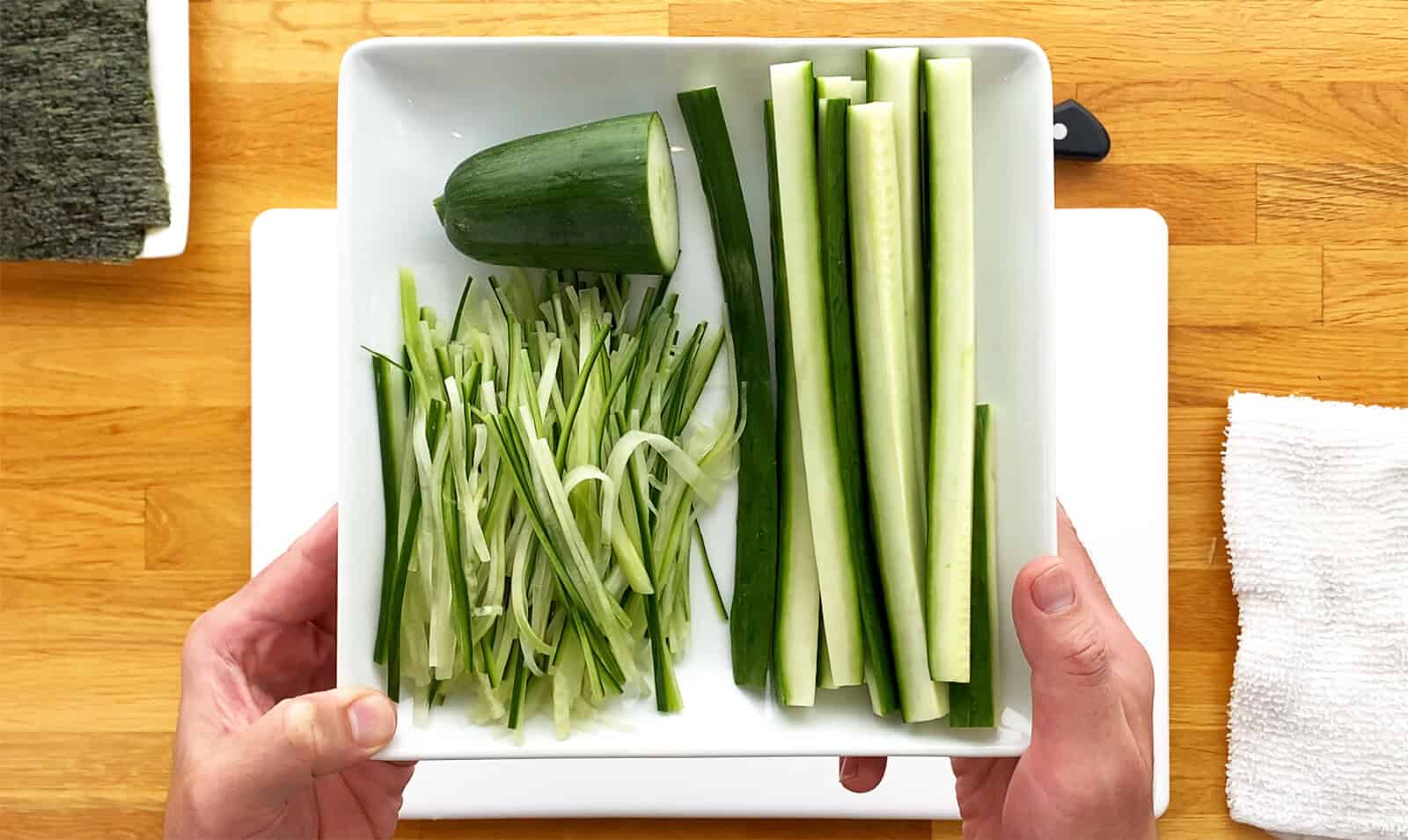
🔪 How I do it:
I typically prepare my cucumber using the katsuramuki technique. It's a little more advanced and definitely not necessary for this recipe, but you can check out my full guide to cutting cucumber for sushi if you'd like to give it a try.
I also use this technique in my Dragon Roll video, which is why you'll see thinner strips instead of the thicker cucumber sticks recommended here.
2. Prepare the unagi
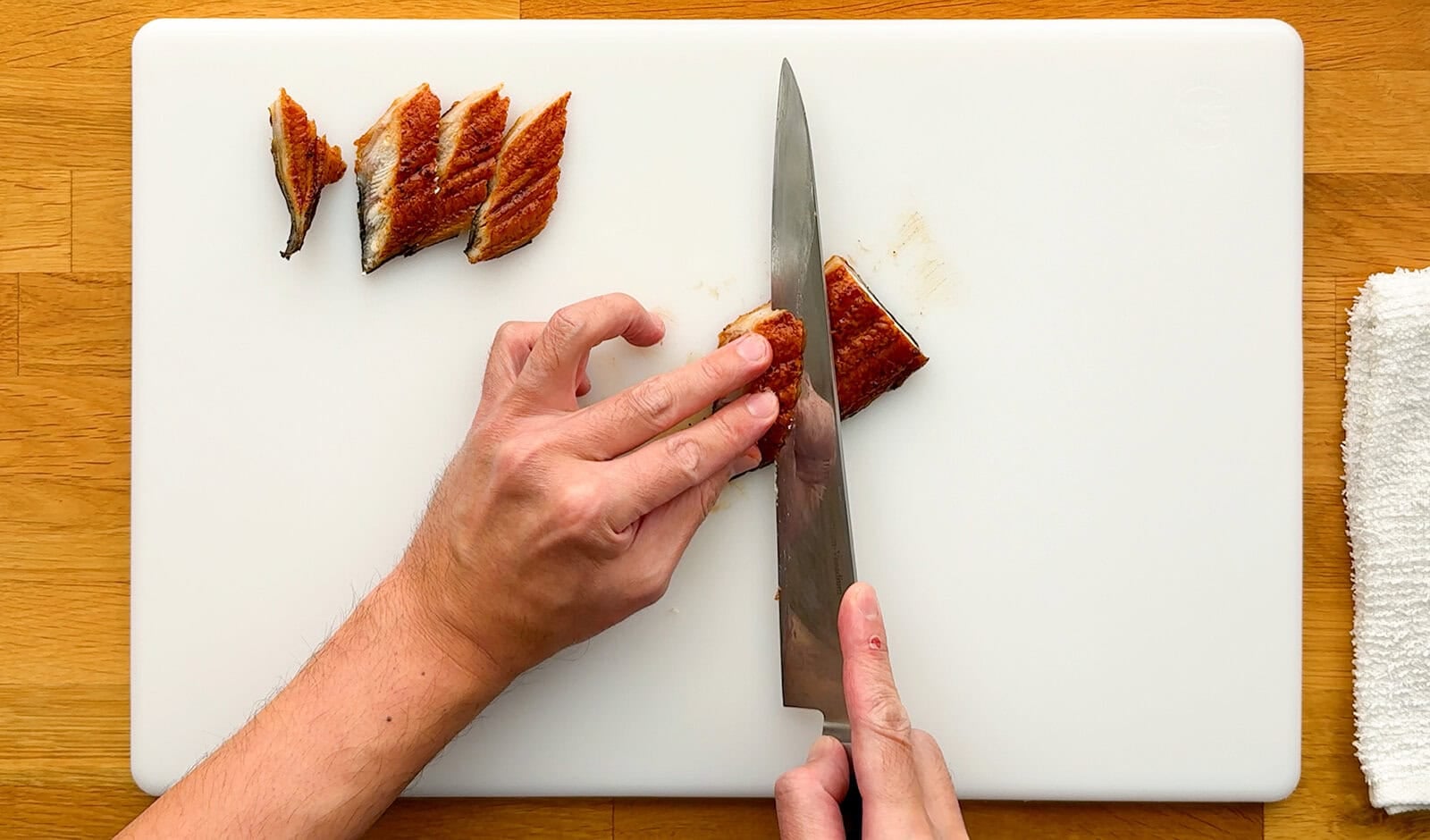
Remove the unagi from the package and gently wipe off any excess sauce or marinade. Lay the fillet flat and cut it lengthwise down the center into two even pieces. There should be a visible line running down the middle of the unagi that you can use as a guide.
Take one of those halves and slice it diagonally into four thin pieces, roughly 1.5 inches wide by 2 inches long. I cut these similarly to unagi for nigiri, but slightly thinner and shorter. The thinner slices are more flexible and will sit more naturally over the rounded top of the roll.
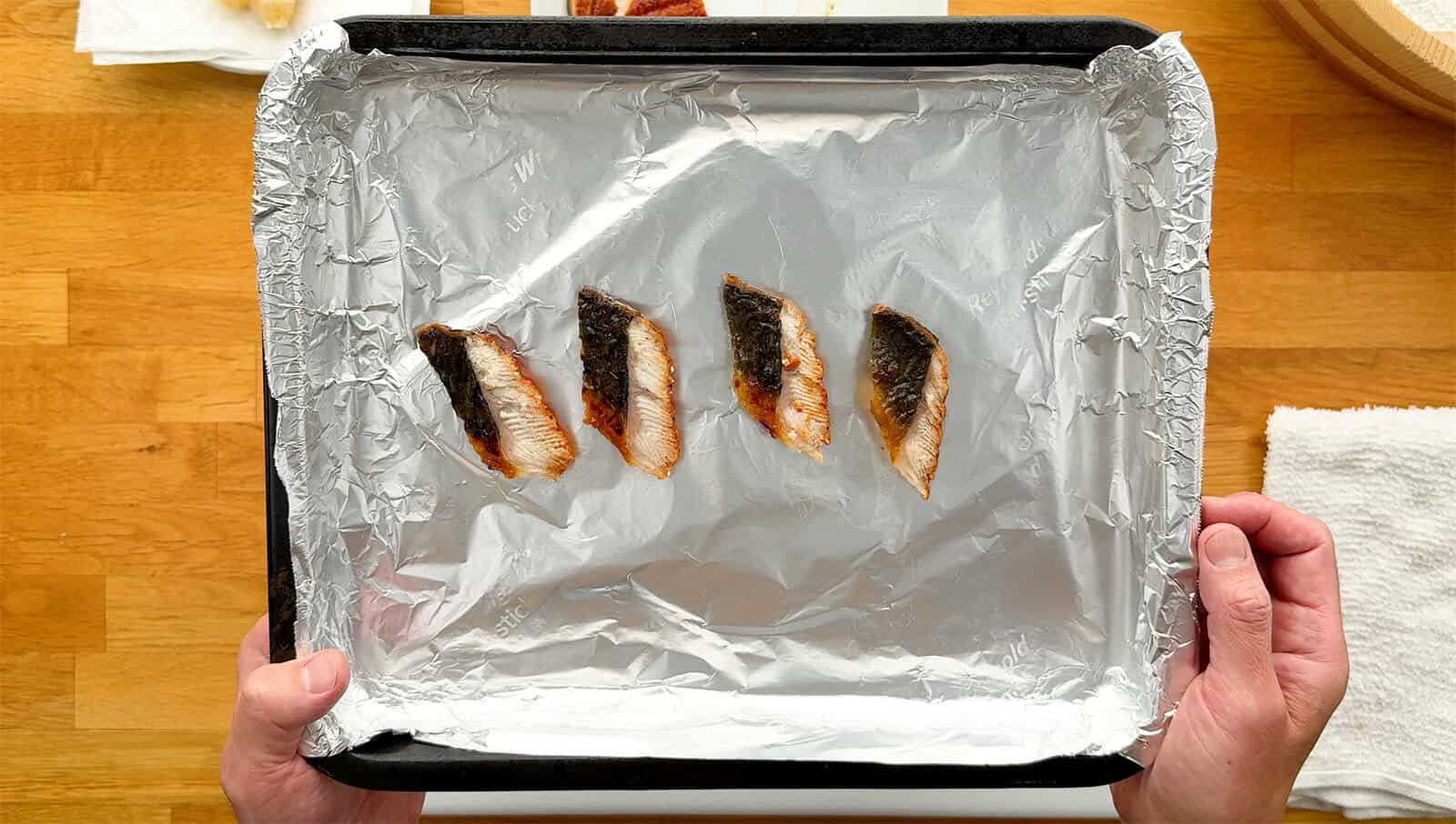
Line a baking sheet with non-stick aluminum foil, or lightly coat regular foil with vegetable oil to prevent sticking. Place the four pieces of unagi skin-side up and broil on high for about 5-6 minutes, with the unagi roughly 6 inches from the heat source. Let it cool just until it's comfortable enough to handle. You still want it slightly warm and tender when you add it to the roll.
3. Prepare the shrimp tempura
Cook two pieces of frozen shrimp tempura according to the package directions. For the easiest method, I recommend using an air fryer, but you can also deep-fry them if you want them extra crispy.
Once cooked, let the shrimp cool just until they're comfortable enough to handle. You still want them somewhat warm and crispy when you assemble the roll.
If you're making the shrimp tempura yourself, see the fresh shrimp tempura option below.
4. Add the sushi rice
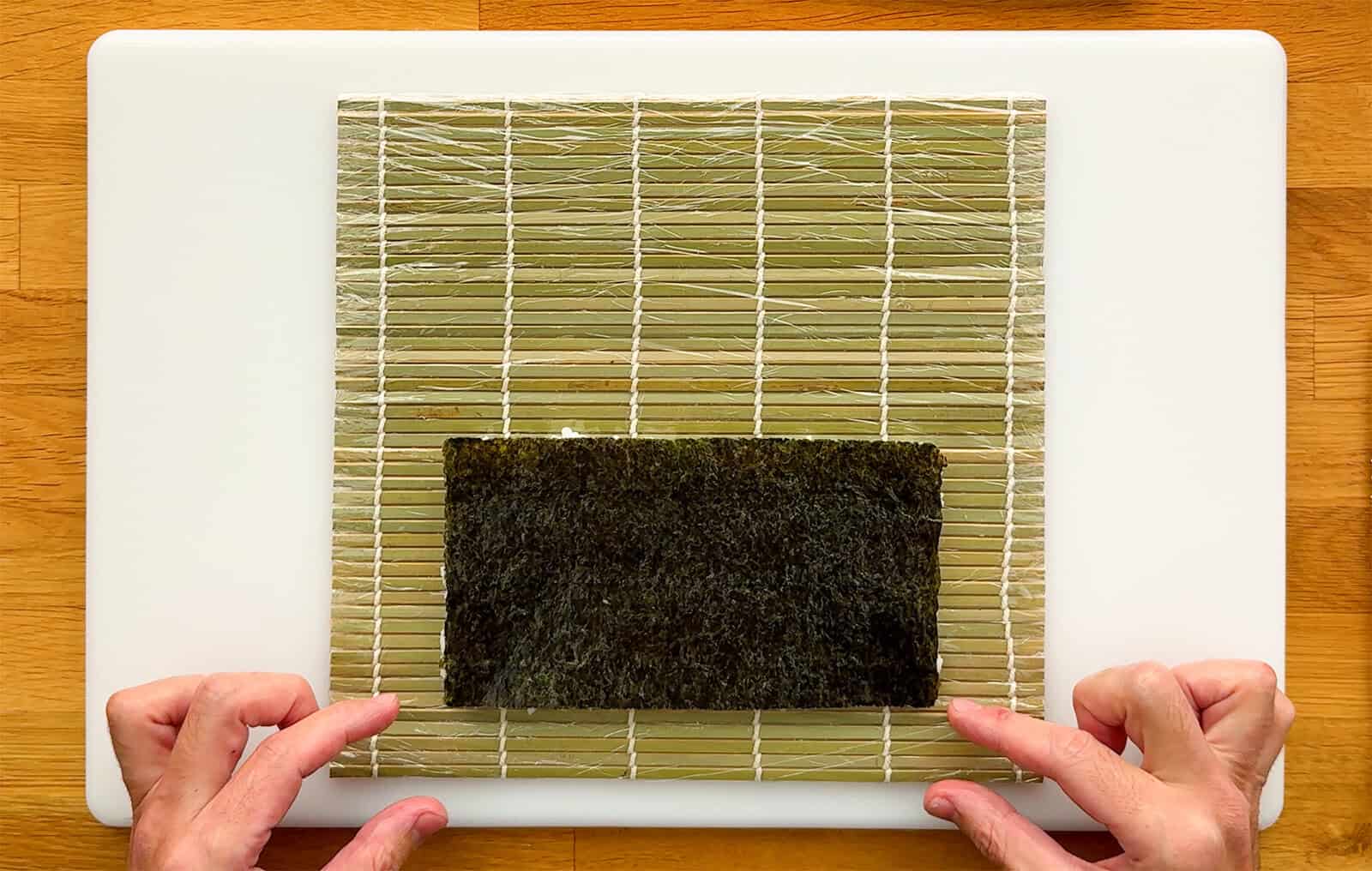
Place a half sheet of nori, rough side facing up, on your plastic-wrapped makisu. Lightly wet your hands with cold water to keep the rice from sticking, then spread about ½ cup of sushi rice evenly across the entire sheet of nori.
Try not to press or mash the rice as you spread it. You want it evenly distributed all the way to the edges without compacting it too much.
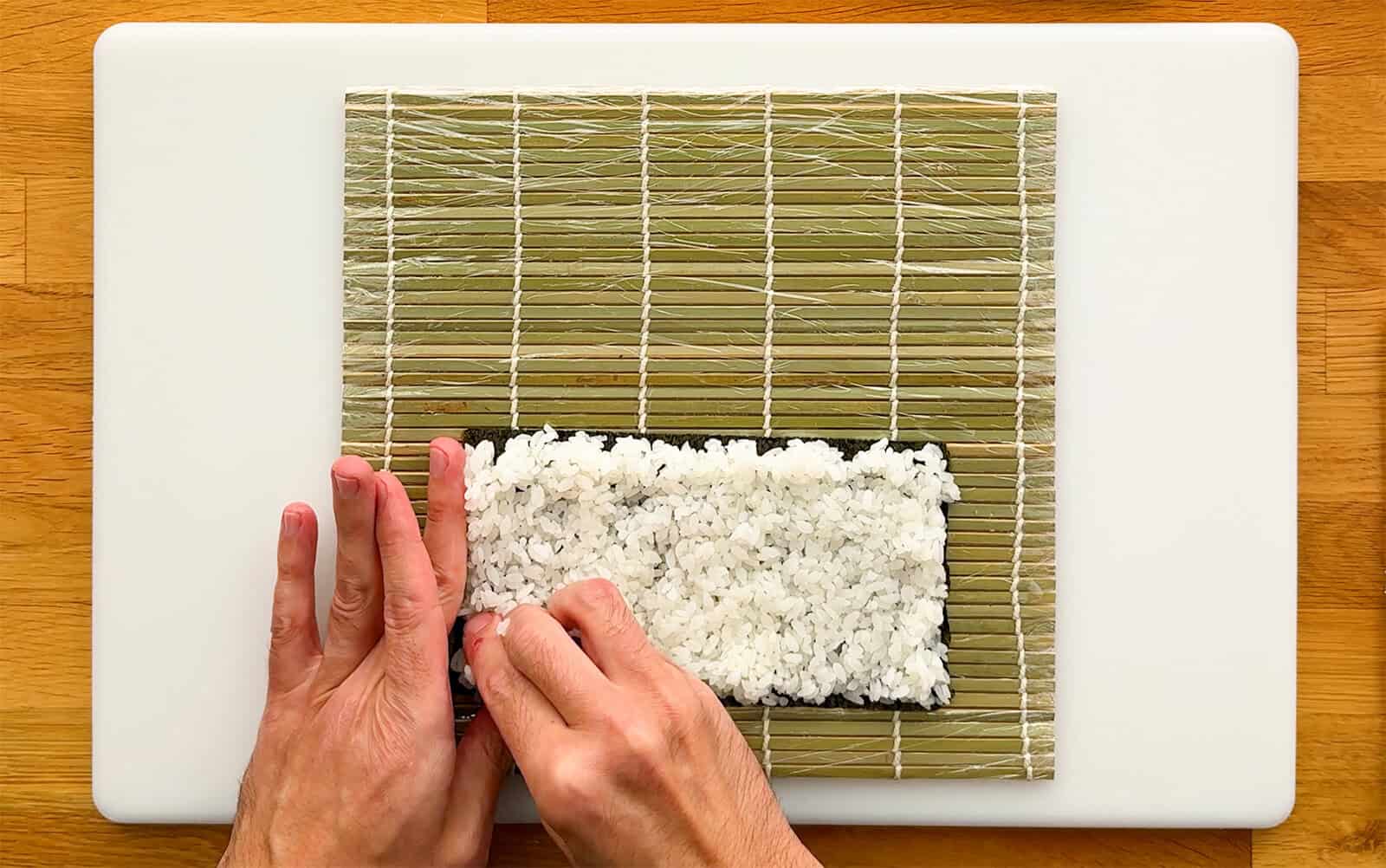
If you want to be more traditional, you can use tezu (a mixture of water and rice vinegar) instead of plain water, but cold water works perfectly fine.
Once the rice is evenly spread, carefully flip the nori over so the rice side is facing down, leaving about an inch of space between the bottom of the nori and the bottom edge of the makisu. This gives you some room to grab the mat when you start rolling.
5. Add the fillings and roll
Place the cucumber across the center of the nori, followed by the two pieces of shrimp tempura. Arrange the shrimp end to end with the tails sticking out from opposite sides of the roll. This keeps the tails out of the filling and gives the finished roll a more elegant presentation. You can also cut the tails off if you prefer.
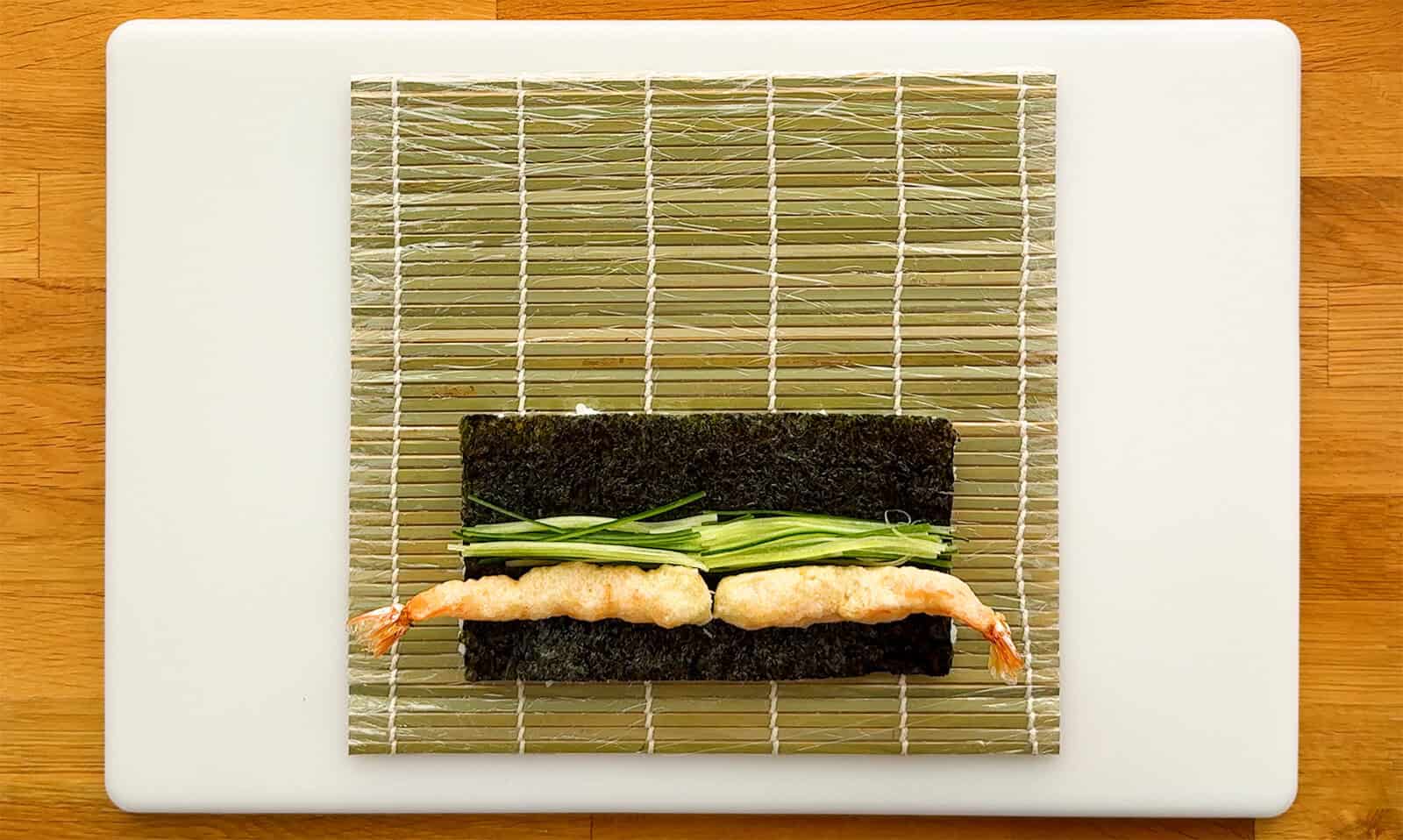
Use your fingers to hold the fillings in place while lifting the bottom edge of the makisu up and over them. Continue rolling forward until the nori wraps completely around the fillings.
Once the roll is formed, hold it in place with one hand while pulling the top end of the makisu away from you with the other. This helps tighten the roll without having to squeeze down too hard.
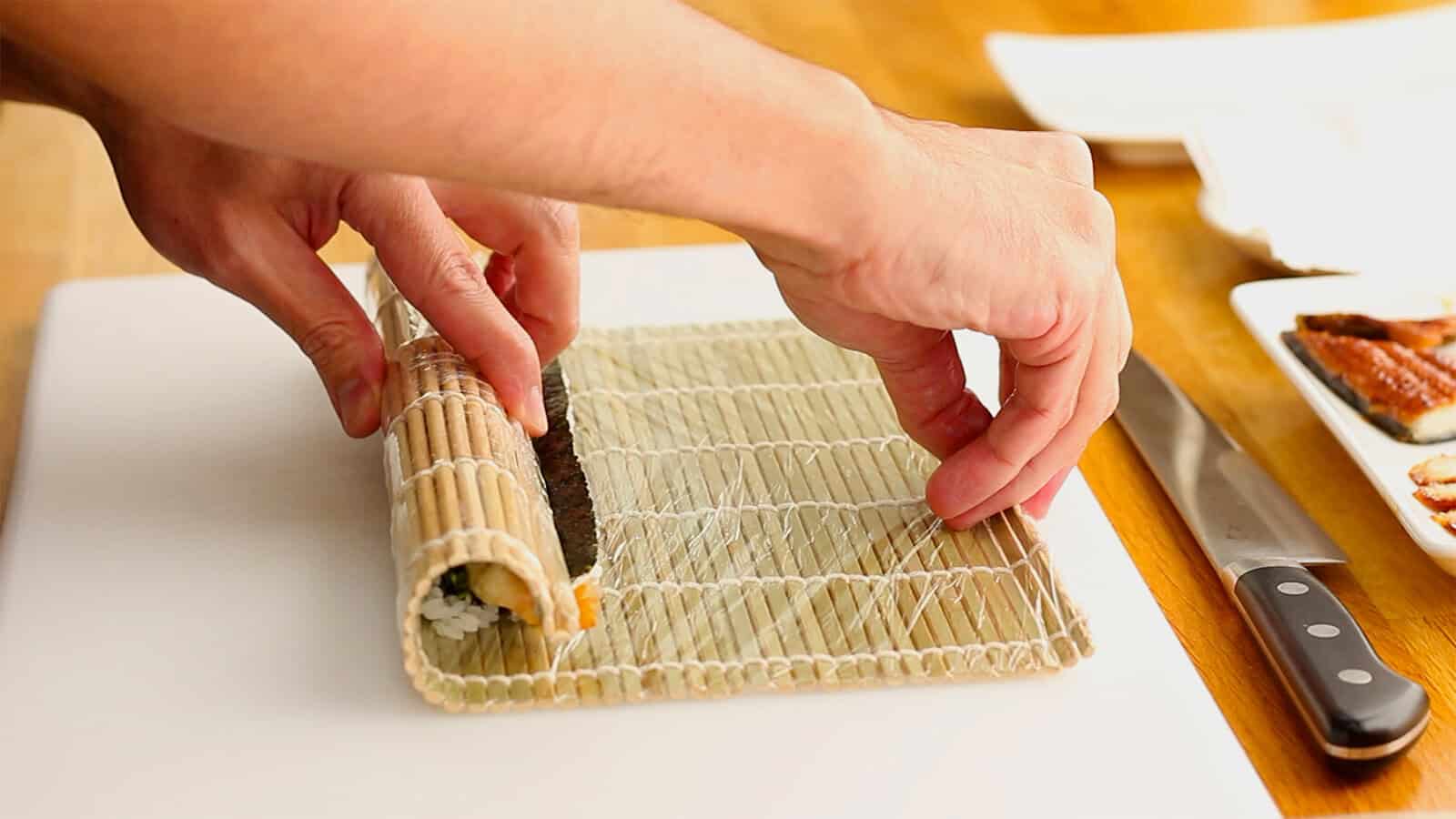
Finally, use the mat to gently shape the roll, then press in on both ends to clean up any rice or fillings that may have pushed out while rolling. You want the roll tight enough to hold together, but not so tight that you compress the rice or force the fillings out.
6. Slice the avocado
Cut the avocado in half lengthwise. Keep the half with the pit intact, wrap it tightly, and store it in the refrigerator. Remove the skin from the other half and place it cut-side down on your cutting board. The flat surface will make it much easier to slice. You can also see this technique in my How to Cut Avocado for Sushi video.
Starting from one end, cut about 6-9 thin slices, roughly ⅛ inch thick. This should be enough to cover one Dragon Roll, so there's no need to slice the entire half. Wrap up whatever avocado you have left and save it for later.
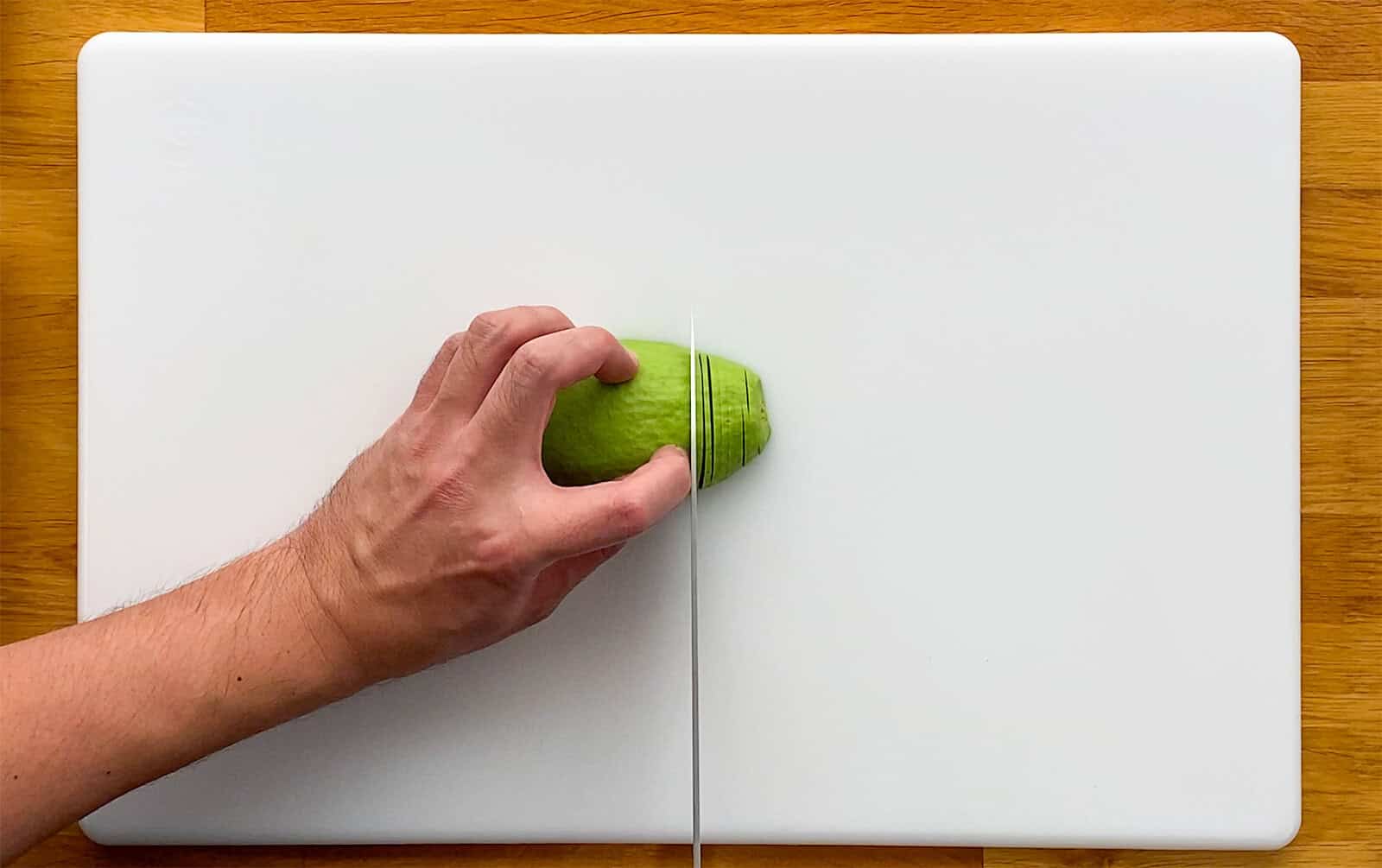
If you're comfortable with your knife skills, you can also quarter the avocado and slice it thinly at an angle, like I do in my Dragon Roll video. This lets you get longer slices while using only what you need, which helps minimize waste. But if you're just starting out, the half-avocado method above is much easier.
Try to keep the slices fairly even so they'll overlap neatly and conform to the rounded shape of the roll.
7. Add the unagi and avocado
Place the four pieces of unagi, skin-side down, across the top of the roll, starting at one end and spacing them evenly. Position the two outside pieces so they cover the ends of the roll.
Next, fill the spaces between each piece of unagi with 2-3 thin slices of avocado, slightly overlapping the avocado slices as you go. From one end to the other, you should have a pattern of unagi, avocado, unagi, avocado, unagi, avocado, and unagi.
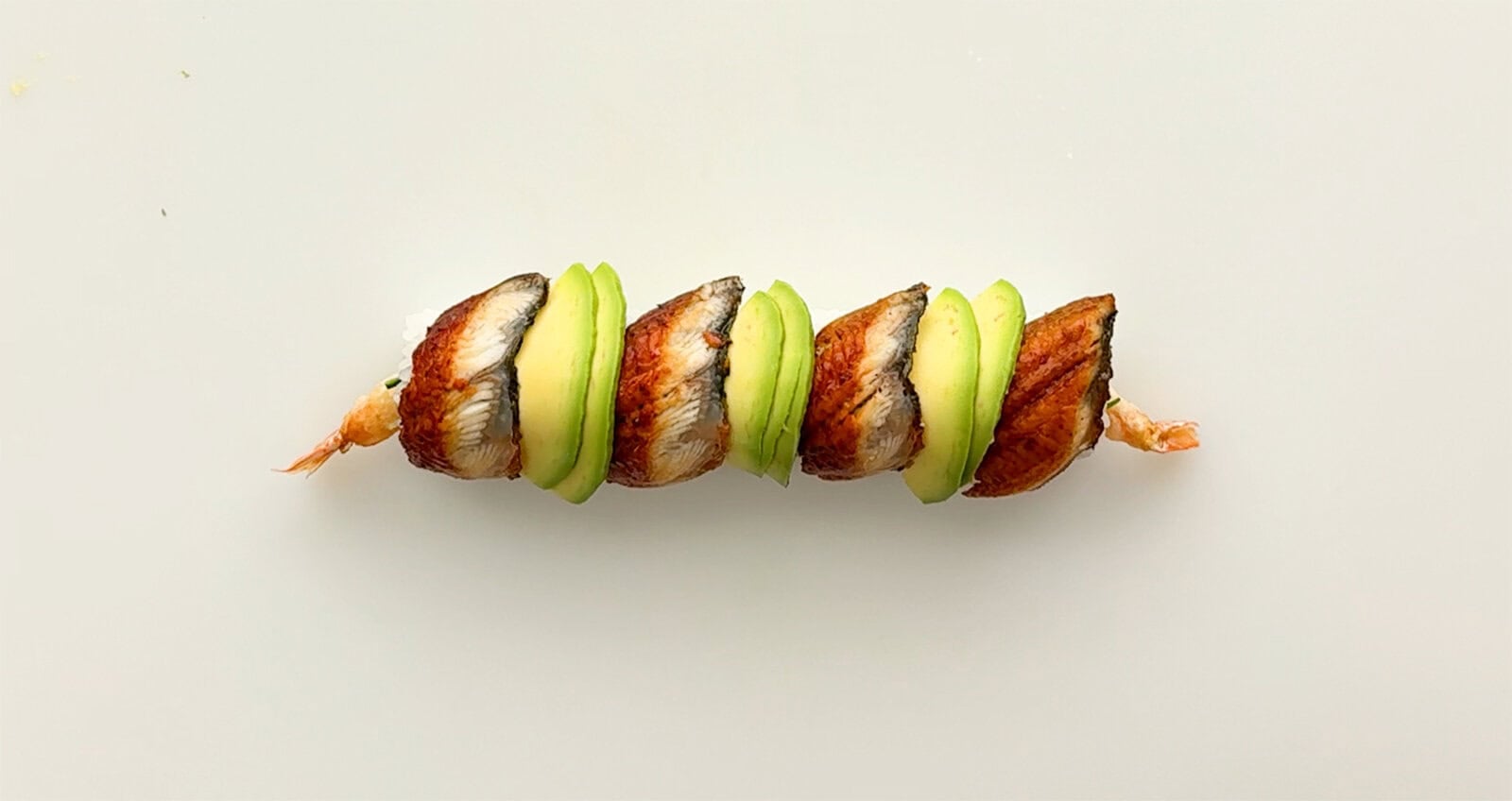
Don't worry about lining the toppings up with where you'll eventually cut the roll. The goal here is simply to space everything evenly across the top.
8. Shape the Dragon Roll
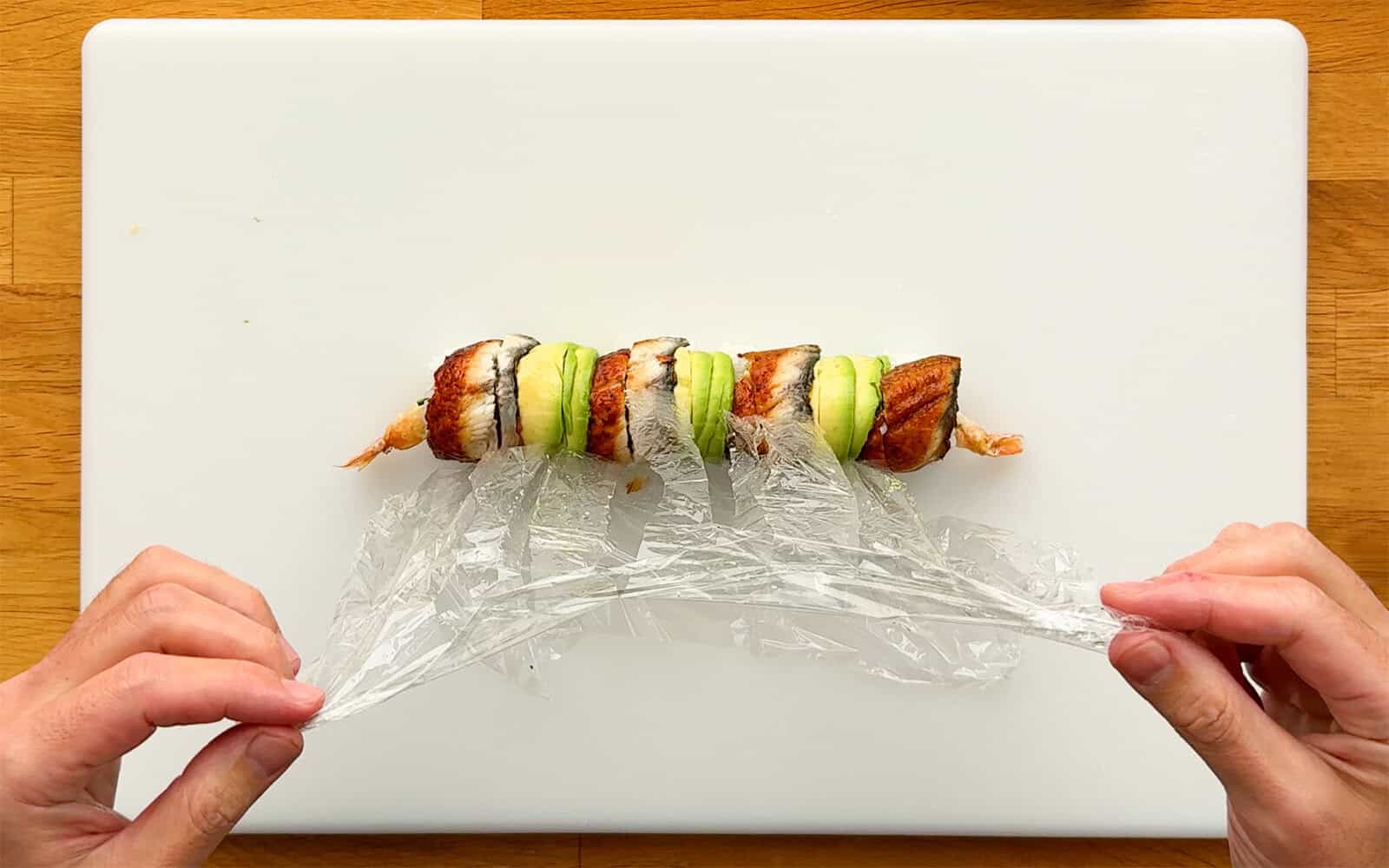
Cover the entire roll with a sheet of plastic wrap, leaving a few extra inches extending past the top of the roll. You'll use that extra plastic when cutting, so don't trim or cut through it yet.
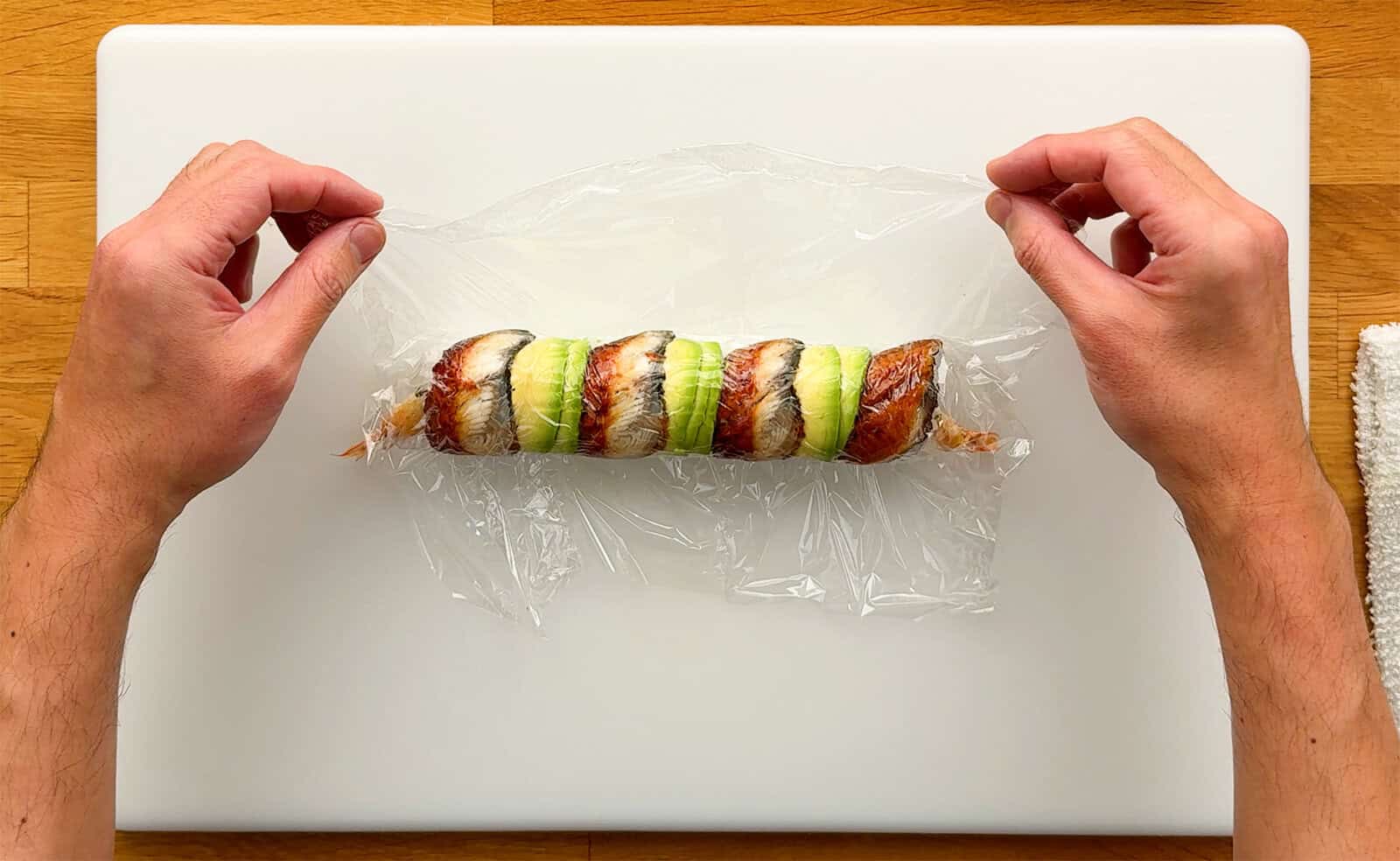
Place the makisu over the plastic wrap and gently press around the roll to shape the toppings and help them adhere to the rice. Use firm but gentle pressure so the avocado and unagi conform to the rounded shape of the roll without crushing the rice or squeezing out the fillings.
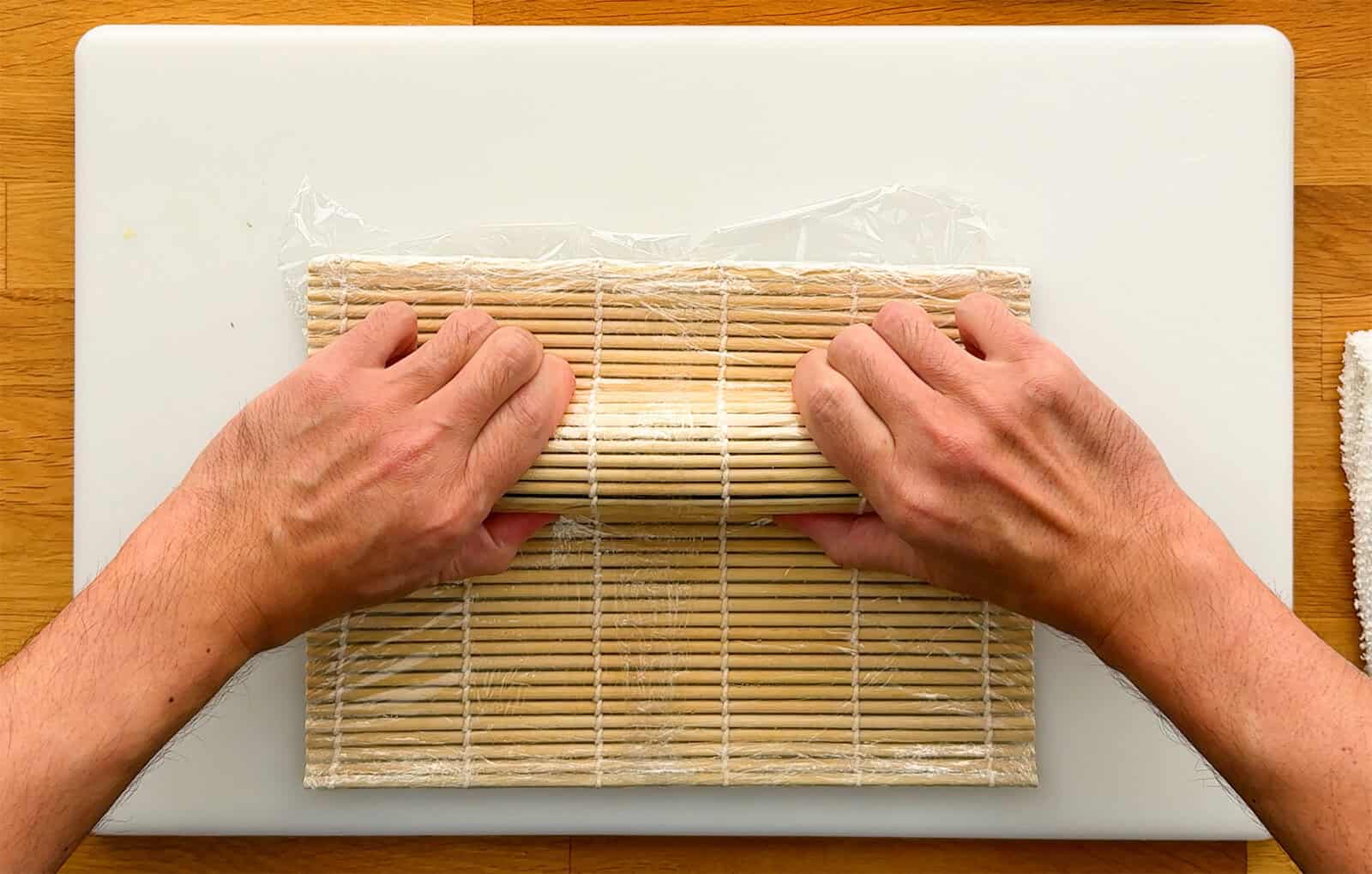
Carefully remove the makisu, holding the plastic wrap against the roll if it starts to lift with the mat. If it does come off, no big deal - simply wrap it back around the roll. Make sure the plastic is snug against the toppings with as little space in between as possible. This will help keep everything from shifting when you cut it.
Leave the plastic wrap in place for the next step.
9. Cut the Dragon Roll
Using a sharp knife, cut the roll in half through the plastic wrap. Then cut each half in half again, and finally cut each of those pieces in half to make 8 pieces total. I've found this to be the easiest way to get consistently even pieces.
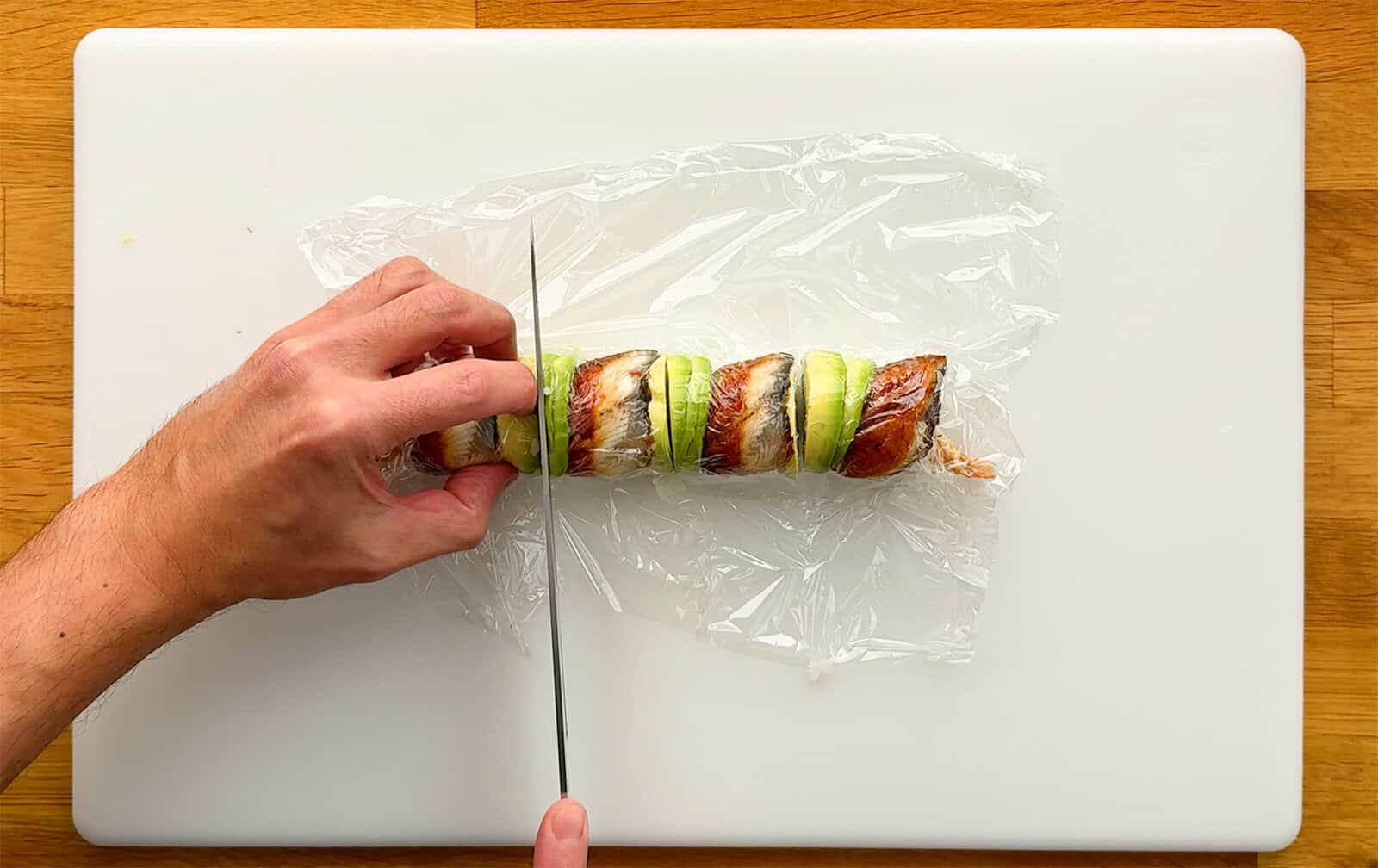
As you cut, make sure you don't slice through the few inches of extra plastic you left above the roll. Keeping that section intact means the plastic stays together as one sheet, rather than leaving you swearing at yourself as you pull individual strips off each piece. 😅
Wipe your knife clean with a damp towel and lightly wet the blade between cuts as needed. This will help keep the rice from sticking and give you cleaner cuts.
Once all 8 pieces are cut, give the roll one final light shaping with the makisu to make sure the toppings are still in place. You can also gently shape it with your hands if that's easier.
Finally, carefully lift off the plastic wrap, which should be in one piece.
10. Finish the Dragon Roll
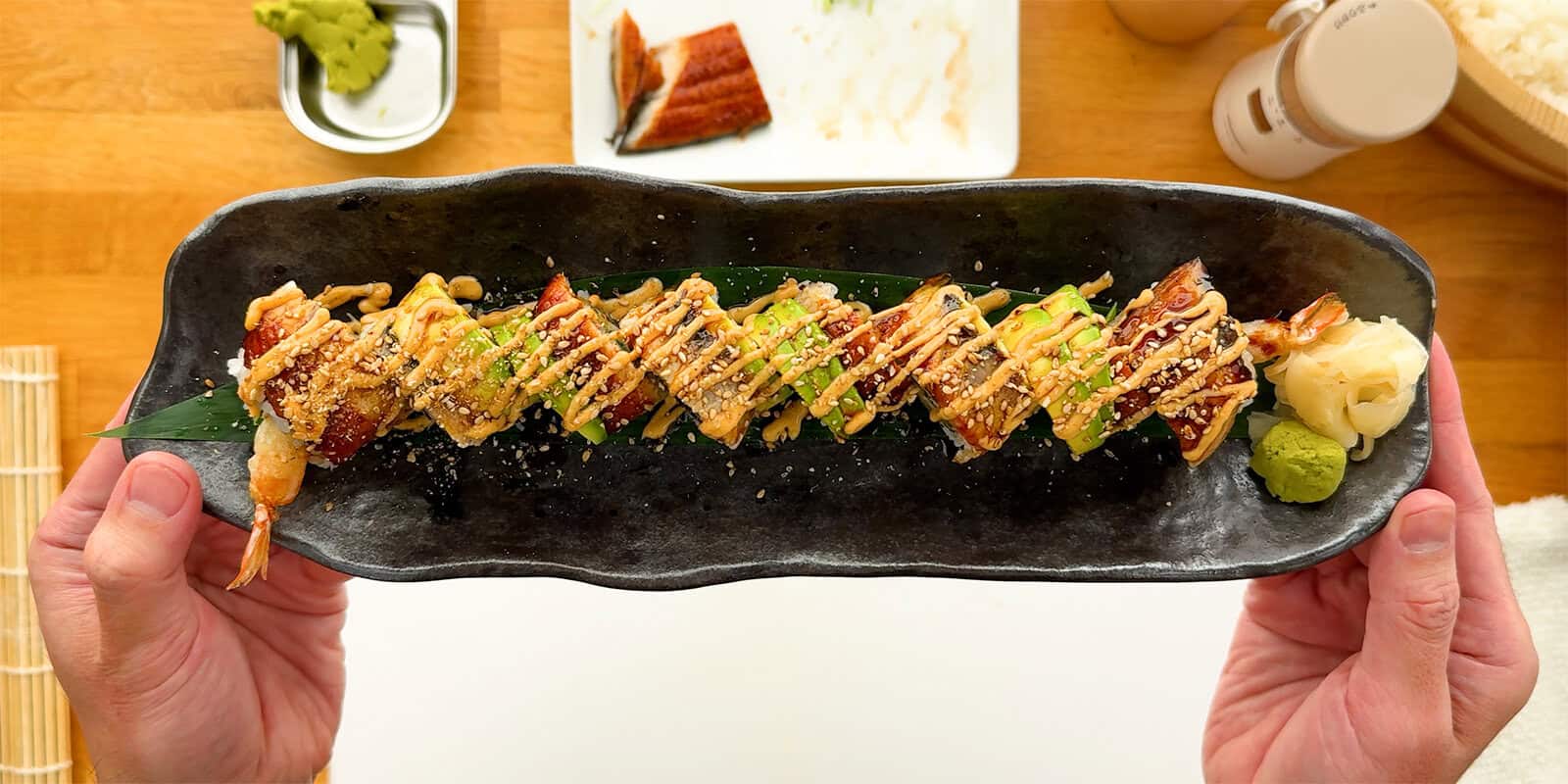
Transfer the pieces to a serving plate and drizzle the Dragon Roll with unagi sauce and spicy mayo. Finish with a sprinkle of ground toasted sesame seeds.
Serve immediately while the shrimp tempura is still crispy and the unagi is slightly warm. Serve with soy sauce, wasabi, and pickled ginger on the side if desired.
💡 Dragon Roll Tips & Troubleshooting
Dragon Rolls have a few more moving parts than a basic sushi roll, but most problems come down to a handful of things:
- Don't overfill the roll: Shrimp tempura is fairly thick, so it doesn't take much additional filling. Two shrimp and the cucumber are plenty.
- Make sure the roll is tight enough: If the initial roll is too loose, it'll be much harder to keep everything together once you add the toppings. Tighten it enough to hold its shape without compressing the rice or squeezing out the fillings.
- Keep the toppings thin: Thin slices of avocado and unagi will conform to the shape of the roll much more easily. If they're too thick, they'll be more likely to shift or fall off.
- Take your time when cutting: A topped roll is trickier to cut than a basic sushi roll. Keep the plastic wrap snug, use a sharp knife, and clean and wet the blade as needed between cuts.
🔄 Options and Substitutions
There are a few easy ways to adjust this Dragon Roll depending on what you have available or what you prefer.
Want to Make Fresh Shrimp Tempura?
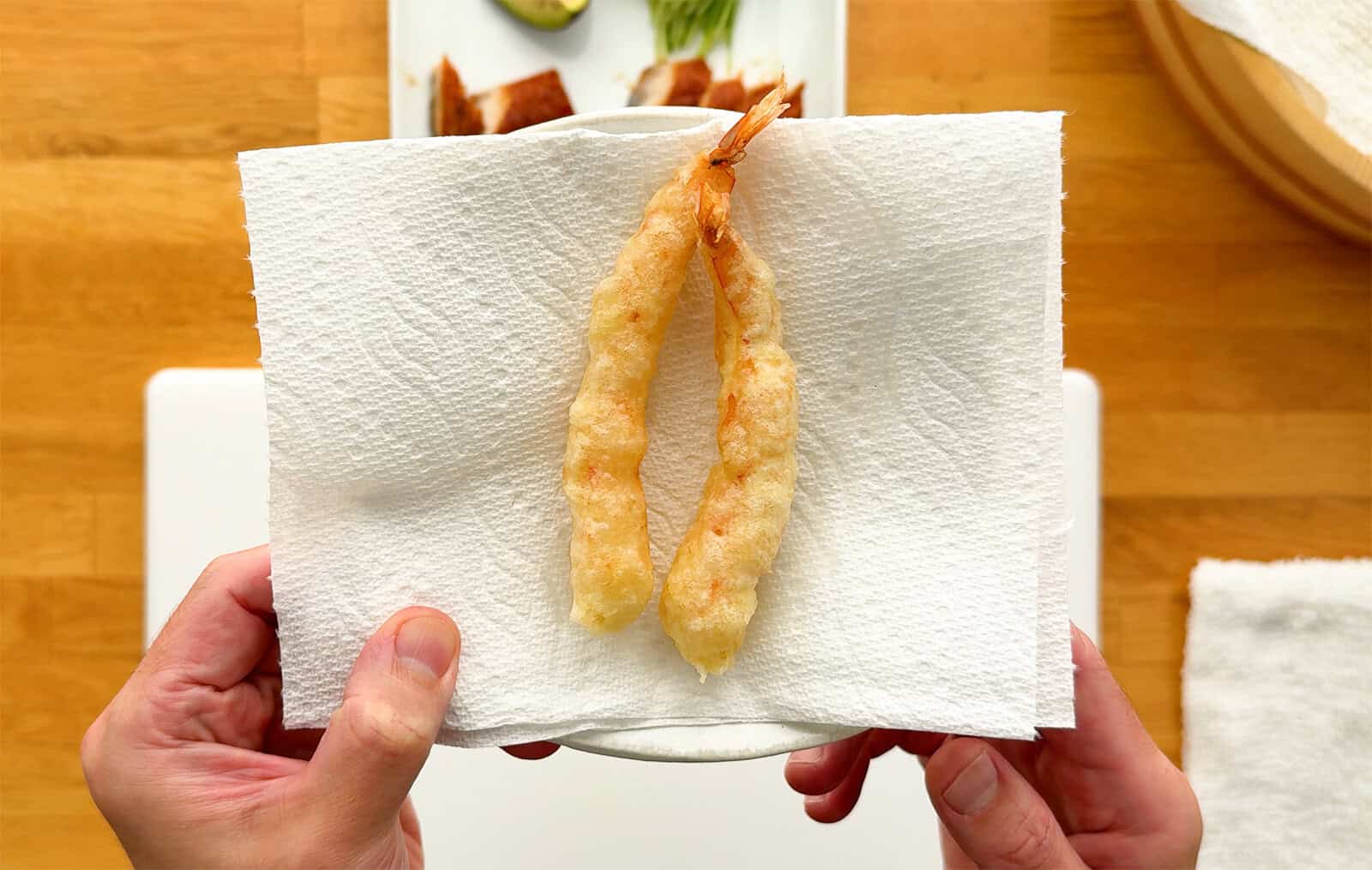
If you'd rather make the shrimp tempura yourself, I recommend using tempurako, a Japanese tempura batter mix. It's what I typically use at home because it's easy, consistent, and makes great tempura without having to mix the batter from scratch.
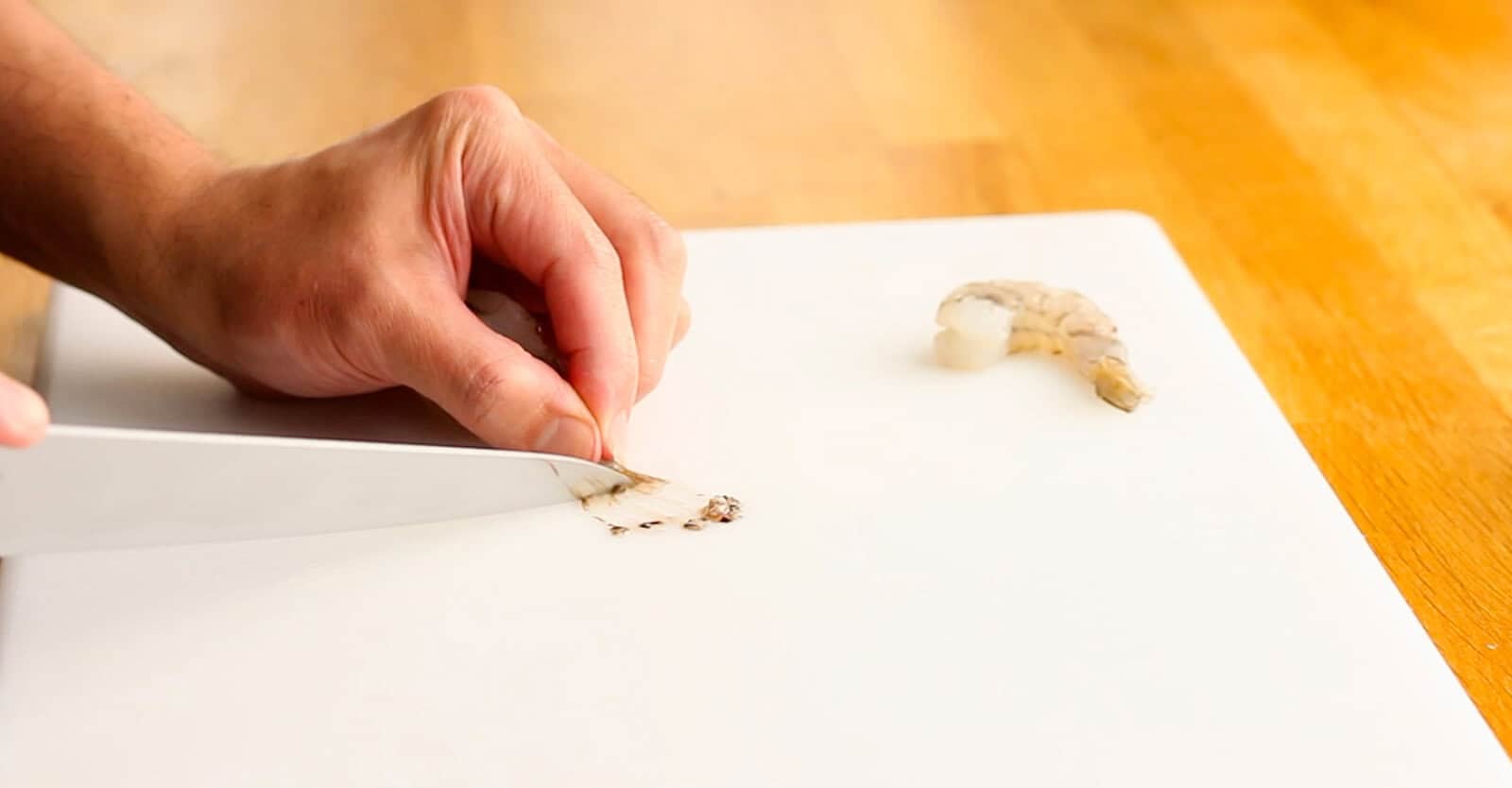
Start by peeling and deveining two shrimp, leaving the tails intact. Using the tip of your knife, carefully scrape the tails to remove any trapped moisture and debris. This is an important safety step, as moisture trapped in the tails can cause hot oil to splatter when frying.
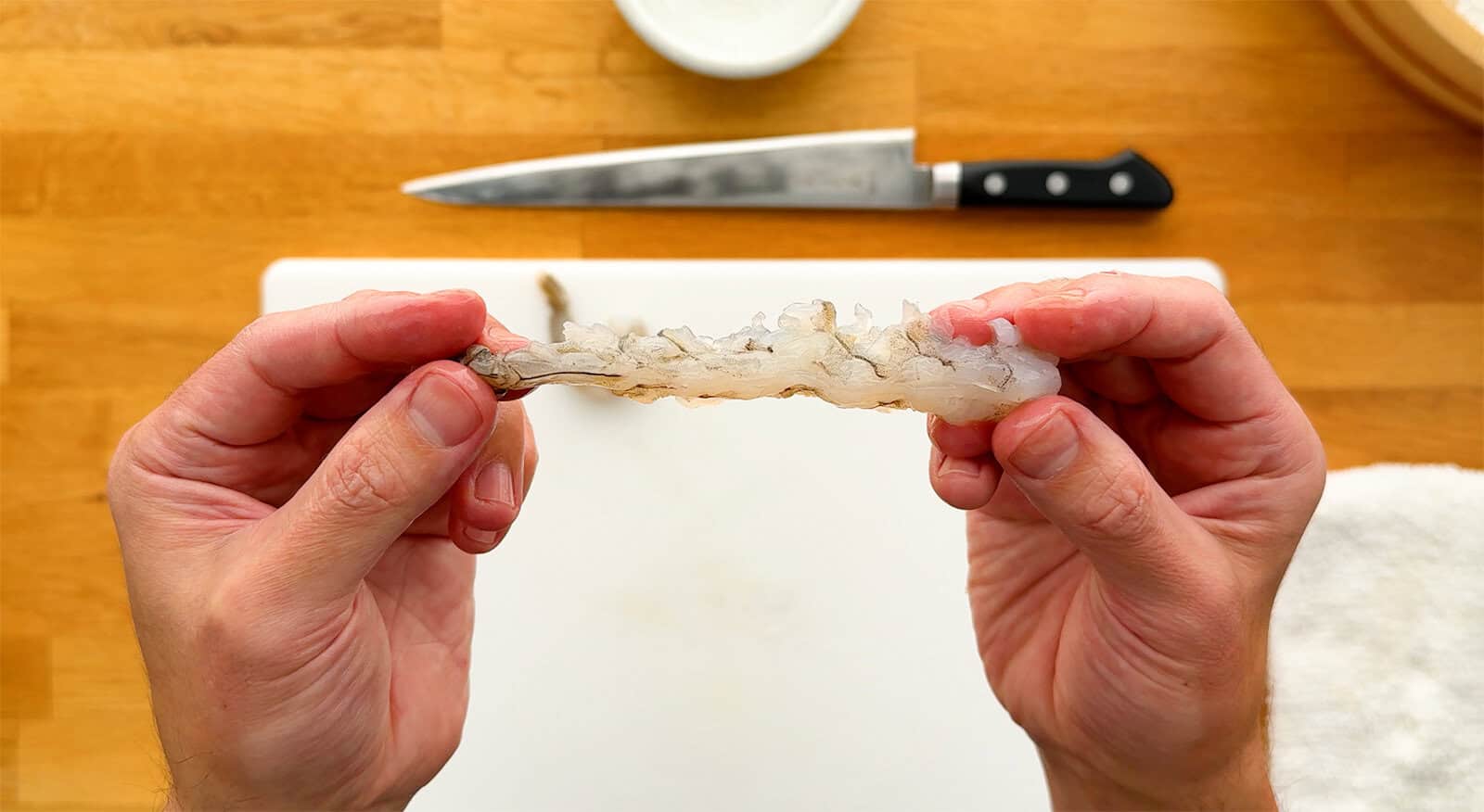
Next, make a few shallow cuts across the belly side of each shrimp. Lay them belly-side down on your cutting board and gently press along their length to straighten them out. This helps prevent the shrimp from curling up when fried.
Once the shrimp are prepared, heat your oil to around 340-350°F. While the oil is heating, prepare the tempurako with cold water according to the package directions. When the oil is ready, lightly dust the shrimp with all-purpose flour, shaking off any excess, then dip them into the batter and carefully lower them into the hot oil. Deep-fry for about 2 minutes, or until crispy and fully cooked. Let the shrimp cool just enough to handle before adding them to the roll.
🍤 No tempurako?
You can also make tempura batter from scratch. Mix 1 large egg with 1 ½ cups of ice-cold water, then add 1 cup of all-purpose flour. Mix with chopsticks and don't worry about getting the batter completely smooth - a few small clumps are actually a good thing. This will make more batter than you need for two shrimp, but it's much easier than trying to scale down an egg.
Don't Have Unagi?
No problem. Plenty of Dragon Rolls are made with shrimp tempura inside and just avocado layered over the top. Simply leave out the unagi and cover the entire top of the roll with overlapping avocado slices instead.
Don't Eat Shrimp?
You can substitute asparagus tempura for the shrimp and still get that crispy texture that works so well in a Dragon Roll. Just make sure the asparagus is tender enough to bite through easily once fried.
🍣 Final Thoughts
Dragon Rolls definitely take a little more work than your basic sushi roll, but that's also part of what makes them so fun to make. Once you get the hang of rolling, layering the toppings, and keeping everything together while cutting, you'll have a pretty impressive-looking roll on your hands.
And remember, it doesn't have to look perfect the first time. Even if your avocado slices aren't perfectly even or your dragon looks like it's been through one too many battles across Westeros, I'm sure it'll still taste just as good. 😅
Hopefully this guide gives you the confidence to give one a try at home. And once you've mastered the Dragon Roll, there are plenty more rolls and sushi techniques to tackle next!
🍣 Continue Your Sushi Journey
More Sushi Recipes & Guides
- Easy Sushi Rolls for Beginners
- Shrimp Tempura Rolls
- How to Roll Sushi Without a Bamboo Mat
- How to Make Sushi Rice
Related Videos
🤔Frequently Asked Questions
A Dragon Roll is typically made with shrimp tempura, cucumber, sushi rice, and avocado layered on top. My version also includes broiled unagi (freshwater eel), finished with unagi sauce, spicy mayo, and toasted sesame seeds. Ingredients can vary quite a bit depending on the restaurant.
It depends on the restaurant, but my version of the Dragon Roll contains no raw fish. The shrimp tempura is fried, the unagi is fully cooked and then broiled, and the remaining ingredients are avocado, cucumber, and sushi rice. It's a great option for anyone who enjoys sushi but prefers to avoid raw seafood.
You can prepare the sushi rice, sauces, and some of the other ingredients ahead of time, but I recommend making the actual roll right before serving. The shrimp tempura tastes best while it's still crispy, the unagi is more tender when it's warm, and freshly sliced avocado looks and tastes better than avocado that's been sitting around for hours.
Dragon Rolls are best enjoyed fresh, ideally right after they're made. But if you have leftovers, store them in an airtight container in the refrigerator and eat them within 24 hours. Just keep in mind that the quality will diminish significantly. The shrimp tempura will lose its crispiness, the unagi will become firmer and chewier, the avocado may discolor, and the sushi rice will harden.
Dragon Roll
VIDEO
INGREDIENTS
- ½ cup sushi rice cooked and seasoned
- ½ sheet nori
- 2 pieces frozen pre-fried shrimp tempura
- 2 cucumber sticks each about ½ inch thick and 4 inches long
- 4 slices cooked unagi about 3-4 oz total
- 6-9 slices avocado thinly sliced, about ⅛ inch thick
- Unagi sauce for drizzling
- Spicy mayo for drizzling (optional)
- Ground toasted sesame seeds optional
INSTRUCTIONS
Prepare the Ingredients
- Prepare the shrimp tempura. Cook the frozen pre-fried shrimp tempura according to the package instructions. I recommend using an air fryer for convenience or deep-frying for an extra crispy texture.
- Prepare the unagi. Gently wipe off any excess marinade from the cooked unagi. Cut the fillet lengthwise into two halves, then cut four diagonal slices from one half, about 1.5 inches wide and 2 inches long. Line a baking sheet with non-stick aluminum foil, or lightly coat regular foil with vegetable oil to prevent sticking. Arrange the unagi slices skin-side up and broil on high for about 5-6 minutes, roughly 6 inches from the heating element.
- Prepare the cucumber. Cut two cucumber sticks, each about ½ inch thick and 4 inches long.
Make the Sushi Roll
- Prepare the rolling mat. Wrap a bamboo sushi rolling mat (makisu) in plastic wrap. Place half a sheet of nori horizontally on the mat, rough side facing up.
- Spread the sushi rice. Lightly wet your hands with cold water and spread about ½ cup of sushi rice evenly over the nori, all the way to the edges. Avoid pressing the rice down too firmly.
- Flip the nori. Carefully flip the nori over so the rice is facing down, leaving about a 1-inch gap between the bottom edge of the nori and the bottom edge of the rolling mat.
- Add the fillings. Arrange the two cucumber sticks across the center of the nori, end to end. Place the two shrimp tempura alongside them, also end to end, with the tails pointing out from opposite ends of the roll.
- Roll the sushi. Lift the bottom edge of the rolling mat and fold the nori over the fillings. Continue rolling until the nori wraps around the fillings, then pull the far end of the mat away while holding the roll in place to tighten it. Gently shape the roll and press in the ends if needed.
Add the Toppings
- Slice the avocado. Cut the avocado in half lengthwise. Remove the skin from one half and place it flat-side down on a cutting board. Starting at one end, slice crosswise into 6-9 thin pieces, about ⅛ inch thick. Leave the remaining avocado unsliced and save it for another use.
- Arrange the toppings. Place the four slices of broiled unagi evenly along the top of the sushi roll, skin-side down, with one piece at each end. Fill the three spaces between the unagi with 2-3 avocado slices each, alternating between unagi and avocado along the length of the roll.
- Shape the toppings. Cover the roll tightly with plastic wrap, leaving a few extra inches extending past the far side of the roll (away from you). Make sure the plastic is snug against the toppings with as little air space as possible. Place the bamboo rolling mat over the plastic and gently press to shape the toppings around the roll. Keep the plastic wrap in place for cutting.
Slice and Serve
- Cut the roll. With the plastic wrap still in place, use a sharp knife to cut the roll in half, then into quarters, and finally into eight even pieces. Wipe and lightly wet the blade between cuts to prevent sticking. Avoid cutting through the extra plastic extending beyond the far side of the roll so it stays connected and can be removed in one piece.
- Finish shaping. With the plastic wrap still covering the roll, gently press and shape the pieces with the bamboo rolling mat if needed. Carefully remove the plastic wrap.
- Add the finishing touches. Arrange the eight pieces on a serving plate. Drizzle with unagi sauce and spicy mayo (if using), then sprinkle with ground toasted sesame seeds. Serve immediately while the shrimp tempura is still crispy and the unagi is warm, with soy sauce, wasabi, and pickled ginger on the side if desired.


Leave a Reply