
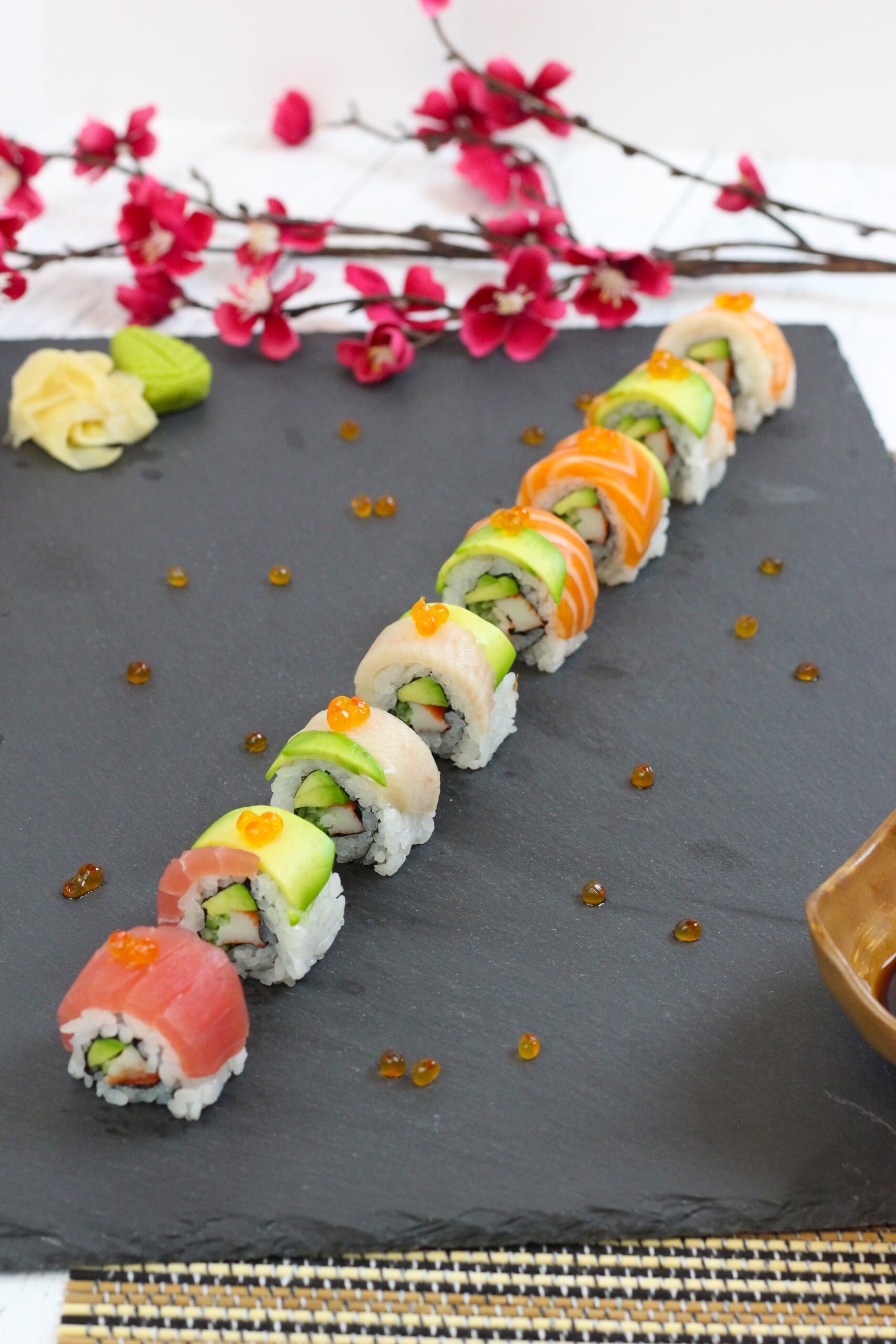
Looking for the one roll that can satisfy all your sushi taste buds? Well, you found the right page! The Rainbow Roll is one of the most variety-packed and well-balanced sushi rolls that you can find, and I'll show you how to make it step-by-step, from the comfort of your own home.
Jump to:
❤️ Why You'll Love the Rainbow Roll
- Balance! - What's NOT to love? The sweet, vinegared sushi rice with creamy, rich avocado and a mild crunch of cucumber, all working in perfect harmony with the different fish and seafood.
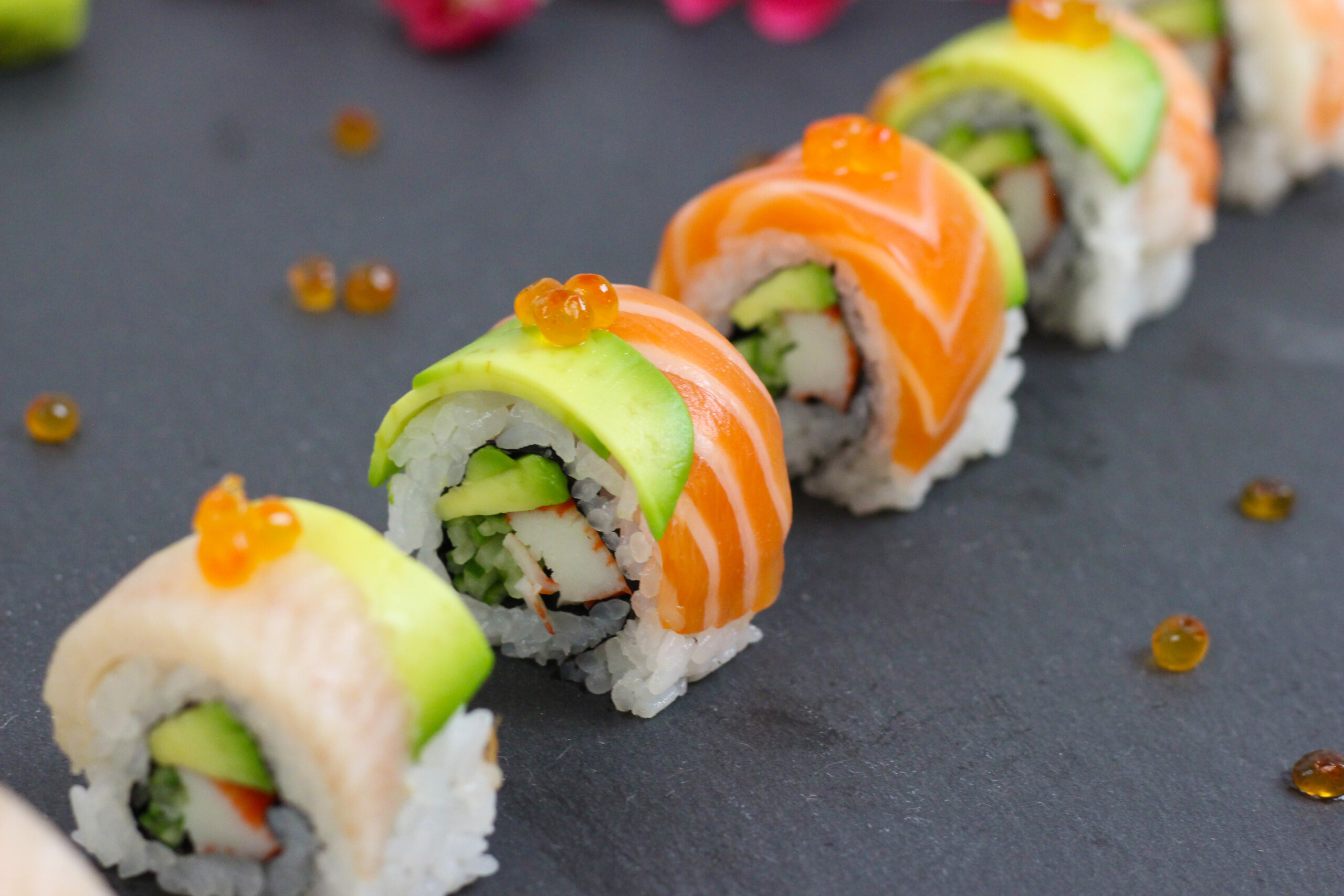
- Presentation - Not only is it delicious but the vibrant and colorful presentation makes it visually appealing as well.
- Versatility - On top of all that, it’s a very versatile roll where you can easily change out the ingredients according to your own preference.
🍲 Ingredients
- Sushi Rice - The most important ingredient in any type of sushi is the sushi rice, so make sure to get this part correct. Watch my tutorial video on how to make the perfect sushi rice at home: How to Make Sushi Rice.
- Nori (Dried seaweed) - Nori is a crucial ingredient in sushi rolls and using good quality nori does make a huge difference. I recommend using a higher grade one that is typically more black in color and thicker. Stay away from the thin (almost translucent) green colored ones.
- Fillings - Avocado, cucumber (Japanese, English, or Persian works best), kanikama (imitation crab meat).
- Seafood (layered on top) - Maguro (tuna), sake (salmon), hamachi (yellowtail), ebi (shrimp).
- Garnishes - Wasabi, pickled ginger, soy sauce, toasted sesame seeds, ikura (salmon roe)
👩🍳 How to Make a Rainbow Roll
- Make sushi rice by following the tutorial video above.
- Cut and prepare all vegetables and fillings.
- Cut one slice each of the seafood to layer on top (tuna, salmon, yellowtail, and shrimp).
- Place one half sheet of nori onto a makisu (bamboo rolling mat) and spread the sushi rice all across evenly.
- Flip the rice and nori over so that the seaweed side is on top.
- Add fillings in the middle all the way across and roll the nori and rice around it, making sure it seals completely as you roll.
- Place the tuna, salmon, yellowtail, and shrimp on top with thin slices of avocado in between each piece.
- Place a sheet of plastic wrap on top and use the bamboo rolling mat to tighten and shape the fish onto the roll.
- Cut the roll into eight even pieces.
- Top it with a few pieces of ikura on top (optional).
- Plate and serve with a side of wasabi, ginger, and soy sauce.
🪄 Tips and Tricks
- Make sure to wet your hands thoroughly (but not drenched) before touching the sushi rice.
- When flipping the nori and rice, leave about an inch of space from the bottom of the makisu to the bottom of the nori. This leaves just enough space which makes it easier to roll.
- Tighten the roll after the initial wrapping of the fillings by pulling the upper end of the makisu away from you while holding the roll with the other hand.
- Cut the roll with the sheet of plastic still on. But make sure to leave the top part of the plastic intact.
- Clean and wet the knife right before cutting.
🗒 Variations
The Rainbow Roll gets it's name because of the vibrant and various colors of the fish wrapped around the roll, but there are many different variations of it. My recipe is pretty standard and is what you typically see at sushi restaurants, however you're more than welcome to swap out any of the ingredients to your liking. Here are some other good options:
- All cooked - If you're looking for a non-raw version, then you can use ingredients like smoked salmon, broiled unagi (freshwater eel), shrimp, and crab.
- Vegetarian - You can also make it vegetarian by using ingredients such as avocado, asparagus, cucumber, carrot, or mango is a great option that as some really nice colors as well.
- Seasonal fish - If you have a good source of fresh seafood, then explore with different seasonal fish such as saba (mackerel), tai (sea bream), kanpachi (amberjack), hirame (flounder), etc.
🗒 Best served with
- Miso soup - This is an obvious one. Sushi in general is always a nice pairing with miso soup. Check out this video here to learn how to make my favorite version of it.
- Salad - Though the Rainbow Roll has vegetables in it, it can't hurt to have more right? A simple green salad or cold tomato salad is a great, healthy addition to complete the meal.
- Edamame - Plain with some sprinkled salt or try out my spicy garlic edamame recipe.
🤔 Common Questions
I get asked this a lot and I get it, brown rice does have it's great health benefits but I personally would not recommend using it for sushi. Texture is a very important part of sushi and brown rice tends to be too dense and not sticky enough. Traditional white Japanese short grain rice has the perfect consistency and texture. Brown rice also has a earthy flavor to it which can overpower more delicate types of sushi.
Now that said, the best part of making sushi on your own is so that you can make however you like. So by all means, if brown rice is your thing, then go for it. Just know that it may not come out the same.
The short answer is yes, however it depends on the ingredients, obviously. The sushi rice, nori, vegetables, and the fish should all be gluten-free. The imitation crab meat may sometimes contain gluten so just make sure to read the label carefully. I like to use Kibun kanikama crab sticks which are gluten free.
Sushi is a very difficult food to keep for later. It needs to be stored in the fridge because of the seafood, but then the sushi rice hardens and gets cold. It's best to eat it as soon as you can but if you have to save it, then make sure to wrap it tightly and keep it in the cooler.
Rainbow Roll
VIDEO
EQUIPMENT
- 1 Makisu Bamboo Rolling Mat
- 1 Cutting board
- 1 Knife
- 1 Bowl For cold water to wet hands
- Plastic wrap
- 1 Serving plate
INGREDIENTS
- ½ cup Sushi rice
- 1 half sheet Nori Dried seaweed
- ½ Avocado for top layer and inside roll
- 4 inches Cucumber English or Japanese
- 1-2 stick(s) Kanikama Imitation crab meat
- 1 slice Maguro (tuna) Sushi grade
- 1 slice Sake (salmon) Sushi grade
- 1 slice Hamachi (yellowtail) Sushi grade
- 1 piece Ebi (shrimp) Prepared for sushi
- Wasabi
- Pickled ginger
- Soy sauce
- Ikura (salmon roe) or Tobiko (flying fish roe) for garnish Optional
INSTRUCTIONS
Preparation
- Gather all ingredients.
- Peel the cucumber by using the katsuramuki technique to create a thin sheet and slice into thin strips, or simply cut into thicker sticks if preferred. Set aside.
- Cut 6 thin slices from the ¼ avocado to layer on top of the roll.
- Cut the remaining avocado into thicker strips for inside the roll. Set aside.
- Prepare the fish by slicing one piece each of your chosen fish (tuna, salmon, yellowtail, shrimp). Each piece should be roughly ⅛-¼ inch thick and slightly smaller than a typical nigiri sushi slice. Set aside.
Preparing the Roll
- Prepare the makisu (bamboo rolling mat) by wrapping it with plastic.
- Lay the makisu down onto a cutting board with the bamboo sticks running horizontally.
- Place a sheet of nori onto the makisu with the rough side up.
- Wet both hands lightly and grab a ball of sushi rice about the size of an apple.
- Spread it across evenly on the nori, making sure to get all the way to the edges and corners.
- Flip the nori over so that the rice side is down. Leave about an inch of space from the bottom of the makisu to the bottom of the nori (this makes it easier to roll).
Adding Fillings
- Place the avocado (thick cuts), cucumber, and kanikama across the center in a horizontal line.
Rolling
- Lift the bottom end of the makisu with your thumbs while holding the fillings in place with your forefingers.
- Bring the mat up and over the fillings until the nori wraps around them completely.
- Pull the makisu from the top (far) end with one hand, while holding the roll in place with the other. This helps tighten the roll so the fillings don't fall out.
- Continue rolling the mat until the nori overlaps onto itself, and then gently apply pressure from all sides using the makisu.
- Press in on the ends of the roll to clean the edges.
Toppings
- Starting at one end, place each slice of fish on top of the roll at a slight angle, leaving small gaps between each piece.
- Place 2–3 thin avocado slices between each fish slice, adjusting as needed depending on size.
- Lightly cover the roll with plastic wrap, leaving 3–4 inches of extra plastic extending from the top edge (this will help during cutting).
- Use the makisu to gently press and shape the roll so the fish and avocado adhere evenly to the surface.
Cutting and Plating
- Place roll onto the cutting board without the makisu.
- Keep the plastic wrap on while cutting. Make sure to leave the top section of the plastic still intact so it can easily be removed in one piece.
- Make sure knife is clean and wet it right before you start cutting.
- Cut the roll right down the center in half first, and then each half into halves again, and now each quarter into halves again. This should total 8 even pieces.
- Arrange the rolls neatly on a plate and add ikura, tobiko, or masago on top of each piece for garnish (optional).
- Serve with some wasabi, pickled ginger, and soy sauce on the side.


Leave a Reply