
Cucumbers are a go-to in sushi for good reason. They add a clean, refreshing flavor and that perfect bit of crunch, whether in a roll, on gunkanmaki, or as a garnish. In this post, I’ll cover two key things: how to choose the right cucumber and how to cut it like a pro. Now let's jump right in!
🥒What Type of Cucumber?
There are a lot of cucumber varieties out there, but most grocery stores in the U.S. only carry a few.

To keep things simple, stick with:
- English cucumbers
- Japanese cucumbers
- Persian cucumbers
These tend to have thinner skin, fewer seeds, and a better overall texture for sushi.
Try to avoid standard slicing cucumbers. They’re usually shorter, thicker, and have more seeds, which can make them slightly bitter and less pleasant to work with. Removing the seeded core is important anyway, since it can add unwanted moisture to your rolls.
When picking one out, look for a cucumber that’s firm and relatively straight. It'll help make your cuts cleaner and more consistent.
🔪Cutting Cucumber for Sushi
Cutting cucumber for sushi is pretty straightforward, but there are a few different methods depending on your skill level and what you’re making.
If you already have a method that works for you, stick with it. But if you’re looking to improve your technique, here are two solid approaches.
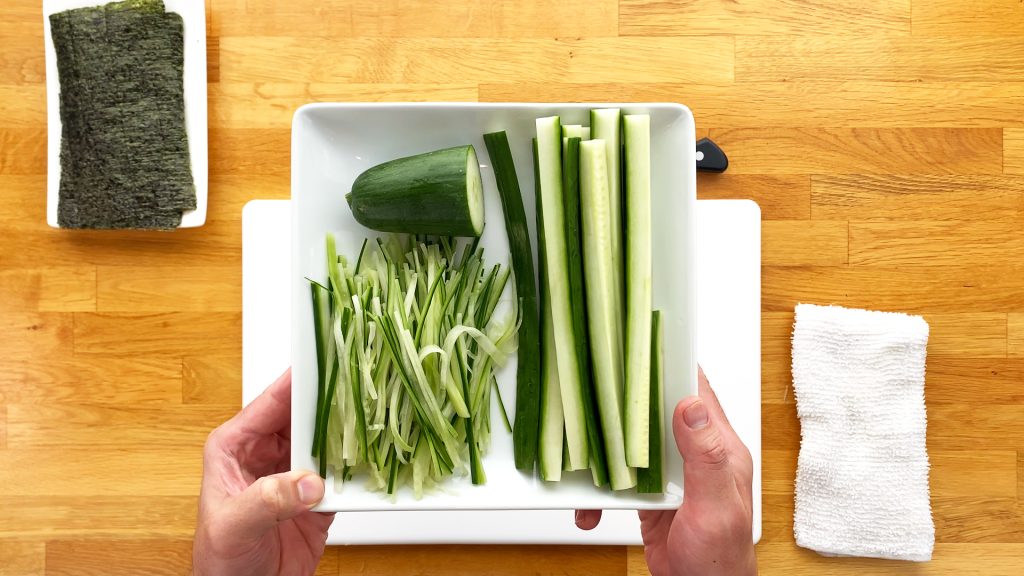
Method 1: Basic (Beginner-Friendly)
This is the method I recommend starting with.
- Cut the cucumber to the same length as a sheet of nori
- Slice into roughly ½-inch strips lengthwise
- Cut out the center seed section
The goal is to create uniform pieces so your rolls come together cleanly. Consistent size and shape make a big difference in both texture and presentation.
Method 2: Katsuramuki (Advanced)
This is a traditional Japanese technique where you peel the cucumber into a thin, continuous sheet, then cut it into fine strands.
You’ve probably seen something similar with daikon in sashimi presentations.
A couple notes:
- This technique takes practice
- It’s easier to start with cucumber before moving to daikon
- Don’t worry if it looks rough at first, practice makes perfect
Once you get the hang of it, you can use this cut for:
- Sushi rolls (makimono)
- Hand rolls (temaki)
- Garnishes or even nigiri
✍️Final Thoughts
Like anything in sushi, this comes down to repetition. Start with the basic method, get comfortable, then try katsuramuki when you’re ready. Over time, your cuts will get cleaner, faster, and more consistent.
🤔Common Questions
Not usually. English, Japanese, and Persian cucumbers have thin, tender skin that works well in sushi. If you’re using a thicker-skinned cucumber, you can peel it, but it’s not always necessary.
The seeded core holds a lot of moisture, which can make your sushi rolls soggy. Removing it helps keep the texture crisp and prevents excess water from affecting the rice.
English, Japanese, and Persian cucumbers are your best options. They have fewer seeds, thinner skin, and a cleaner flavor compared to standard slicing cucumbers.
Start by removing the seeds, then cut the cucumber into even strips. If needed, you can lightly pat the pieces dry with a paper towel before using them.

Leave a Reply