
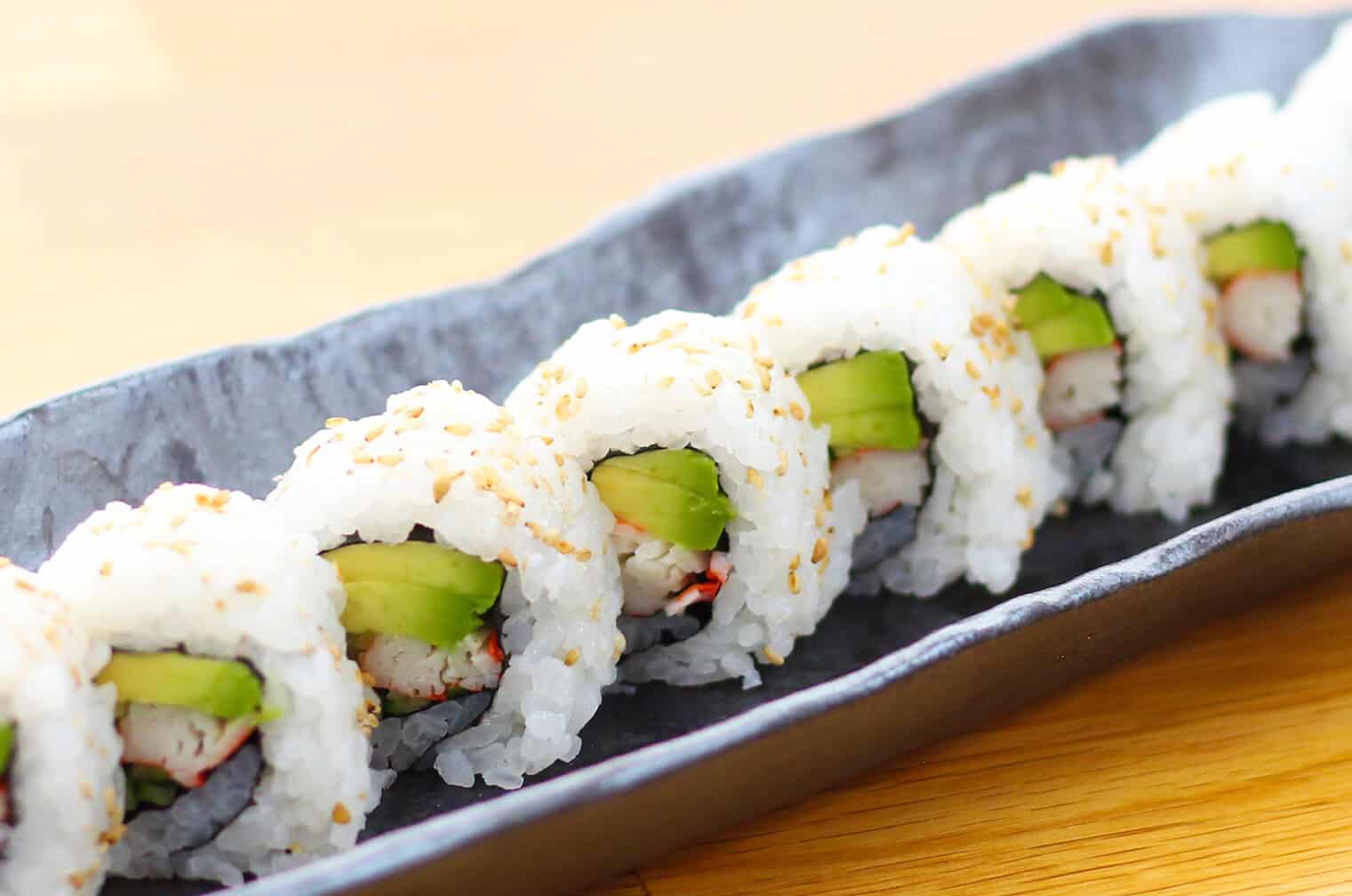
At first, making sushi at home can feel like one of those hobbies that sounds relaxing until you actually try it. Then suddenly there’s rice everywhere, your roll won’t close, and you’re questioning all your life decisions.
But the truth is, beginner sushi doesn’t need to be complicated.
In fact, some of the best sushi rolls for beginners are actually very simple to make and only require a few ingredients. No apprenticeship in Tokyo or $400 sushi knife required.
The key is starting with rolls that are forgiving, use ingredients that are easy to source, and don’t require advanced knife skills or difficult techniques.
If you’re just getting started, these are the sushi rolls I’d recommend learning first.
Jump to:
- 🍣 What Makes a Sushi Roll Beginner Friendly?
- 🎥 Watch These Beginner Sushi Rolls Step-by-Step
- 1. California Roll
- 2. Tuna Roll (Tekkamaki)
- 3. Cucumber Roll (Kappamaki)
- 4. Salmon Avocado Roll
- 5. Shrimp Tempura Roll
- 6. Philadelphia Roll
- 7. Negihama Roll
- 🍚 A Few Tips That Will Make Sushi Much Easier
- 🐟 Where to Buy Fish for Homemade Sushi
- 🍣 Final Thoughts
- 🍣 Continue Your Sushi Journey
- ❓Common Questions (FAQ)
🍣 What Makes a Sushi Roll Beginner Friendly?
Not all sushi rolls are created equal.
Some rolls are packed with multiple fillings, sauces, crunchy toppings, and enough ingredients to collapse under their own emotional weight the second you try to roll them. Others are simple, balanced, and much easier to control.
When you’re first learning, simpler is better.
A beginner-friendly sushi roll usually has:
- Fewer ingredients
- Fillings that hold their shape (often cooked)
- A simple rolling technique
- Ingredients that are easy to find
- Minimal toppings and garnish
The goal in the beginning isn’t perfection. It’s building confidence and learning how sushi feels in your hands.
And trust me, your first few rolls probably won’t look restaurant quality. Most beginners end up making something vaguely shaped like an exploding Chipotle burrito that had one ingredient too many. That’s completely normal.
Once you understand the basics, like rice amount, rolling pressure, and not overstuffing everything, sushi starts becoming much easier and a lot more fun.
🎥 Watch These Beginner Sushi Rolls Step-by-Step
If you want to see beginner-friendly sushi rolls made from start to finish, check out the video below.
The rolls in this video are slightly different from the list in this post. They take a more relaxed, real-world beginner approach using easy grocery store ingredients rather than traditional starter rolls.
These are great beginner sushi rolls you can easily make at home. One of the biggest barriers for people is actually just the ingredients, and this video removes that problem entirely. Everything used here can be picked up at a regular grocery store, so there’s no need to track down a specialty seafood shop or Asian market.
That makes the whole process feel much more approachable, especially if you’re trying sushi for the first time.
This video also isn’t just about technique. It’s for anyone who’s curious about trying sushi but isn’t quite comfortable with it yet. Since there’s no raw fish involved, these rolls are also perfect for young kids (my 7-year-old can easily devour 2–3 whole rolls himself) and sushi newcomers alike.
Seeing the process visually can make a huge difference when you’re first learning.
1. California Roll
Difficulty: Easy
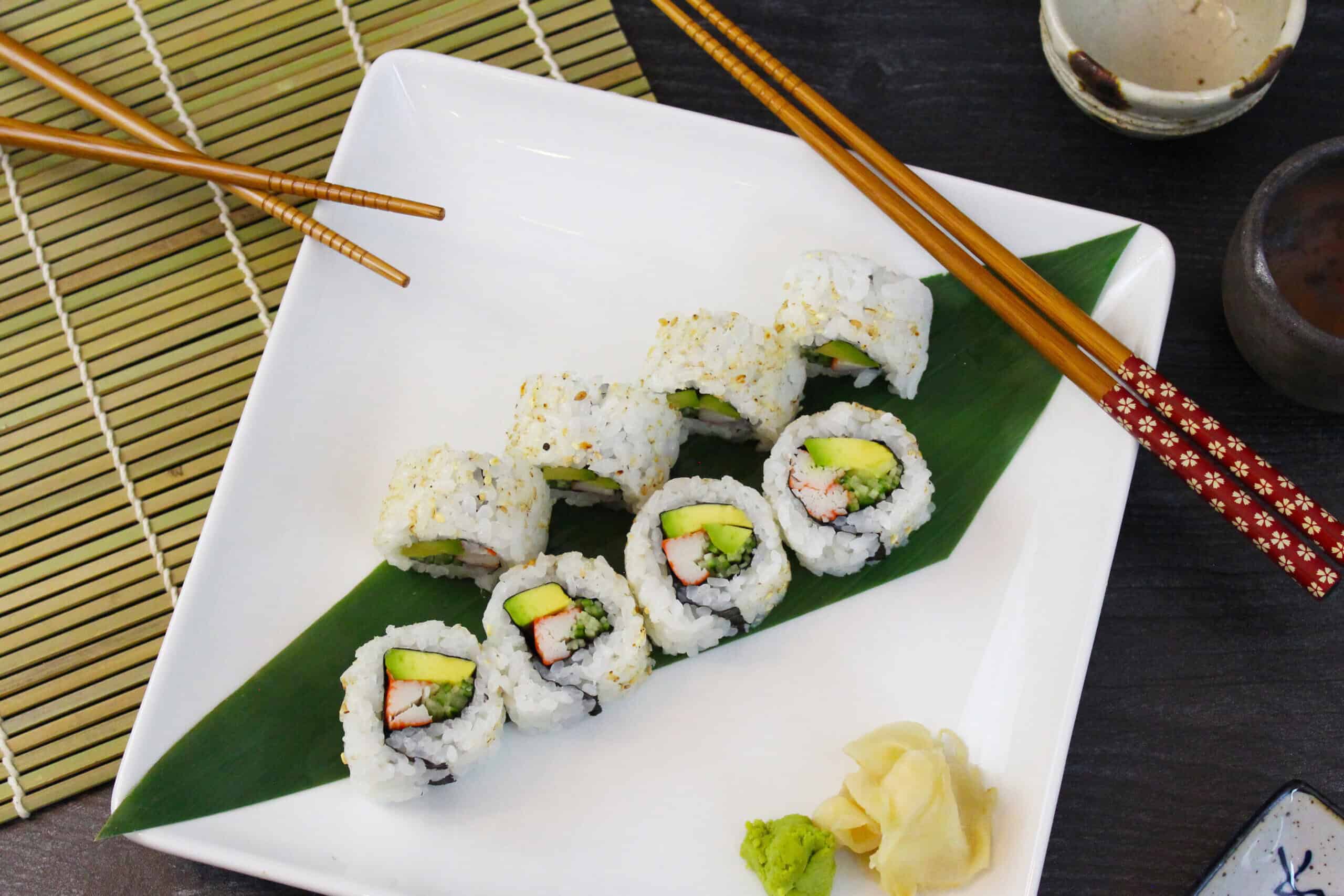
The California roll is probably the best first sushi roll for most beginners, both to eat and to make.
It’s simple, approachable, and uses cooked ingredients that are easy to find, which makes it a lot less intimidating if you’re new to sushi.
Traditional ingredients:
- Imitation crab
- Avocado
- Cucumber
- Sushi rice
- Nori
- Sesame seeds (optional)
The texture combination is soft, balanced, and easy to roll without the ingredients fighting you every step of the way.
Why It’s Great for Beginners
- No raw fish
- Easy ingredients to find
- Forgiving to roll
- Familiar flavor for most people
Common Beginner Mistake
Overfilling the roll.
A lot of beginners try to pack in too much avocado or crab, which makes the roll difficult to close properly. If the imitation crab sticks are too large, just cut or tear them into smaller pieces.
Start lighter than you think you need. Sushi rolls are more forgiving than they look, but only if you don’t overload them.
2. Tuna Roll (Tekkamaki)
Difficulty: Easy
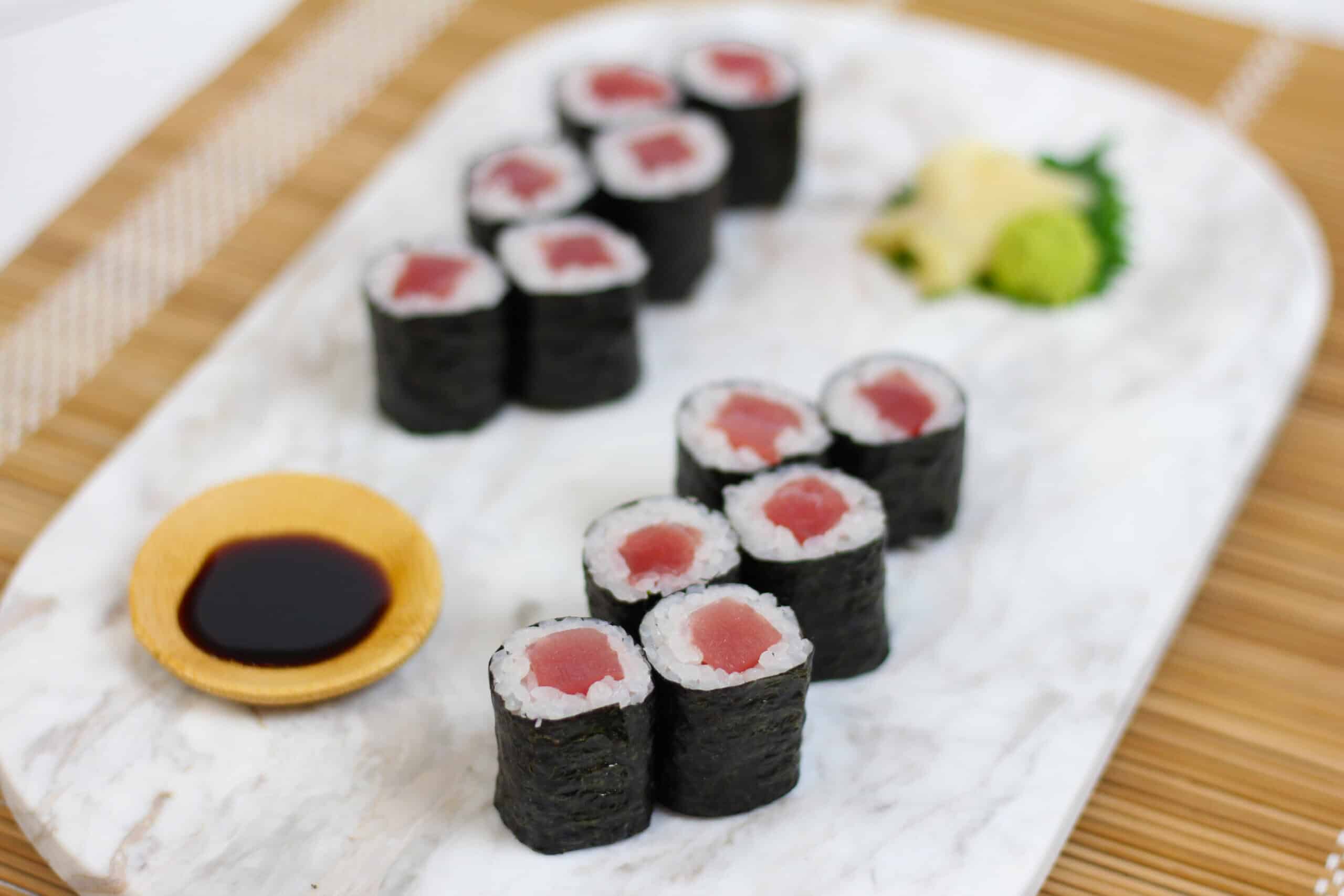
The tuna roll is one of the simplest traditional sushi rolls you can make, which makes it great for practicing the basics without distractions.
Traditional ingredients:
- Tuna
- Sushi rice
- Nori
Since this roll only has a few ingredients, it becomes even more important that each one is good quality. Rolls like this are called hosomaki, which have the seaweed on the outside and typically only includes one or two fillings. They’re much thinner than inside-out rolls (uramaki), like the California roll.
Why It’s Great for Beginners
- Very simple ingredient list
- Easy to swap fillings and create different hosomaki variations
- Great foundation for learning basic rolling technique
- No complicated components
Common Beginner Mistake
Using too much rice and filling.
Make sure to leave a small strip of empty nori at the top so the roll can seal properly. Also avoid overfilling. Too much filling will make the roll difficult to close and nearly impossible to seal cleanly.
3. Cucumber Roll (Kappamaki)
Difficulty: Very Easy
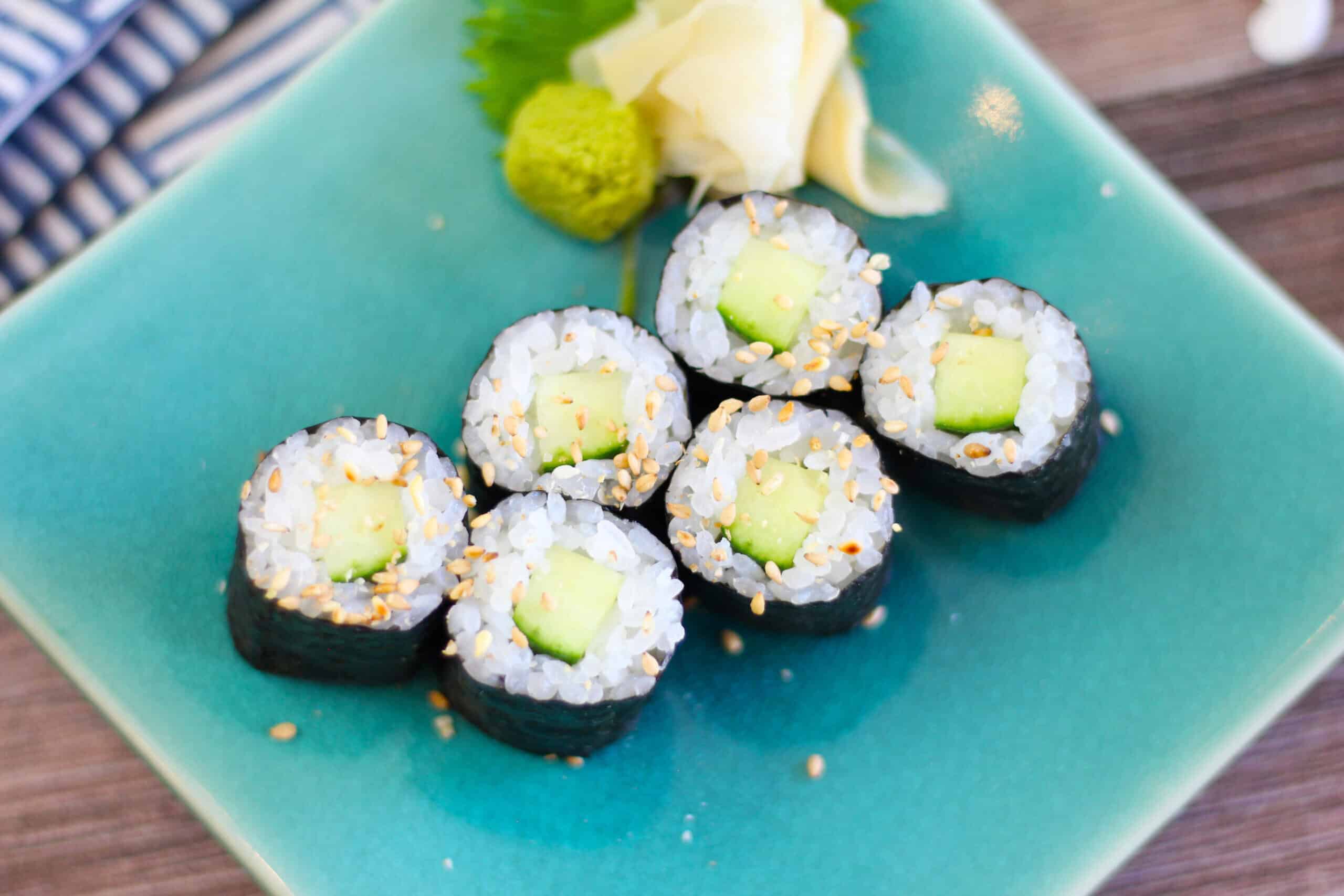
This is about as simple as sushi gets, which makes it perfect for your very first practice rolls.
Traditional ingredients:
- Cucumber
- Sushi rice
- Nori
It’s light, refreshing, and extremely forgiving. Since cucumber is firm and consistent, it’s much easier to roll tightly without things shifting around.
Why It’s Great for Beginners
- Extremely simple structure
- Very easy to roll tightly
- Cheap and easy to find ingredients
- Great for practicing repetition
Common Beginner Mistake
Cutting the cucumber too thick.
Thinner, even strips make rolling much easier and help the roll stay tight and uniform.
Check out my full guide on how to prepare cucumber for sushi if you want a step-by-step tutorial.
4. Salmon Avocado Roll
Difficulty: Easy to Medium
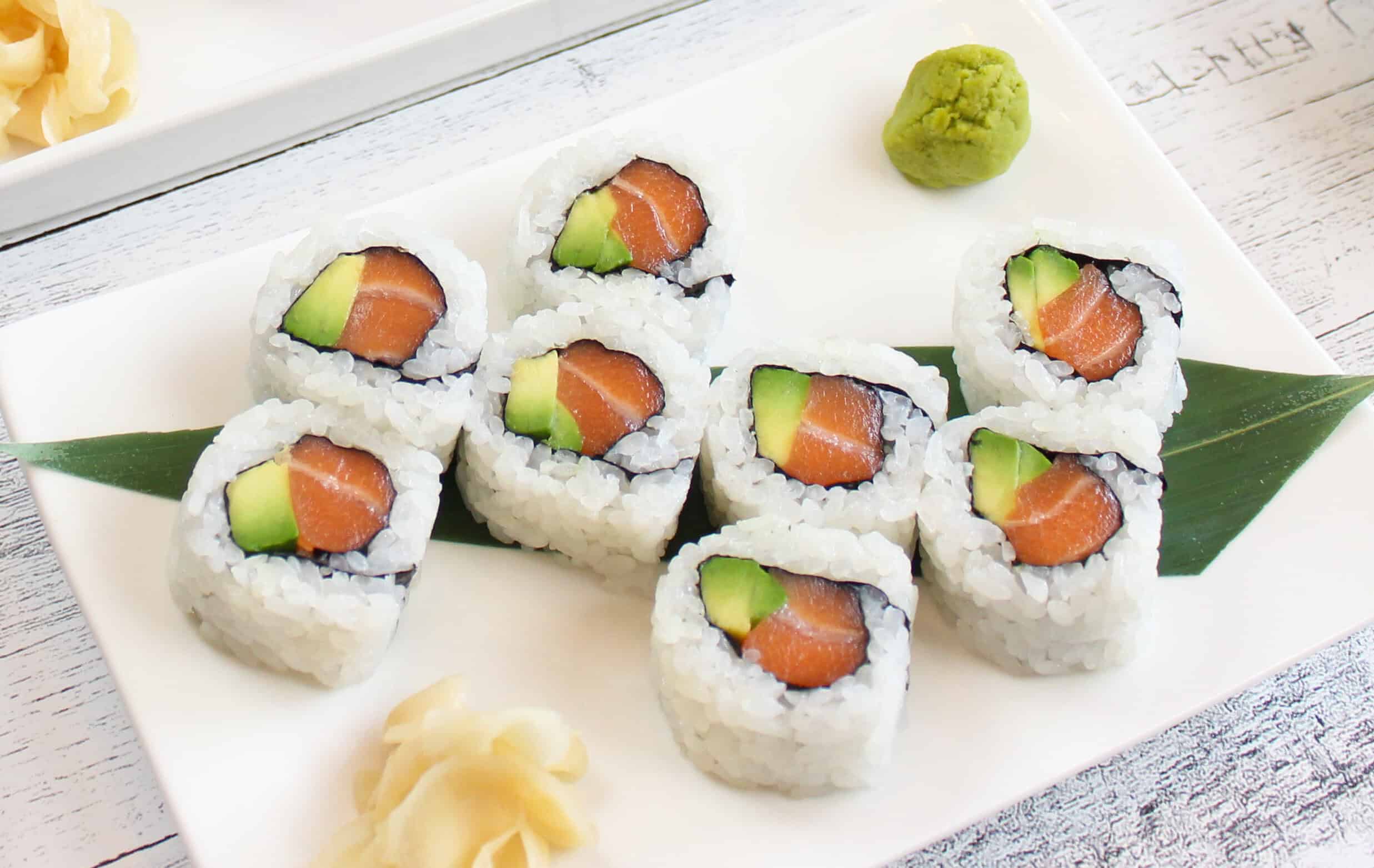
This is one of the most popular beginner-friendly combinations because it’s soft, balanced, and really satisfying to eat.
Traditional ingredients:
- Salmon
- Avocado
- Sushi rice
- Nori
The creamy texture of avocado paired with salmon makes this roll feel “restaurant quality” even when it’s very simple to make at home. You can also use smoked salmon if you’re not comfortable using raw fish yet.
If you are using raw salmon and aren't sure how to cut it for your roll, check out my complete guide: How to Cut Salmon for Sushi & Sashimi.
Why It’s Great for Beginners
- Soft ingredients that roll easily
- Very popular flavor combination
- Easy transition into raw fish (or smoked alternatives)
- Feels more “premium” without extra effort
Common Beginner Mistake
Using overripe avocado.
If the avocado is too soft, it turns into a paste while rolling and makes everything messy. Great for guacamole maybe, but not so great for sushi.
And let’s be honest, picking avocados can be a real pain. Half the time they’re either mushy and bruised or hard enough to qualify as baseballs.
You want the avocado to be slightly soft, but still firm enough to hold its shape when sliced.
And don’t worry, I got you covered. If you want tips on how to pick the perfect avocado and cut it properly for sushi, check out my full guide: How to Cut Avocado for Sushi.
5. Shrimp Tempura Roll
Difficulty: Medium
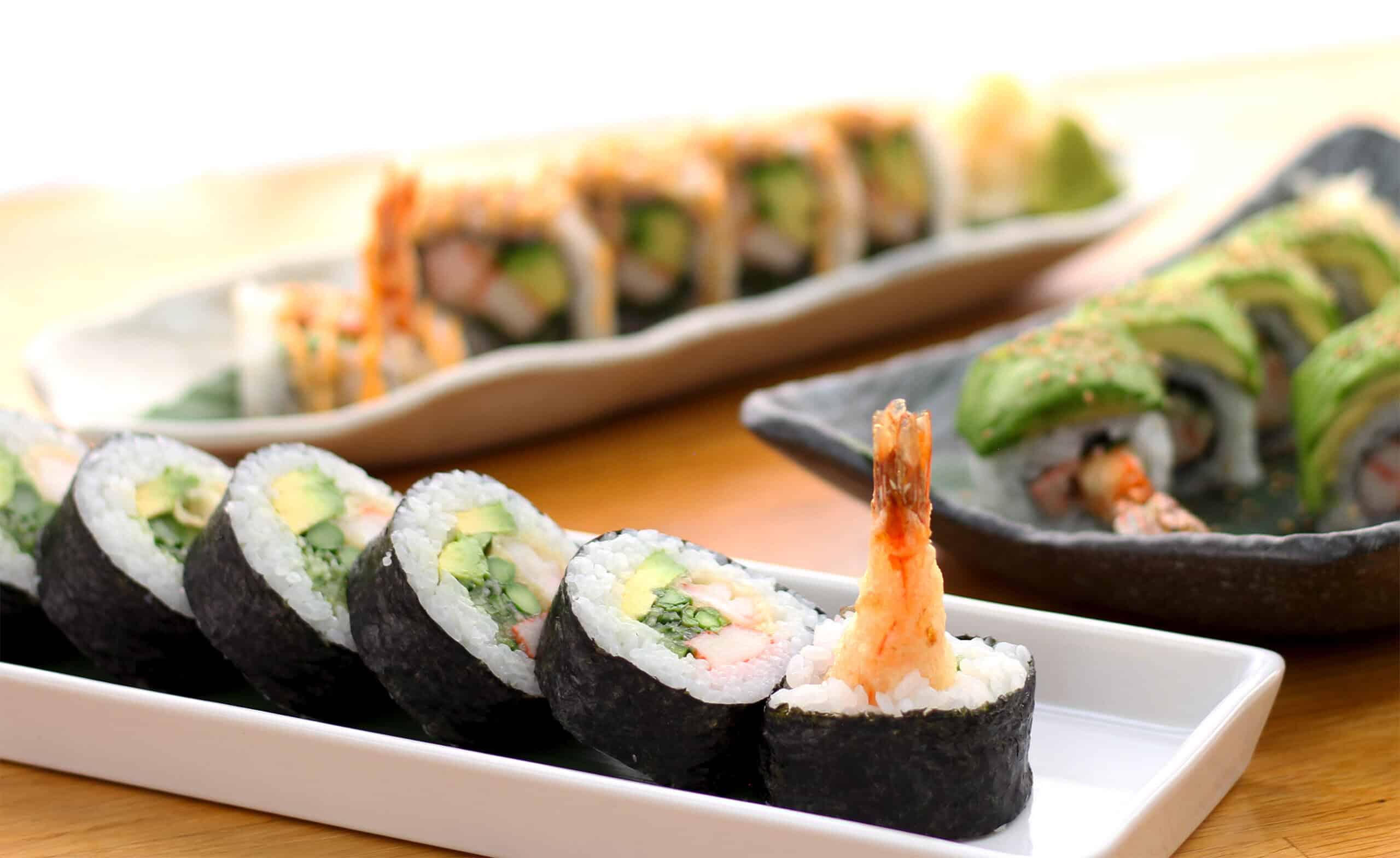
This is a slightly more advanced beginner roll, but still very doable and honestly one of the most rewarding to make at home.
Traditional ingredients:
- Shrimp tempura
- Sushi rice
- Nori
- Cucumber and/or avocado (optional)
The crispy shrimp gives the roll structure and instantly makes it feel more like something you’d order at a restaurant.
To keep things beginner friendly, I highly recommend buying frozen pre-fried shrimp tempura. No need to start deep frying shrimp from scratch while simultaneously trying to learn how to roll sushi. One kitchen crisis at a time.
Most frozen tempura can simply be baked in the oven or crisped up in oil and works perfectly for homemade sushi.
Why It’s Great for Beginners
- Cooked filling (no raw fish)
- Great texture contrast
- Feels more “restaurant-style”
- Helps you practice slightly fuller rolls
Common Beginner Mistake
Adding too many fillings.
It’s really easy to overstuff this roll since the shrimp tempura is already fairly thick on its own. If you want to keep it as a standard uramaki, I’d recommend sticking to just one additional filling like thin cucumber slices or avocado.
Otherwise, things can escalate quickly and suddenly your sushi roll starts looking like a burrito fighting for its life.
If you want multiple fillings inside, it’s better to turn it into a futomaki (large roll) by using a full sheet of nori or laying the nori vertically before rolling.
And here's my full step-by-step guide on how to make shrimp tempura rolls at home.
6. Philadelphia Roll
Difficulty: Easy
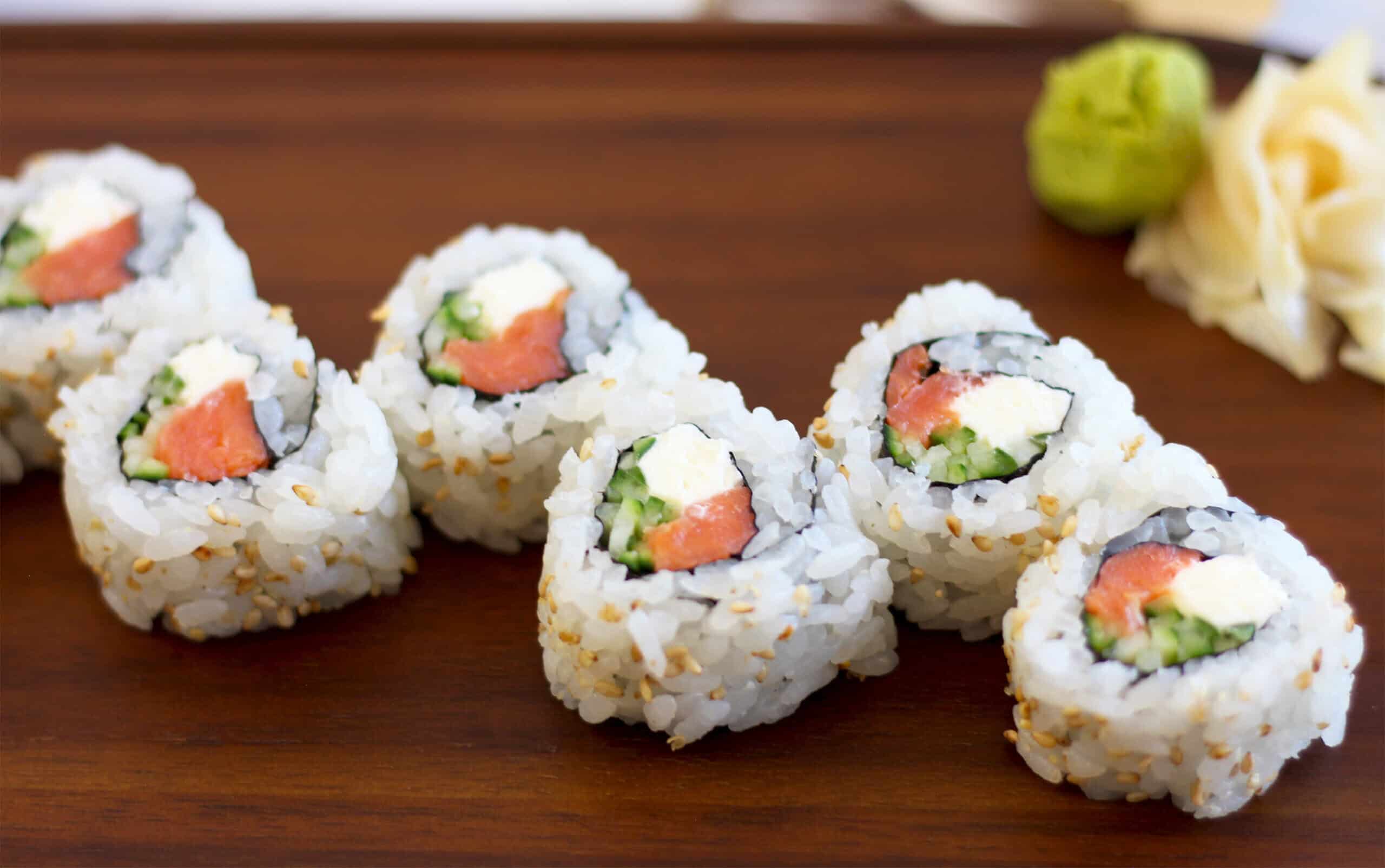
The Philadelphia roll is creamy, rich, and very beginner-friendly thanks to its soft, easy-to-work-with ingredients.
Traditional ingredients:
- Salmon (fresh or smoked)
- Cream cheese
- Cucumber (optional)
- Sushi rice
- Nori
It’s one of those rolls that feels slightly indulgent but is surprisingly simple to make at home. And since smoked salmon is widely available at most grocery stores, this is often one of the easiest “fancy-feeling” sushi rolls for beginners to recreate.
Why It’s Great for Beginners
- Soft, easy-to-manage ingredients
- Smoked salmon can be found almost anywhere
- Easy to customize to your liking
- Very forgiving when rolling
Common Beginner Mistake
Using too much cream cheese.
A little goes a long way here. Overdoing it makes the roll harder to seal and completely takes over the flavor balance. Remember, we’re still making sushi here, not cheesecakes.
If you want to learn how to make three different variations, check out my full guide: Philadelphia Roll: 3 Easy Variations.
7. Negihama Roll
Difficulty: Medium
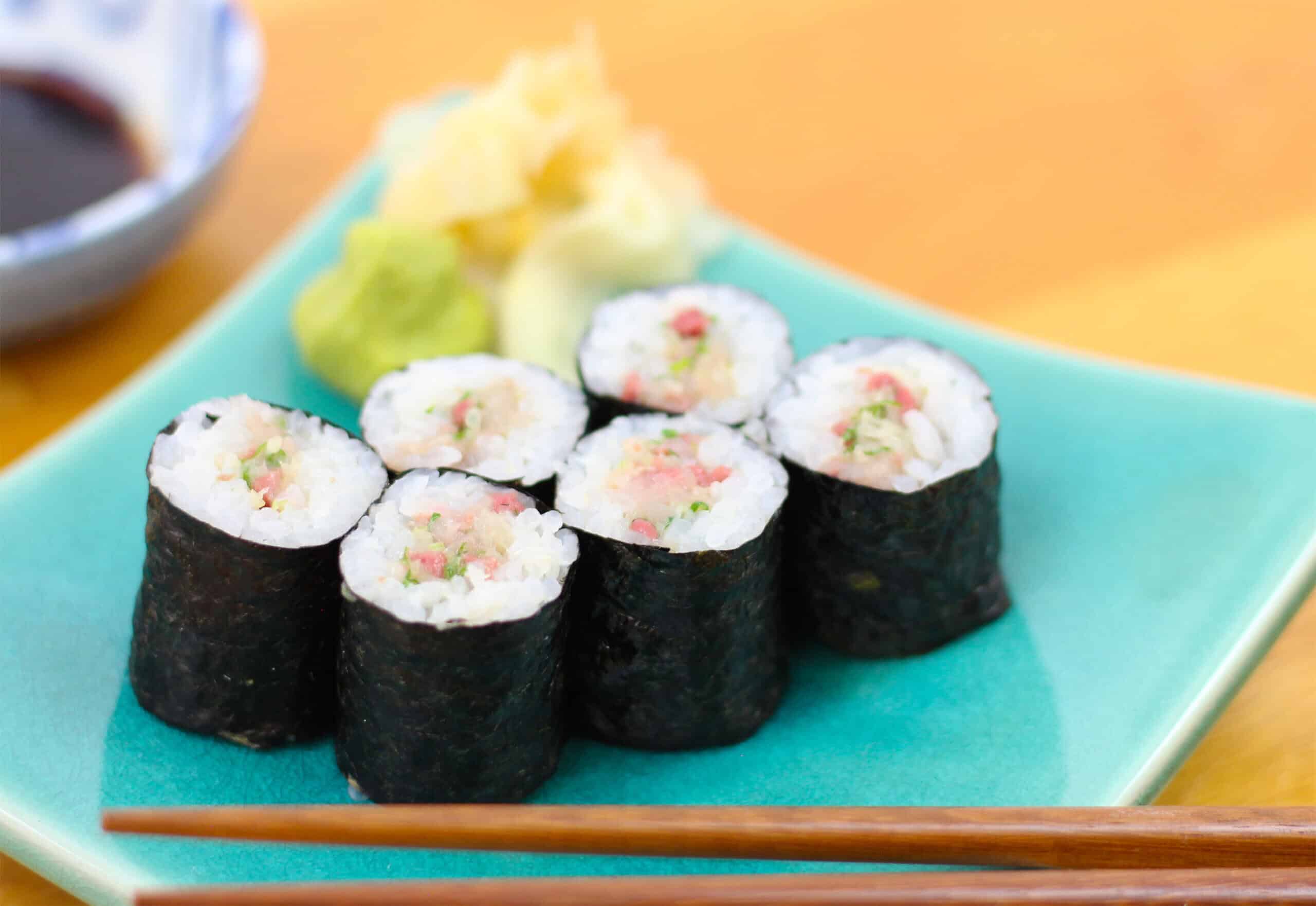
Negihama is a simple but slightly more refined sushi roll made with yellowtail (hamachi) and green onion.
Traditional ingredients:
- Yellowtail (hamachi)
- Green onion
- Sushi rice
- Nori
Even though the ingredient list is minimal, the flavor combination has a surprising amount of depth. The buttery richness of the hamachi paired with the clean, sharp bite of green onion gives it that unmistakable “restaurant-quality” feel.
It’s honestly one of my personal favorites and one of those rolls that quietly makes you feel like you know what you’re doing.
Why It’s Great for Beginners
- Minimal ingredient list
- Great for practicing clean knife work
- Helps you understand balance in flavor and texture
- Simple but high-end taste
Common Beginner Mistake
Leaving the fillings whole.
There are a couple ways to make negihama rolls. You can either leave the hamachi and green onion in larger pieces or finely chop everything together.
Personally, I highly recommend mincing the hamachi and mixing it with very thinly sliced green onion. Chopping the fish helps release its natural oils and gives the filling a much smoother, buttery texture.
Once you try it this way, it’s honestly pretty hard to go back to the basic version. That said, the minced version does add a few extra prep steps, so it can feel slightly more advanced for complete beginners.
🍚 A Few Tips That Will Make Sushi Much Easier
Don’t Overfill Your Rolls
Outside of poorly prepared rice, this is probably the most common beginner mistake.
Most sushi rolls need far less filling than people think. So if your sushi is bursting out the sides, refusing to close, or shaped like an overstuffed sleeping bag being forced back into its case, this is usually the reason why.
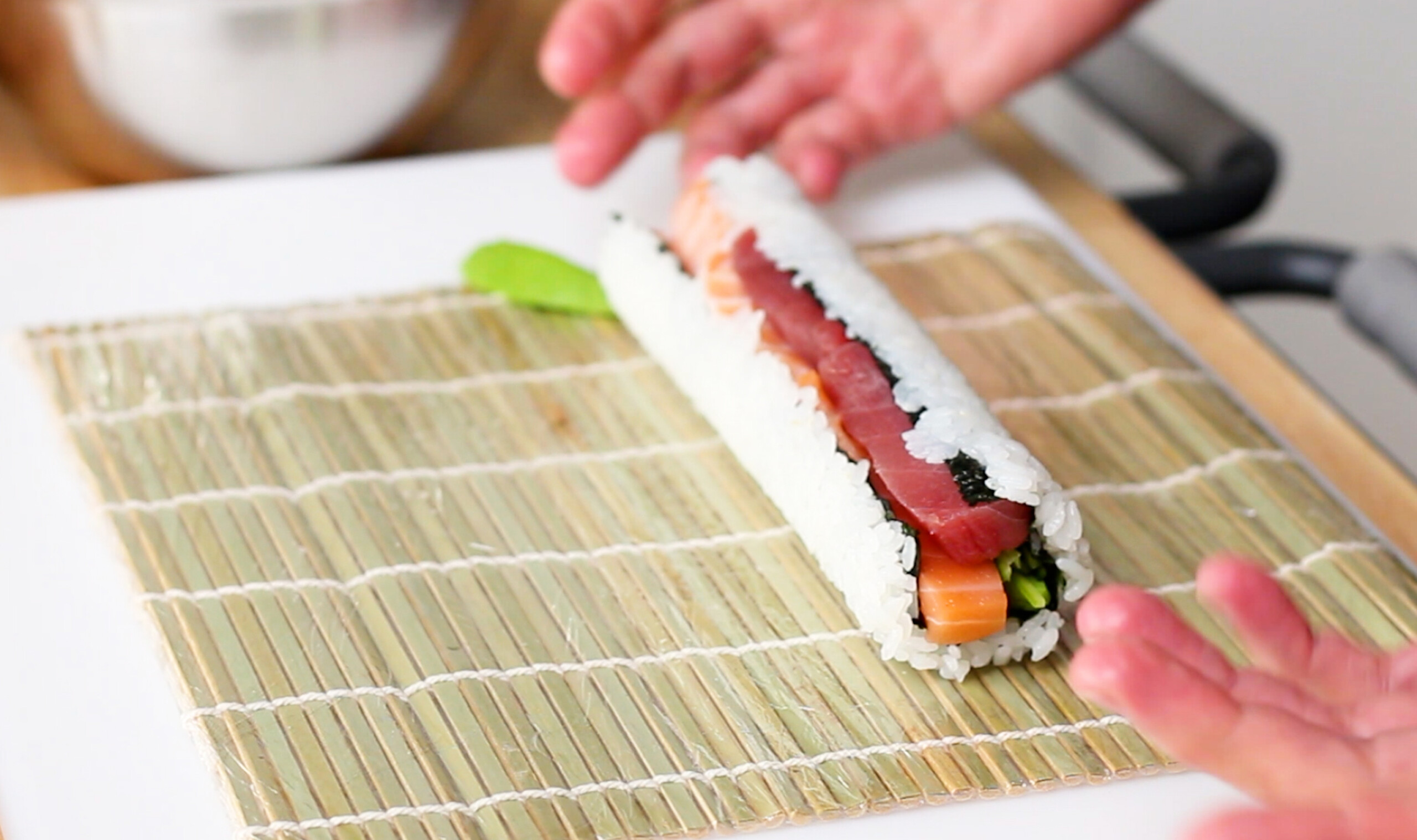
Try using a little less of everything. Simpler rolls almost always turn out better, especially in the beginning.
Keep Your Hands Slightly Wet
Sushi rice is extremely sticky, especially when your hands are dry.
Lightly wetting your fingertips and palms helps prevent the rice from sticking to your hands and actually gets it onto the nori where it belongs.
That said, too much water creates a completely different problem. The rice gets mushy, the nori starts turning limp, and suddenly everything feels vaguely depressing.
You’re aiming for lightly damp hands, not dripping, just a light sheen.
Use a Sharp Knife
A dull knife tends to smush sushi instead of slicing it. It can also tear the nori and spill out all the ingredients like a piñata at a kid’s birthday party.
The best way to prevent a sushi-pocalypse is to use a sharp knife and stick to a smooth slicing motion instead of forcing the blade down.
It also helps to keep the blade clean and lightly dampened with water between slices. A little moisture reduces sticking and helps the knife glide through the roll much more smoothly.
If you want learn more about Japanese knives and want help choosing the right knife for you, check out my full guide: Best Sushi Knives for Beginners.
Focus on Technique First
In the beginning, don’t stress about making perfect restaurant-quality sushi. Sushi takes time and practice. A lot of practice.
Now, I’m not saying you need to become an apprentice in Japan for 10 years, but maybe give yourself more than a couple of tries before entering your “I’m terrible at this” phase. And honestly, if you’ve made it this far in the guide, you’re already on the right track.
What’s important at first is to focus on the fundamentals:
- Making the rice correctly
- Evenly spreading the rice on the nori
- Balanced fillings
- Gentle but firm rolling pressure
- Clean rolling technique
- Slicing instead of pressing straight down with the knife
Keep practicing those basics and your rolls will gradually start to look cleaner, tighter, and much more professional over time.
🐟 Where to Buy Fish for Homemade Sushi
Before we move on, there’s one important thing to keep in mind.
The easiest way to get started with sushi is actually by using ingredients that are readily available and low risk, which often means cooked ingredients. It takes a lot of the pressure off and lets you focus on learning the fundamentals without worrying about handling raw fish right away.
But at the same time… this is sushi after all, and raw fish is a big part of it.
So the next question naturally becomes: where do you actually get fish for sushi at home, and how do you know what’s safe?
The good news is that you don’t necessarily need a specialty fish market to get started, although if you do have access to one, that’s always a great option.
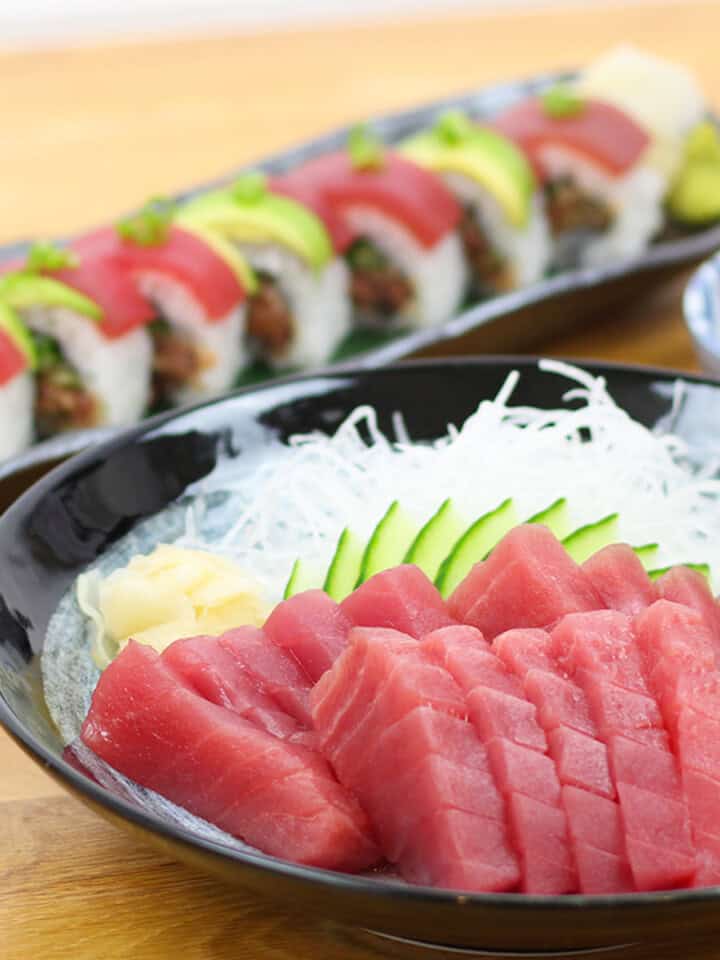
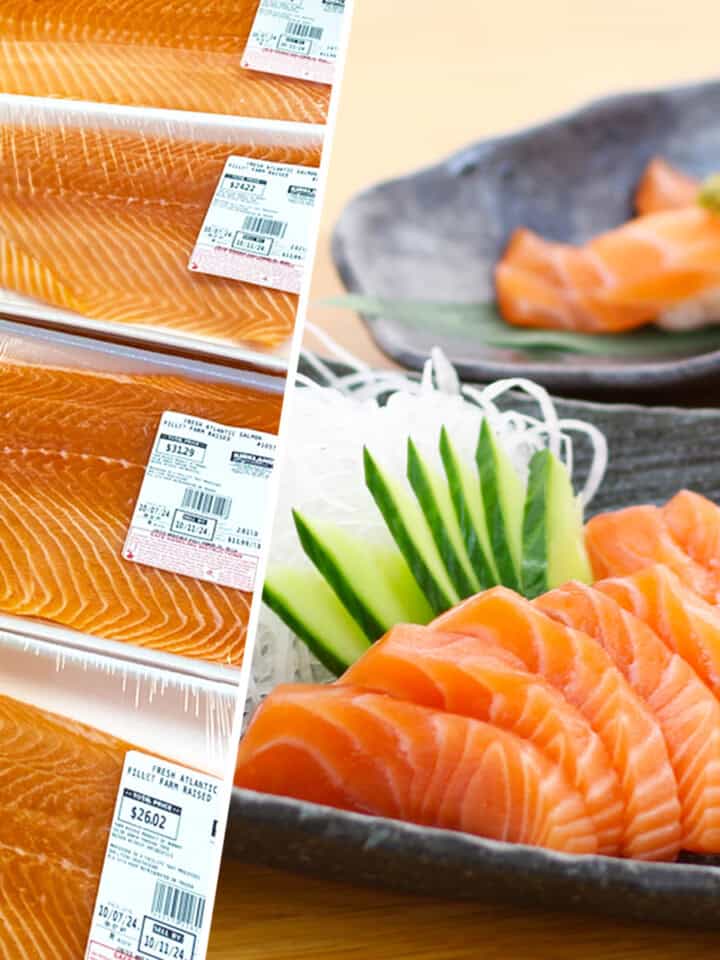
Many people make sushi at home successfully using fresh salmon or tuna from trusted grocery stores and retailers like Whole Foods and Costco. The key is understanding how to source and handle the fish properly.
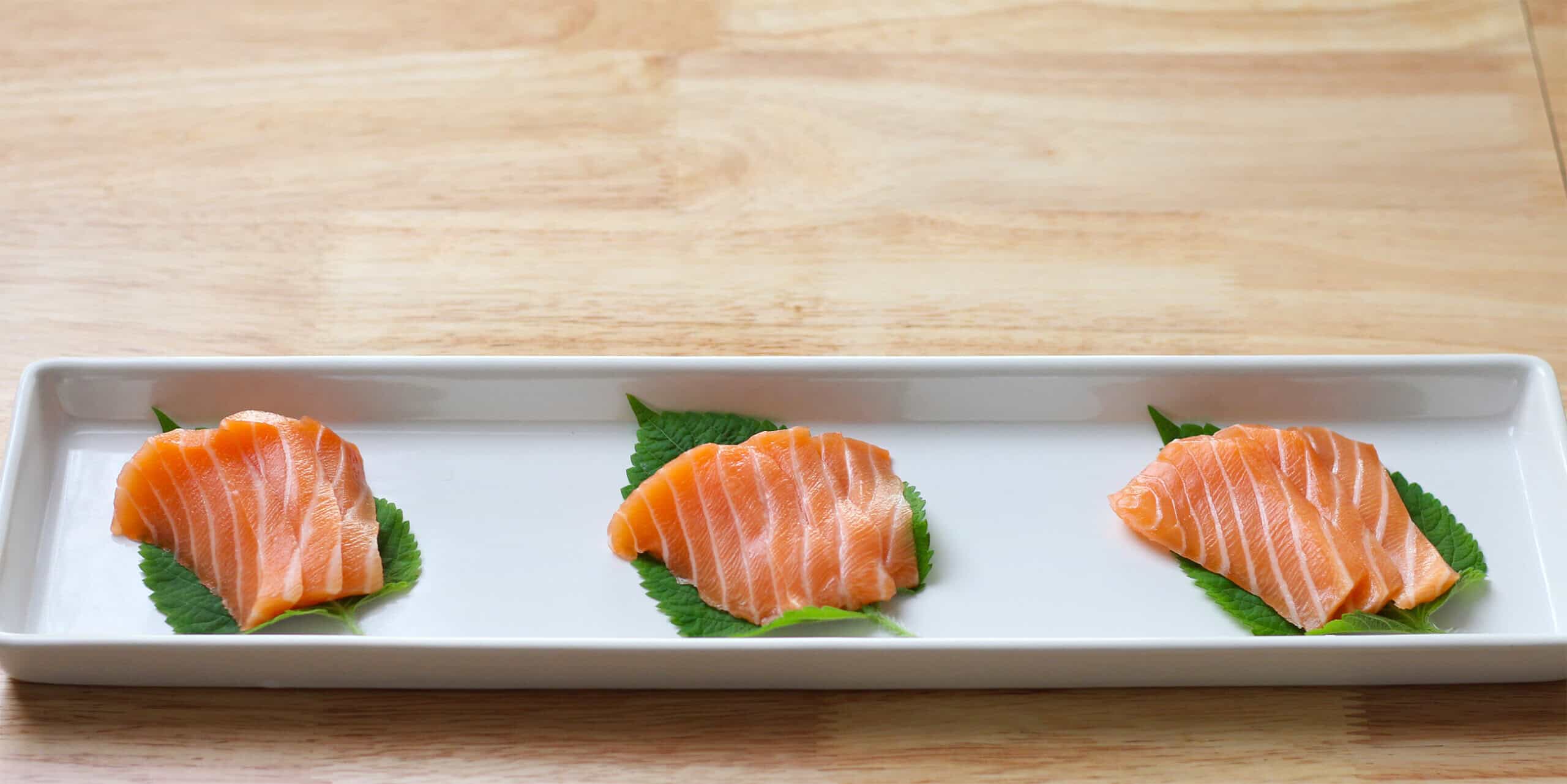
If you want a deeper breakdown of the term "sushi-grade" and how to choose fish safely for sushi at home, check out my full guide: What Does "Sushi-Grade" Actually Mean?
I also have videos showing how to use Costco salmon and tuna for homemade sushi:
- Costco Salmon Video - (how to safely prepare and use Costco salmon for sushi at home)
- Costco Tuna Video - (is Costco tuna sushi-grade?)
For beginners, don’t feel pressured to start with raw fish right away. Rolls like California rolls and shrimp tempura rolls are excellent starting points while you build confidence.
🍣 Final Thoughts
Just like most things, the best way to learn sushi is to keep it simple in the beginning.
A lot of beginners go straight for fancy specialty rolls before they’ve really learned the basics… and it usually ends with sushi-related regret.
Leave the fancy rolls to the restaurants for now. Once you understand the fundamentals, even the more advanced rolls become a lot less intimidating.
So start with a few simple rolls, focus on consistency, and enjoy the process.
Keep at it and you’ll improve faster than you think.
And honestly, homemade sushi doesn’t need to look perfect to taste amazing, which is good news, because your first few attempts will probably have… “character.”
🍣 Continue Your Sushi Journey
Related Blog Posts
- How to Make Sushi Rice
- What Does Sushi Grade Actually Mean?
- How to Cut Salmon for Sushi & Sashimi
- How to Cut Avocado for Sushi
- How to Roll Sushi Without a Bamboo Mat
Related Videos
- How to Roll Sushi
- How to Make Sushi Rice
- How to Make a Philadelphia Roll
- Top 5 Beginner Sushi Mistakes
❓Common Questions (FAQ)
Not nearly as hard as most people think.
The biggest challenges in the beginning are usually handling the rice and learning not to overfill the rolls. Once you get a few practice rolls in, things start feeling much more natural.
And trust me, everyone makes a few ugly sushi rolls at first.
Nope, a makisu definitely helps, but it’s not required. You can roll sushi with just your hands and use plastic wrap or even parchment paper to help shape it afterwards.
Because let’s be honest, most people don’t casually have a bamboo mat sitting in their kitchen drawer next to the vegetable peeler.
If you don’t own one, check out my full guide on how to roll sushi without a bamboo mat.
The California roll is usually the best place to start.
It uses easy-to-find ingredients, doesn’t require raw fish, and is very forgiving when rolling. Cucumber rolls are also great for practicing technique.
Not necessarily. Actually “sushi-grade” isn’t an officially regulated term, which is why proper sourcing and handling matters more than the label itself.
Many people successfully make sushi at home using fish from trusted grocery stores like Costco and Whole Foods.
You can learn more about what "sushi-grade" actually means in my full guide here:
What Does "Sushi-Grade" Actually Mean? (And Why It Matters)
There could be a lot of reasons: improperly prepared rice, using too much rice, overstuffing the roll, hands that are too wet, not sealing the roll properly, a dull knife… honestly, the list can go on and on.
But at the end of the day, it’s all part of the learning process. Most beginner sushi rolls look a little chaotic at first, and that’s completely normal.
Don’t get discouraged. Keep practicing the basics and things will start clicking surprisingly fast.

Leave a Reply