
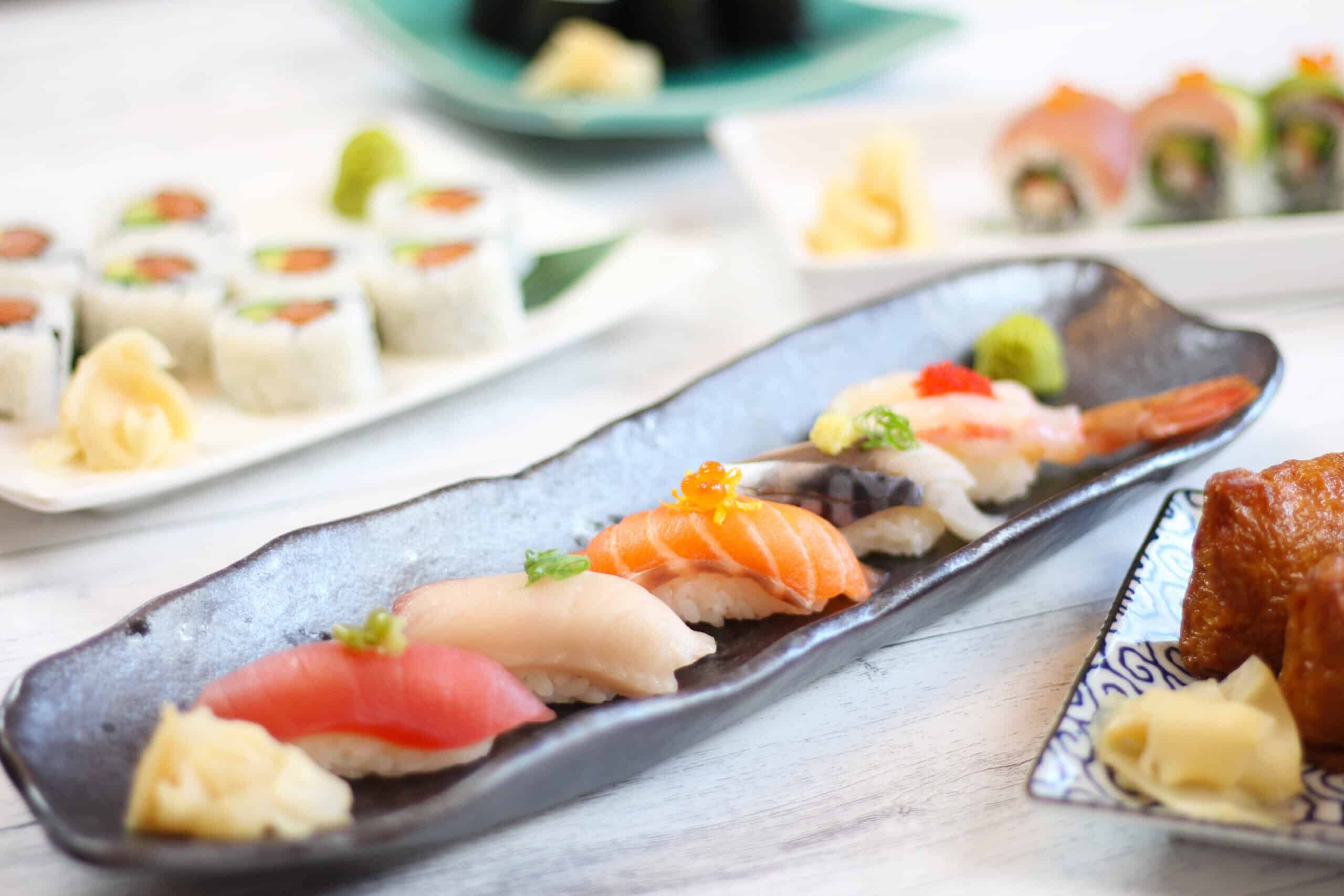
If you've ever stood in front of the seafood counter wondering, "What fish should I buy for sushi?" you're definitely not alone.
It's probably the question I get asked more than any other when it comes to making sushi at home. A lot of people assume they need some rare fish from a specialty market or something flown in from Japan, but the reality is much simpler than that.
After years of teaching sushi classes and answering this same question over and over, I've found that choosing the fish is often what intimidates beginners the most. The good news is that some of the best fish for homemade sushi are also some of the easiest to find.
In this guide, I'll walk you through the fish I recommend, where to buy them, and what to look for so you can shop with confidence and have the best chance of success on your first sushi night.
Jump to:
- 🍣 Quick Answer: What Is the Best Fish for Homemade Sushi?
- 🐟 What Makes a Fish Good for Homemade Sushi?
- 🎥 Watch: How I Prepare Costco Salmon for Sushi
- 🏆 Best Fish for Homemade Sushi (Ranked)
- ⚠️ Fish I'd Avoid as a Beginner
- 🛒 Where to Buy Fish for Homemade Sushi
- ⚠️ Common Mistakes Beginners Make When Choosing Fish
- 🍣 Final Thoughts
- 📚 Keep Learning
- ❓Common Questions (FAQ)
🍣 Quick Answer: What Is the Best Fish for Homemade Sushi?
The best fish for homemade sushi is salmon because it’s mild, buttery, easy to find, and beginner-friendly.
If I were making a simple beginner sushi platter, this is the order I’d recommend:
- Salmon – Mild, buttery, easy to source, and widely loved.
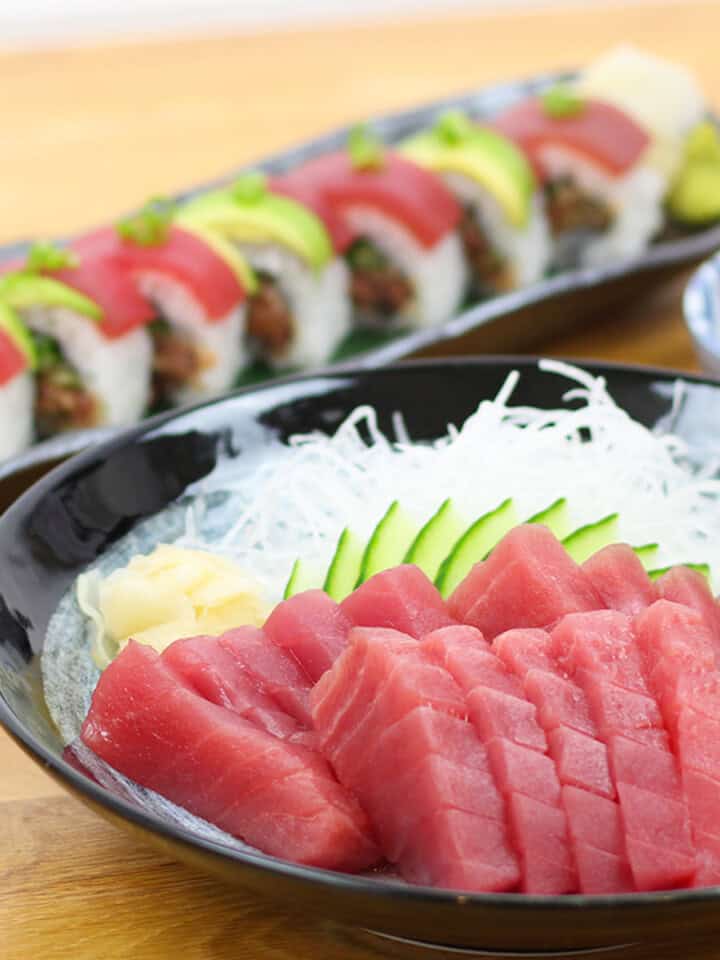
- Tuna – Clean flavor, classic sushi fish, and great for rolls or nigiri.
- Hamachi – Rich, buttery, and one of my personal favorites.
- Shrimp – Cooked, easy to find, and perfect for nervous beginners.
- Cooked Crab – Great for California rolls and very beginner-friendly.
- Unagi – Fully cooked, sweet, savory, and always a crowd-pleaser.
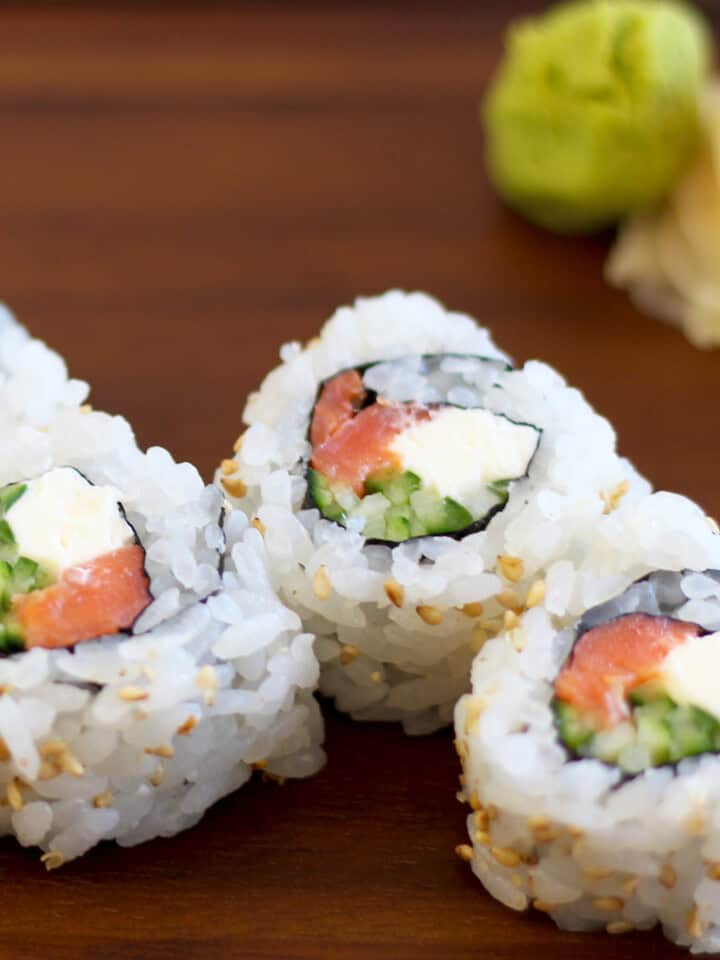
- Smoked Salmon – Easy to find, requires no raw fish preparation, and makes an excellent Philadelphia roll.
That’s it.
No need to start with 15 different fish, three types of roe, and something your guests can’t pronounce.
Start simple. Build confidence. Then branch out.
🐟 What Makes a Fish Good for Homemade Sushi?
When I recommend fish for homemade sushi, I'm not necessarily thinking about what's the most traditional or even what tastes the best.
I'm thinking about what gives you the highest chance of success.
For example, there are plenty of fish that I love eating at sushi restaurants, but I wouldn't necessarily recommend them to someone making sushi at home, especially if it's your first time.
The best beginner sushi fish usually checks a few boxes:
- Easy to find
- Easy to prepare
- Mild enough that most people enjoy it
- Reasonably forgiving if your knife skills aren't perfect
- Available at stores you already shop at
That's one reason salmon sits at the top of my list. It's delicious, easy to source, and most people already know they like it.
My philosophy is simple: your first sushi night should build confidence, not test your patience or leave you wondering if ordering takeout would've been the better idea.
🎥 Watch: How I Prepare Costco Salmon for Sushi
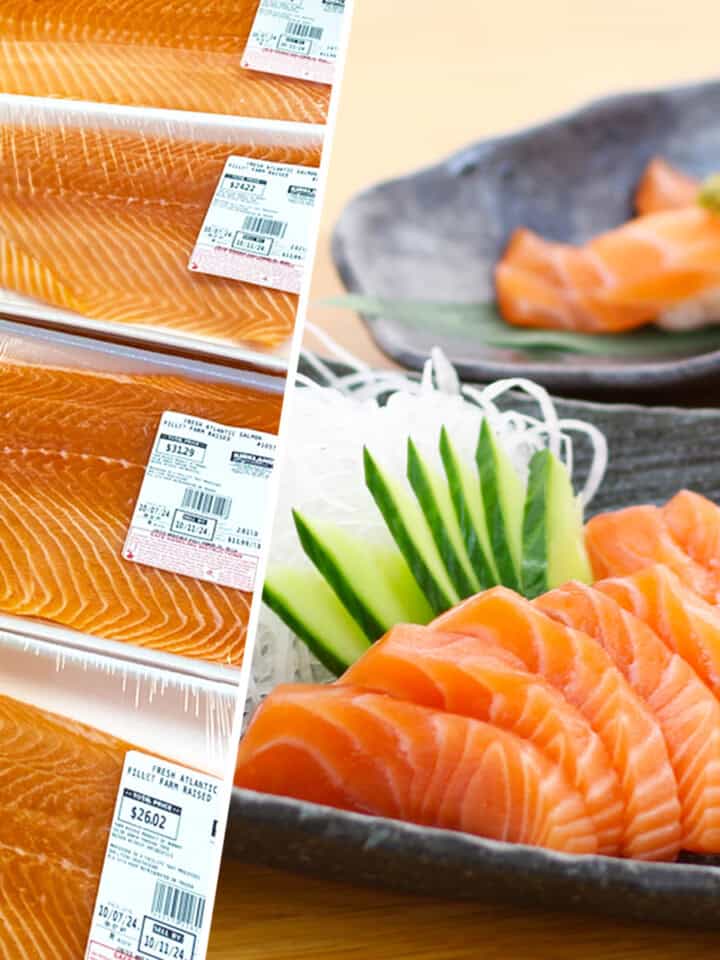
One of the most common questions I get is whether Costco salmon is safe to use for sushi. The short answer is yes, as long as you know what to look for and how to prepare it properly.
That’s why I put together a complete guide to using Costco salmon for sushi and sashimi, including what to look for when choosing a fillet, how I prepare it, and how to properly store and freeze it. You can also watch the video below to see the entire process from start to finish.
Costco salmon isn't the only option for homemade sushi, but it's one of the easiest to find and one of the first recommendations I give to beginners.
Now, is it the same quality as the salmon you'd get at a top-notch sushi restaurant? Of course not. But for homemade sushi, especially if you're just getting started, it's affordable, easy to find, and hard to beat.
🏆 Best Fish for Homemade Sushi (Ranked)
1. Salmon
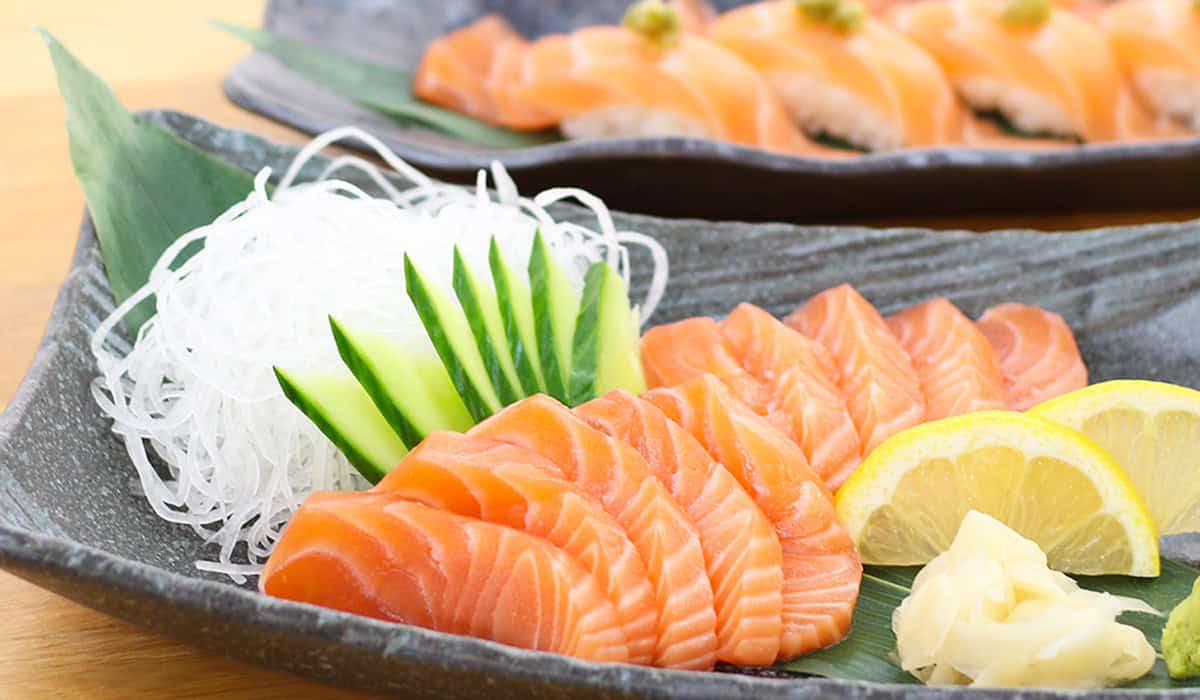
Beginner Confidence Score: ★★★★★
If you're wondering what fish to start with for homemade sushi, my answer is almost always salmon.
I've helped a lot of people choose their first salmon for homemade sushi over the years, and it's still the fish I recommend more than any other. It's mild, buttery, and one of the most forgiving fish to work with. Even people who are a little hesitant about eating raw fish usually enjoy salmon because it has a rich texture without being overly "fishy."
Another reason I recommend salmon so often is because it's easy to find. You don't have to hunt down a specialty fish market or spend a fortune to make great sushi at home. In fact, some of the best beginner options come from stores you're probably already shopping at.
Flavor: Mild, rich, slightly sweet
Texture: Buttery and soft
Availability: Very high
Difficulty: Easy
If you're planning to use salmon for sushi, I'd also recommend reading my guide on What Does Sushi Grade Actually Mean? It's one of the biggest misconceptions when buying fish, and understanding it will help you shop with much more confidence.
And once you have your salmon, my How to Cut Salmon for Sushi & Sashimi guide will show you exactly how to break it down and cut it for sashimi, nigiri, and rolls.
2. Tuna
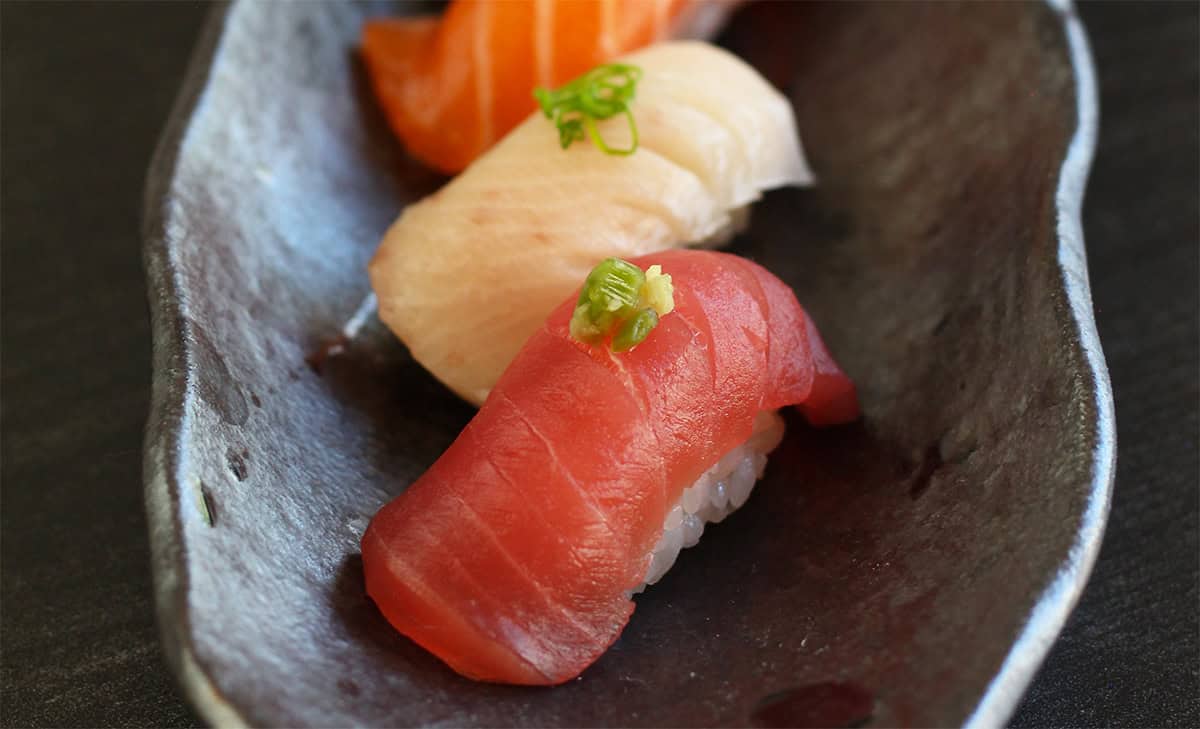
Beginner Confidence Score: ★★★★☆
Tuna is one of the most iconic fish used for sushi, and it's usually the second fish I recommend after salmon.
I often tell beginners that if they can make good salmon and tuna sushi, they're already off to a great start. Tuna has a clean, mild flavor and a firmer texture than salmon, making it an excellent choice for both nigiri and sushi rolls.
For beginners, I'd recommend starting with yellowfin (ahi) or bigeye tuna. It's widely available, has a mild flavor, and is typically more affordable than premium varieties like bluefin.
Flavor: Clean, mild, slightly meaty
Texture: Firm and smooth
Availability: Medium to high
Difficulty: Easy to medium
One thing to keep in mind is that tuna can be a little more hit or miss than salmon, depending on where you buy it. Look for a deep, vibrant red color, firm flesh, and very little liquid in the package. Fresh tuna should have a clean, mild smell. If it looks brown, feels mushy, or smells off, I'd pass on it.
If Costco is where you plan to buy your tuna, I also have a step-by-step video showing exactly how I choose and prepare Costco ahi tuna for sushi and sashimi.
3. Hamachi (Yellowtail)
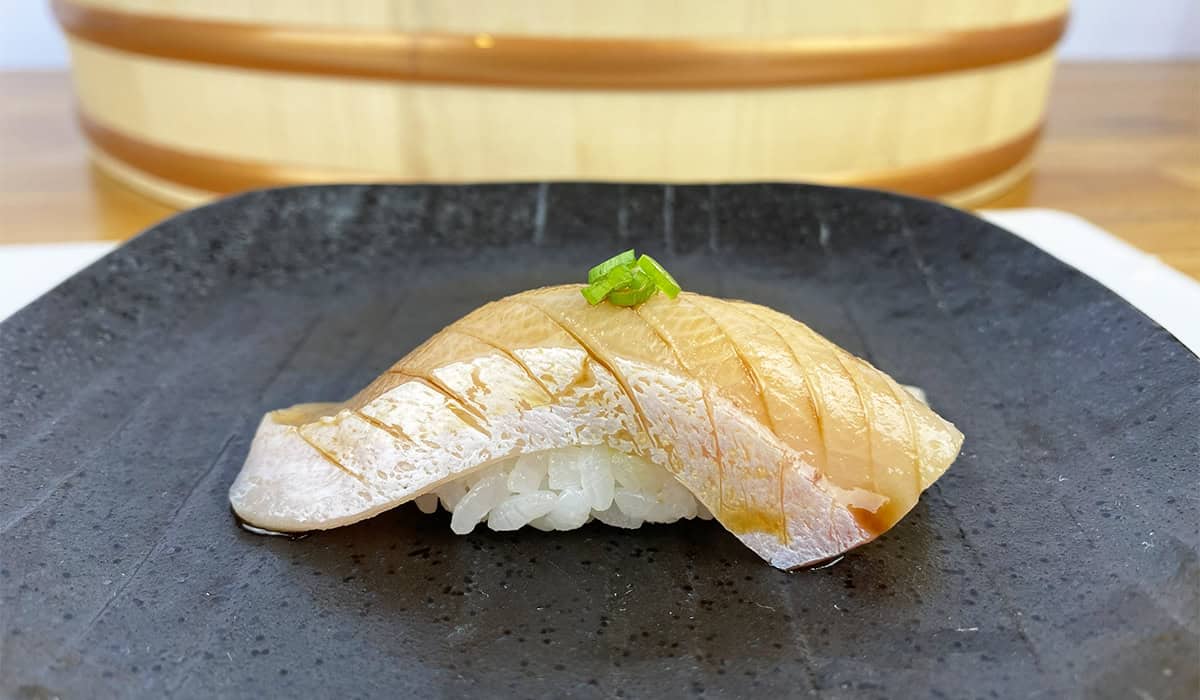
Beginner Confidence Score: ★★★★☆
If you've followed my content for a while, it probably won't surprise you to see hamachi this high on the list. It's one of those fish that I almost always order when I visit a sushi restaurant.
Compared to tuna, it's richer (excluding toro). Compared to salmon, it's cleaner. The buttery texture and clean flavor strike a nice balance, making it one of my personal favorites for nigiri, sashimi, and rolls.
One of my favorite ways to enjoy hamachi is in a negihama roll. "Negi" means green onion, and when it's paired with minced hamachi, the freshness of the onion complements the rich flavor of the fish beautifully. It's a simple combination, but one that really showcases how a few quality ingredients can go a long way.
Flavor: Rich, clean, slightly savory
Texture: Buttery and smooth
Availability: Medium
Difficulty: Easy to medium
Fresh hamachi can be a little harder to find than salmon or tuna, but many Asian markets carry frozen hamachi loins that work really well for homemade sushi. That's actually where I buy mine most of the time. They're convenient, consistently good, and make it easy to enjoy one of my favorite sushi fish at home.
4. Shrimp
Beginner Confidence Score: ★★★★★
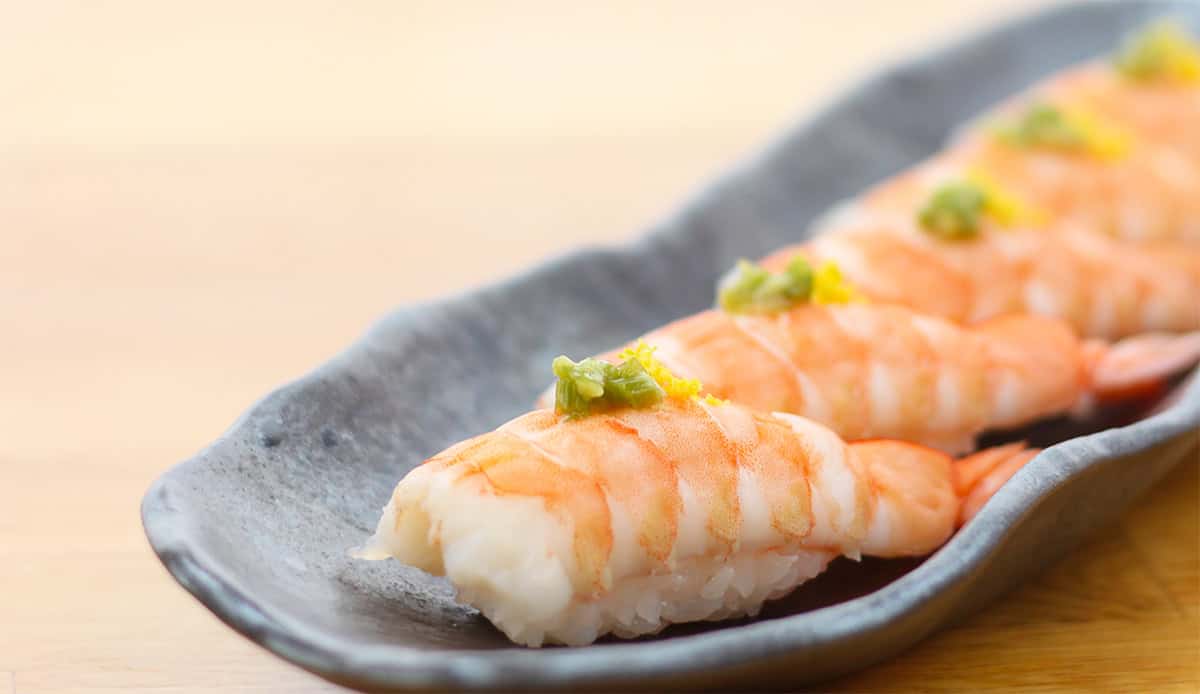
If you're not quite ready to work with raw fish, shrimp is an excellent place to start. Since it's typically served cooked, it takes a lot of the uncertainty out of making sushi at home.
Shrimp is one of the first ingredients I recommend to beginners because it's sweet, approachable, and familiar to most people. I've found that once people gain confidence making sushi with cooked ingredients, trying raw fish doesn't seem nearly as intimidating.
Flavor: Sweet and mild
Texture: Firm and springy
Availability: Very high
Difficulty: Very easy
One of the reasons shrimp ranks so high on this list is that you don't have to prepare it from scratch. Many Asian markets carry frozen sushi shrimp (ebi) that are already cooked, butterflied, and ready to use after thawing. They're incredibly convenient and a great option for beginners.
Personally, I still prefer preparing shrimp myself whenever I have the time. It does take a bit of patience, but I think the flavor and texture are worth the extra effort. If you'd like to learn how I do it, I put together a step-by-step video that walks you through the entire process.
Shrimp is also a great option if you're making sushi for kids or guests who aren't quite ready to try raw fish. It gives everyone something familiar to enjoy while still feeling like a real sushi night.
5. Cooked Crab
Beginner Confidence Score: ★★★★★
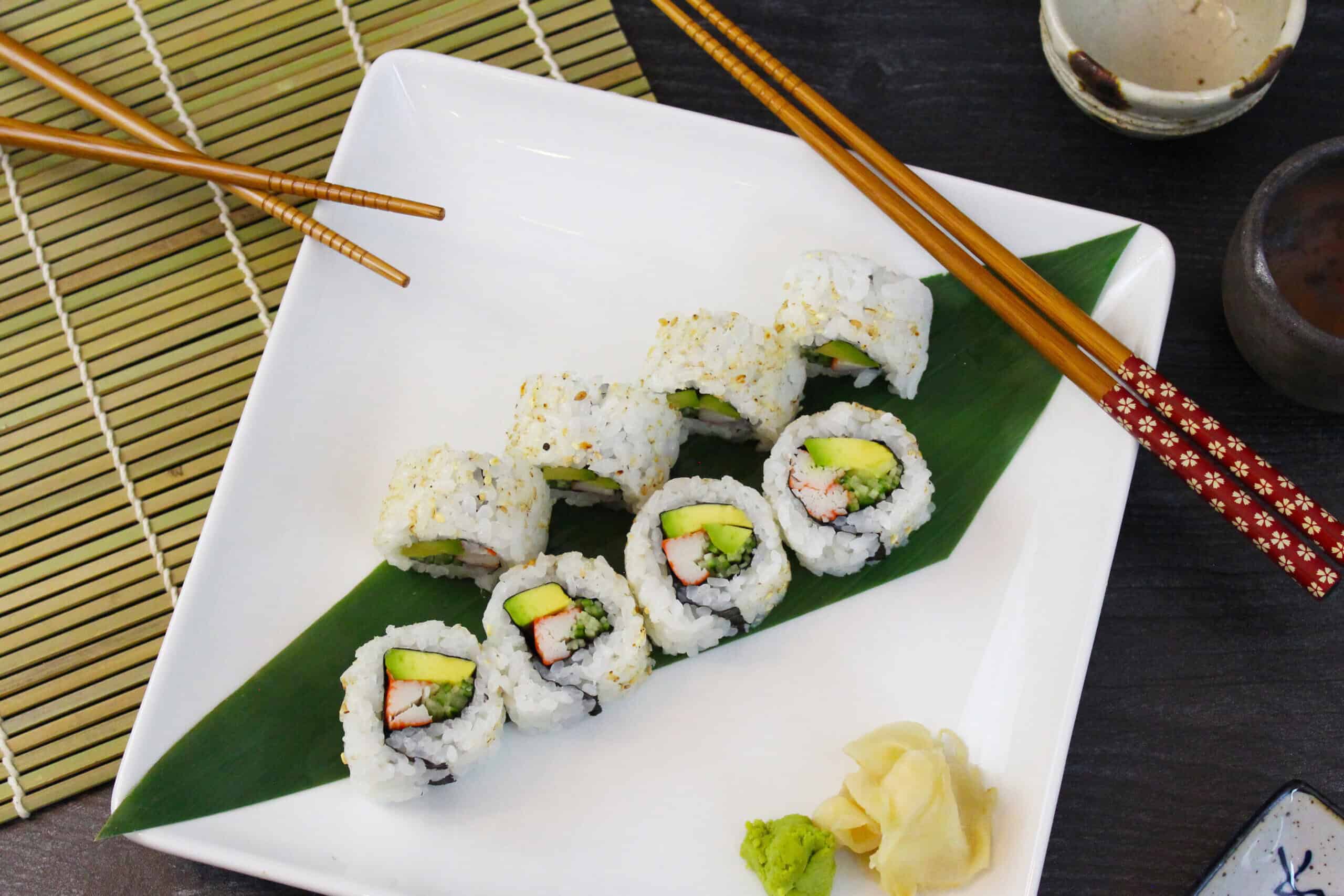
Cooked crab is another excellent choice for beginners, and there's a good chance you've already had it in one of the most popular sushi rolls ever made: the California roll.
When most people think of "crab" in a California roll, they're actually thinking of imitation crab, or kanikama. While it's made from white fish rather than crab, it's affordable, easy to find, already cooked, and one of the most beginner-friendly sushi ingredients you can buy.
Flavor: Mild and slightly sweet
Texture: Soft and easy to roll
Availability: Very high
Difficulty: Very easy
If you want to use real crab, go for it. Blue crab, snow crab, or my personal favorite, Alaskan king crab, are all excellent options for sushi. They each have their own unique flavor and texture, but they're all naturally sweet and absolutely delicious.
That said, for homemade sushi, I think imitation crab is a perfectly good place to start. In fact, it's what I recommend to most beginners because it takes one more thing off your plate and lets you focus on learning the fundamentals.
If you're making sushi for family and friends, crab-based rolls are almost always a hit. They're familiar, approachable, and a great reminder that homemade sushi doesn't have to be complicated to be delicious.
6. Unagi (Freshwater Eel)
Beginner Confidence Score: ★★★★★
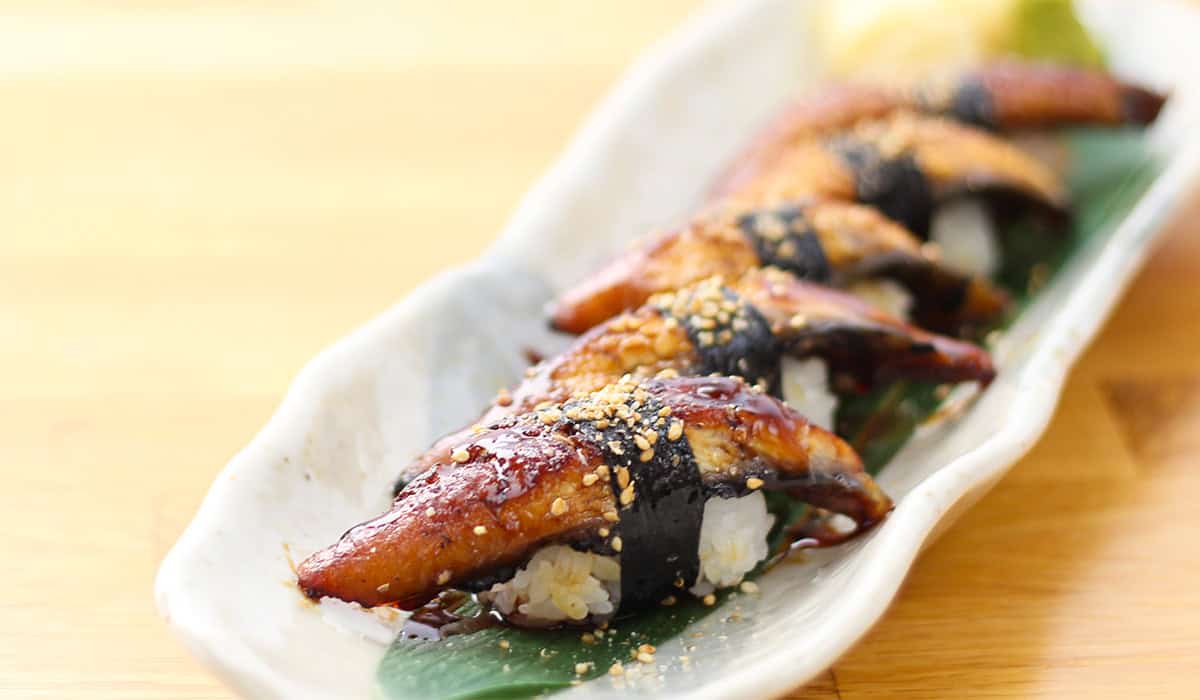
Unagi is another fully cooked option that's excellent for beginners who aren't quite ready to work with raw fish.
While unagi is one of the most popular sushi toppings here in the U.S., it's actually more common to enjoy it over rice as unadon or unajū in Japan. For sushi, anago (saltwater eel) is traditionally the more common choice. Personally, I enjoy it both ways. As much as I enjoy unagi nigiri, a good bowl of unadon is honestly one of my all-time favorite meals.
Unagi is prepared kabayaki style, meaning it's grilled and brushed with a sweet-savory soy-based sauce as it cooks. That's what gives it its rich, smoky, umami-packed flavor.
Flavor: Sweet, savory, rich
Texture: Tender and soft
Availability: Medium (especially at Asian markets)
Difficulty: Easy
Most Asian markets sell frozen unagi that's already cooked, making it one of the easiest sushi toppings to prepare at home. Simply warm it up before serving because cold unagi straight from the package is just wrong.
If you'd like to see how I use store-bought unagi to make restaurant-style unagi nigiri, I also have a step-by-step video you can follow along with.
7. Smoked Salmon
Beginner Confidence Score: ★★★★★
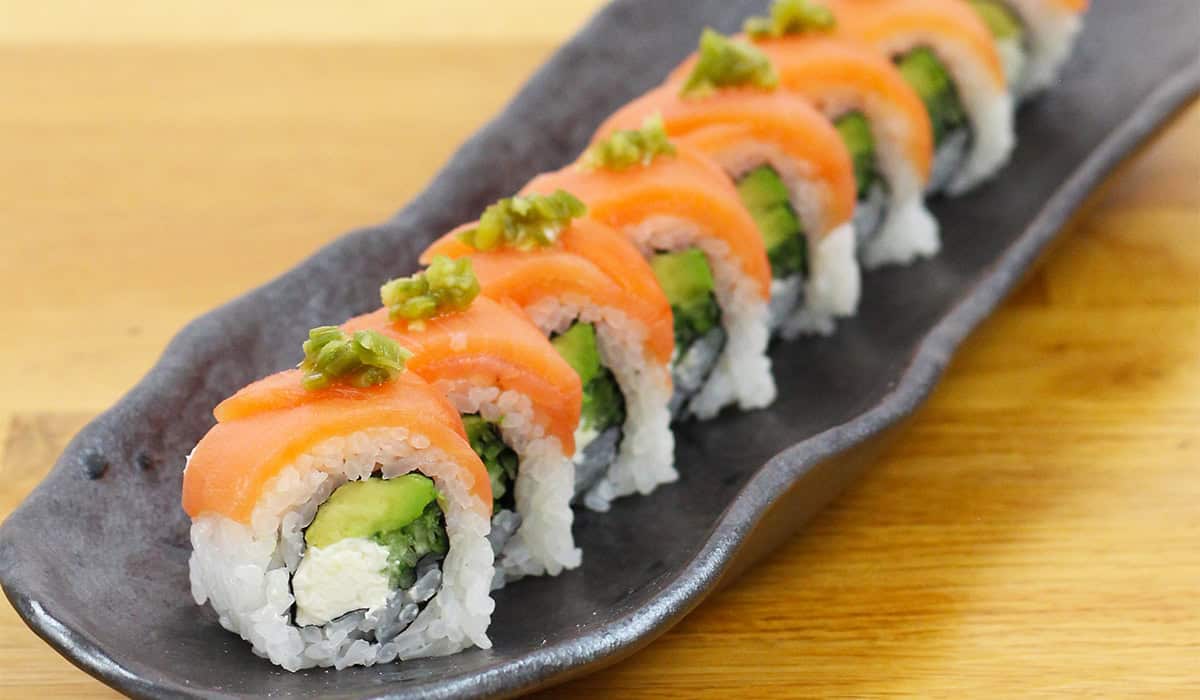
Smoked salmon is one of the easiest ingredients I recommend to beginners. It's easy to find at almost any grocery store, requires zero prep, and works beautifully in homemade sushi.
One of my favorite ways to enjoy smoked salmon is in a Philadelphia roll. The combination of smoked salmon, cream cheese, and cucumber is simple, familiar, and one of the easiest sushi rolls for beginners to make. In fact, it's one of my favorite beginner rolls, which is why I created a step-by-step video showing how to make three different variations.
Flavor: Smoky, savory, slightly salty
Texture: Soft and silky
Availability: Very high
Difficulty: Very easy
If you're looking for a stress-free first sushi night, smoked salmon is definitely a winner. It lets you focus on making great sushi rice and practicing your rolling technique instead of worrying about preparing raw fish.
⚠️ Fish I'd Avoid as a Beginner
There are plenty of incredible sushi ingredients out there, but that doesn't necessarily mean they're the best place to start.
As a beginner, I'd hold off on things like:
- Uni
- Toro
- Hikarimono (stronger-flavored silver-skinned fish)
- Aji
- Kohada
- Saba
- Sanma
- Whole fish that require breaking down
- Expensive seasonal fish
Not because they're bad. In fact, many of them are some of my favorite sushi ingredients. But they often require better sourcing, more careful preparation, or a palate that's already used to stronger flavors.
Even professional sushi chefs start with the basics. It may not sound as exciting as working with uni or other specialty fish, but trust me, you can make some incredible sushi using the ingredients I've recommended above.
Focus on building your confidence first. Once you've got the fundamentals down, you can take the training wheels off and start experimenting with some of the more adventurous ingredients.
Your wallet will probably appreciate that approach too.
🛒 Where to Buy Fish for Homemade Sushi
One of the biggest reasons people hesitate to make sushi at home is simply not knowing where to buy the fish. The good news is, you don't need to live by the coast or have a specialty seafood market to get started.
Japanese/Asian Markets
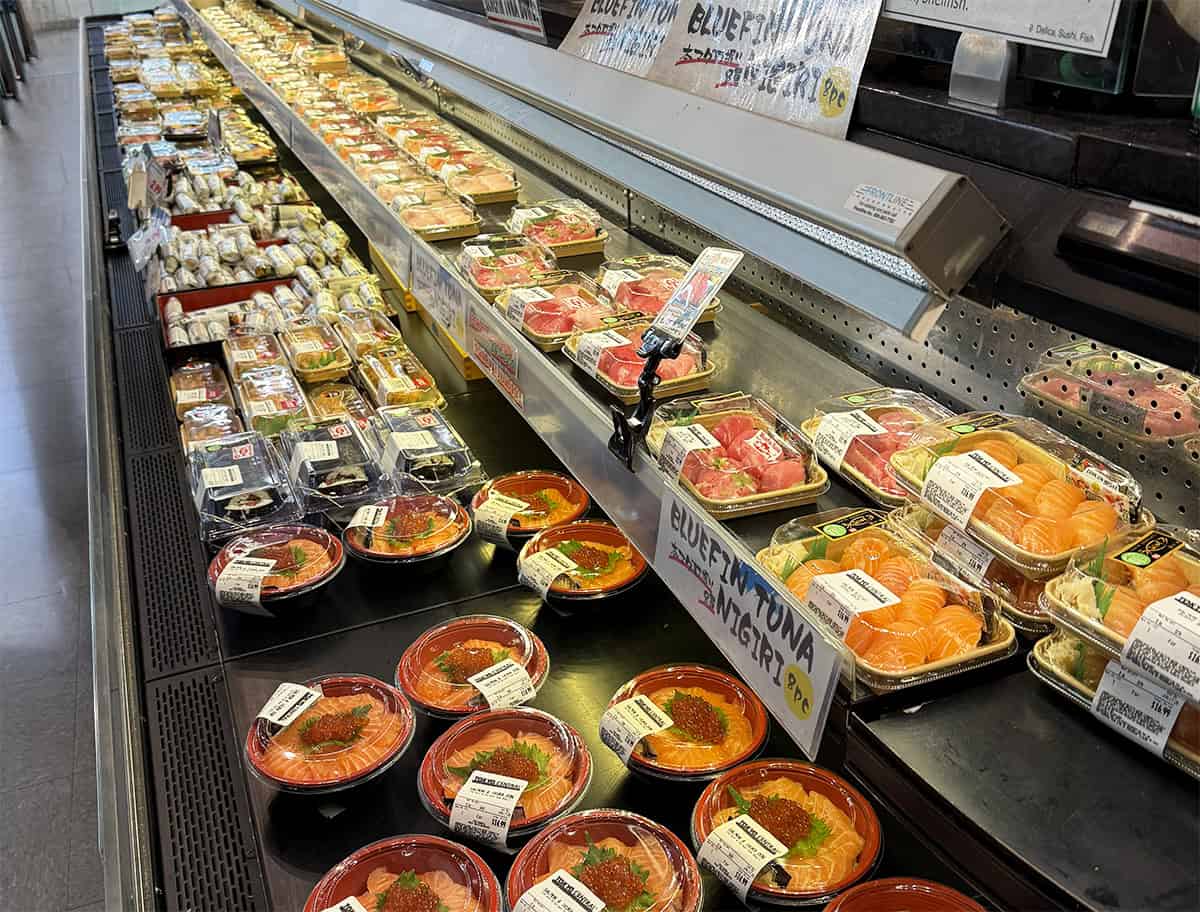
If you're lucky enough to live near a Japanese market like Mitsuwa or Tokyo Central, you've hit the jackpot. I don't have one anywhere near where I live, so anytime we're traveling and there's one nearby, it's almost guaranteed I'll stop in. They usually have everything you could possibly need for homemade sushi. From beautifully prepared cuts of toro and sushi-ready fish to freshly made bento, Japanese snacks, and every pantry staple imaginable, it's one of my favorite places to browse.
If you don't have a Japanese market nearby, don't worry. Other Asian markets are still a fantastic option. They're my go-to for most of my Japanese cooking, and many carry frozen hamachi, unagi, imitation crab, and other seafood that's perfect for homemade sushi. You'll also find staples like sushi rice, nori, rice vinegar, soy sauce, and plenty of other Japanese ingredients.
Costco
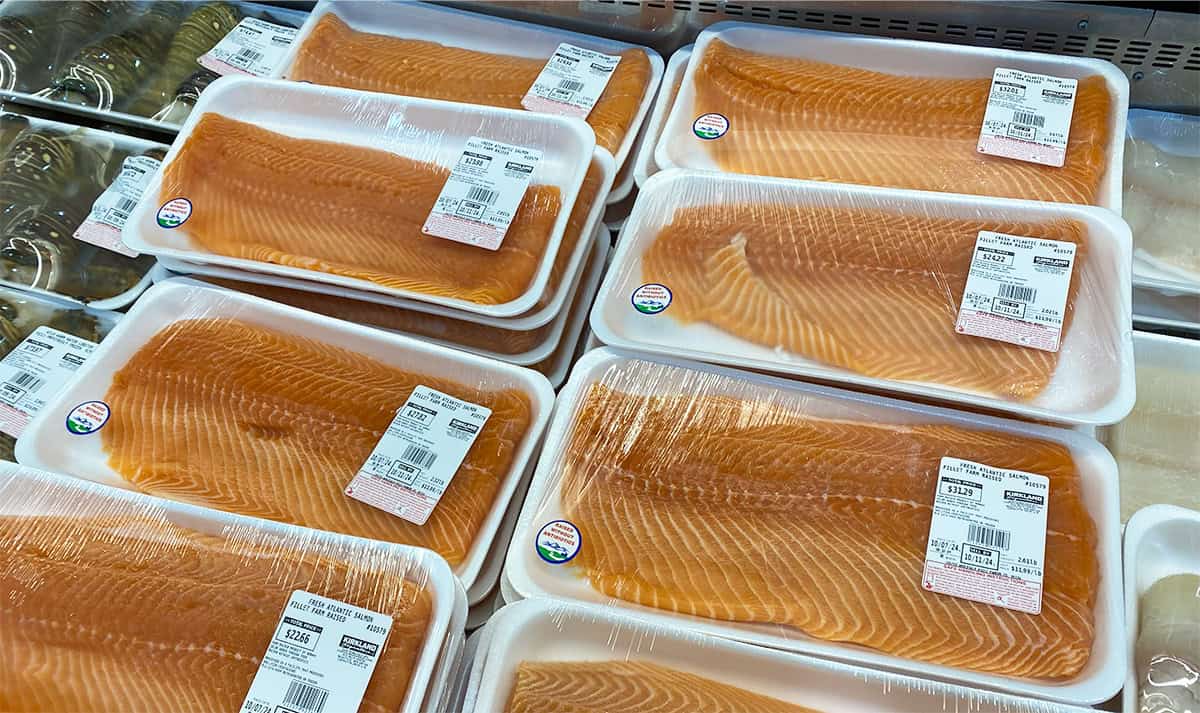
Costco can be a fantastic option, especially for salmon. The quality is usually consistent, turnover is high, and the price is very hard to beat.
When buying salmon, I look for farm-raised Atlantic salmon with vibrant color, firm flesh, minimal miware (separation/splitting of the meat), and very little liquid in the package.
Costco tuna can also be a good option, though in my experience it's a little more hit or miss than their salmon. At least that's been the case at my local Costco. Tuna also oxidizes faster, so it tends to lose its bright red color sooner. If possible, ask when they receive shipments and try to buy it on the freshest day.
Reputable Seafood Counters
If your local grocery store has a good seafood counter, don't be afraid to ask questions. In my experience, stores like Whole Foods usually have knowledgeable fishmongers who are happy to point you in the right direction.
Some of the questions I like to ask are:
- When did the fish arrive?
- Has it been previously frozen?
- Would you personally feel comfortable serving it raw?
That last question can be surprisingly telling.
Trader Joe's is another place I recommend if you're shopping for salmon. One thing I like is that you don't have to buy an entire side of salmon like you often do at Costco. If you're making sushi for one or two people (or just want the flexibility to pick out a nice belly portion) it's a much more practical option.
If you're curious how salmon from Costco, Whole Foods, and Trader Joe's compares, I also put together a step-by-step video where I turn each one into sashimi and share which one I'd choose for homemade sushi.
Freshness Matters More Than a Fancy Label
The term "sushi-grade" can be helpful, but it isn't a guarantee. (If you're curious why, I wrote an entire article breaking down what the term actually means.) What matters most is proper handling, proper freezing when needed, freshness, and buying from a trusted source.
If something smells off, looks off, or simply makes you second-guess it, don't eat it raw. When in doubt, cook it. I've passed on plenty of fish over the years, and I've never regretted being cautious.
Online Seafood Suppliers
If you've exhausted your local options and still can't find what you're looking for, reputable online seafood suppliers are worth exploring.
I haven't personally ordered from any yet, but companies like Yama Seafood, Riviera Seafood Club, and Catalina Offshore Products all have excellent reputations within the sushi community for sourcing high-quality seafood.
They can also be a convenient way to find specialty items that may be harder to source locally, like hamachi, uni, or seasonal fish.
⚠️ Common Mistakes Beginners Make When Choosing Fish
Trying Too Many Fish at Once
This is something I see all the time. People get excited about making sushi and end up buying salmon, tuna, hamachi, shrimp, eel, ikura, plus a few other ingredients they've never worked with before. Before they know it, they're trying to manage six or seven different ingredients while also making sushi rice for the first time.
Keep it simple. I'd much rather see someone make great salmon and tuna sushi than mediocre versions of eight different fish. Or worse yet, not get around to making it at all and have it go to waste.
Assuming Expensive Means Better
Expensive fish doesn't automatically make better sushi. I'd rather have perfectly seasoned sushi rice with good salmon than expensive fish sitting on top of poorly made rice.
Ignoring Freshness
Freshness matters. Look at the color, feel the texture, and give the fish a smell when you get home. Fresh fish should smell clean, not fishy or sour.
If it smells like low tide and regret, don't use it raw.
Buying Too Much Fish
Beginners almost always buy more fish than they need. I get it. You're excited. But sushi uses less fish than most people expect, especially if you're making rolls or nigiri.
Start small. You can always buy more fish next time. That's a much better problem than staring at two pounds of leftover tuna and trying to convince yourself you'll eat it all tomorrow.
Overcomplicating the Menu
You don't need to put together a full-blown omakase meal to have a great sushi night. A few well-prepared ingredients will almost always beat an overly ambitious menu.
Focus on doing a handful of things well, and your sushi will be better because of it.
🍣 Final Thoughts
When it comes to choosing fish for homemade sushi, most people make it more complicated than it needs to be.
You don't need rare ingredients, years of experience, or a huge budget to make great sushi at home. Start with one or two beginner-friendly options like salmon or tuna, focus on making great sushi rice, and let your confidence grow from there.
That's how I learned, and it's how every sushi chef starts.
Remember, the goal isn't to make perfect sushi on your first try. It's to enjoy the process, learn something new, and have fun making it. Before long, you'll be looking for excuses to have another sushi night.
📚 Keep Learning
Read Next
- What Does "Sushi-Grade" Actually Mean?
- How to Make Sushi Rice
- 5 Common Sushi Mistakes Beginners Make
- Easy Sushi Rolls for Beginners
- How to Cut Salmon for Sushi & Sashimi
Video Tutorials
- Beginner Sushi Guide
- Costco Salmon for Sushi
- Costco Ahi Tuna for Sushi
- How to Prepare Shrimp for Sushi
- How to Make Unagi Nigiri
- Philadelphia Roll (3 Variations)
❓Common Questions (FAQ)
Not necessarily. "Sushi-grade" isn't an officially regulated term, so it doesn't guarantee that fish is safe to eat raw. What's more important is buying from a trusted source, understanding how the fish was handled, and knowing which species are appropriate for raw consumption. If you'd like to learn more, I explain it in detail in my guide on What Does "Sushi-Grade" Actually Mean?
If you're making sushi at home for the first time, I almost always recommend salmon. It's mild, buttery, easy to find, and forgiving to work with. Tuna, cooked shrimp, imitation crab, smoked salmon, and unagi are also excellent beginner-friendly options.
Costco’s farm-raised Atlantic salmon can be a great option for homemade sushi, provided you know how to choose the right piece and prepare it properly. My complete guide to using Costco salmon for sushi and sashimi explains what to look for, how I prepare it, and how to store or freeze the leftovers. You can also watch my step-by-step video to see the entire process.
Absolutely. In fact, many fish sold for raw consumption have been previously frozen. Freezing is an important safety step for many species because it helps reduce the risk of parasites. Just remember that not all frozen fish is intended to be eaten raw, so always buy from a trusted source and follow proper handling practices.
If you're just getting started, I'd recommend keeping it simple. California rolls, Philadelphia rolls, cooked shrimp rolls, and basic salmon rolls are all great choices. They're beginner-friendly, use easy-to-find ingredients, and are a great way to build confidence before moving on to more advanced sushi.

Stella B says
Can I refreeze salmon or any fish? Costco is great but way too much fish to eat at one time!
Jun says
Great question! Yes, you can refreeze salmon (and other fish) as long as it's been handled properly and kept refrigerated.
Salmon is actually one of the best fish to freeze because it holds up very well, especially if it's wrapped airtight or, even better, vacuum sealed. Tuna, on the other hand, tends to oxidize and lose its bright color much more quickly after thawing.
When I buy Costco salmon, I usually portion it into sushi-sized blocks and vacuum seal the extras so I only thaw what I need. Hope that helps!
If you'd like to see exactly how I choose and prepare Costco salmon for sushi, here's the video: https://youtu.be/aDhsIDZ6SS8