
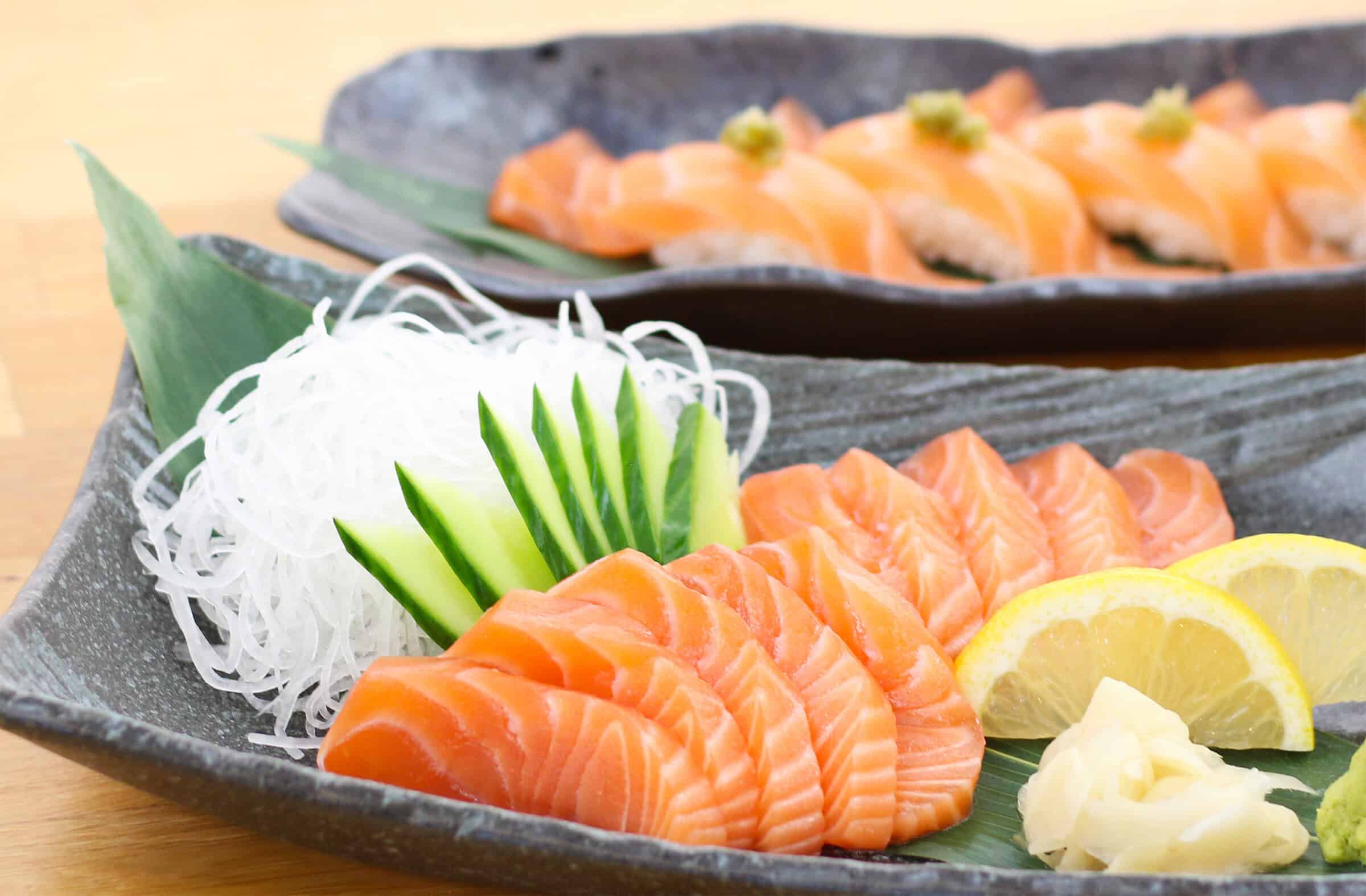
Have you ever walked past the seafood section at Costco and wondered, "Could I actually use that salmon for sushi?"
If so, you're definitely not alone. In fact, one of the most common questions I get asked is, "Where can I buy fish for sushi?"
The short answer is yes... but there's a little more to it than simply grabbing the first package you see and slicing it up.
The good news is that Costco's farm-raised Atlantic salmon can be a great option for homemade sushi. It's affordable, easy to find, and has a rich, buttery texture that works especially well for sushi and sashimi. But just like any raw seafood, choosing the right fillet and handling it properly are both extremely important.
In this guide, I'll walk you through the entire process, from choosing the right fillet at the store to preparing it for sushi and sashimi. Along the way, I'll share the simple techniques I use, explain when I recommend freezing it, and point out a few common mistakes to avoid.
By the end, you'll have everything you need to prepare Costco salmon with confidence and enjoy it as sushi or sashimi at home.
Jump to:
- 🍣 Quick Answer: Can You Use Costco Salmon for Sushi?
- 🎥 Prefer to Watch Instead?
- 🐟 Why Costco Salmon Is a Good Option for Sushi
- 🛡️ Is Costco Salmon Safe to Eat Raw?
- 🛒 How to Choose the Best Costco Salmon for Sushi
- 🔪 How to Prepare Costco Salmon for Sushi
- ❄️ How to Store and Freeze Costco Salmon
- 💭 My Honest Thoughts on Using Costco Salmon
- 🚫 Common Mistakes to Avoid
- 🍣 Final Thoughts
- 📚 Continue Your Sushi Journey
- ❓Common Questions (FAQ)
🍣 Quick Answer: Can You Use Costco Salmon for Sushi?
Yes, Costco's farm-raised Atlantic salmon can be a great choice for homemade sushi when it's chosen carefully and handled properly.
When I'm shopping for salmon at Costco, I look for bright color, firm flesh with as few tears as possible, minimal liquid in the package, and a clean, fresh smell once I get it home. Before using it for sushi or sashimi, I cut it into smaller portions, give it a simple 25-minute salt cure, and depending on when I plan to use it, I may freeze it first.
Like any raw seafood, there's always some level of risk involved. Later in this guide, I'll explain why farm-raised Atlantic salmon is generally considered a lower-risk option and the steps I take to prepare it safely at home.
But first, let's look at why Costco salmon has become one of my favorite options for homemade sushi.
🎥 Prefer to Watch Instead?
If you're more of a visual learner, here's my step-by-step video showing exactly how I prepare Costco salmon for sushi and sashimi.
The video will walk you through the entire process, while this guide expands on it with additional tips, explanations, and answers to common questions. So even if you've already watched the video, I think you'll still pick up a few new things by reading the rest of this guide.
🐟 Why Costco Salmon Is a Good Option for Sushi
There are plenty of places to buy salmon for homemade sushi, from specialty fish markets to your local grocery store. So why do so many people ask specifically about Costco?
Simply put, it offers a combination that's hard to beat: convenience, consistency, and value.
Does that mean it's the best salmon money can buy? No.
If I'm looking for a truly special meal, I'd rather use something like fresh king salmon or one of my personal favorites, Bakkafrost Scottish salmon from the Faroe Islands. The flavor, texture, and overall quality are on another level.
But those options also come with a much higher price tag and aren't nearly as easy to find.
For most people making sushi at home, Costco hits a sweet spot. The goal isn't to recreate a high-end omakase experience. It's to make delicious sushi using ingredients that are realistic for most people to find and afford.
One of the things I enjoy most about teaching people to make sushi at home is showing them that you don't always need the most expensive ingredients to make something you're proud to serve.
It's Easy to Find
For many beginners, the most intimidating part of making sushi isn't actually making the sushi. It's buying the fish.
Not everyone has access to a specialty seafood market or a Japanese grocery store. And even if they do, walking in for the first time can feel a little intimidating if you've never bought fish for raw consumption before.
That's one of the reasons I recommend Costco. It removes a lot of that uncertainty. If you already shop there, you can pick up a quality salmon fillet during your regular grocery run instead of making a separate trip across town.
That convenience alone makes homemade sushi feel much more approachable.
The Fat Content Is Great for Sushi
When shopping at Costco, I recommend choosing their farm-raised Atlantic salmon.
Compared to most wild salmon, Atlantic salmon has a higher fat content, giving it the rich, buttery texture that makes it so popular for sushi. That extra fat also helps keep the fish tender, making it perfect for everything from nigiri and sashimi to sushi rolls and poke bowls.
It's also one of the reasons I recommend salmon so often to beginners. The mild flavor and smooth texture make it less intimidating for people trying raw fish for the first time.
If you're interested in trying other types of fish, check out my guide to the Best Fish for Homemade Sushi, where I rank my favorite beginner-friendly options.
High Turnover Means Fresher Fish
In recent years, it feels like Costco has gotten busier and busier. If you've ever gone the day before a holiday, you know exactly what I'm talking about. The checkout line can feel like you're waiting to get into a Taylor Swift concert. At least, that's my assumption since I've never actually been to one… but you get the point.
As crazy as it can be, there's actually a benefit when you're shopping for salmon. With so many customers coming through every day, products generally don't stay on the shelf very long. While no store is perfect, that high turnover gives you a better chance of finding recently stocked fish.
If you have a chance, ask someone in the seafood department when they receive their salmon shipments. Many Costco locations get deliveries multiple times a week, and shopping on one of those days gives you the best chance of bringing home the freshest fillet available.
It's a simple tip, but one that can make a noticeable difference.
Costco Has High Sourcing Standards
Fresh shipments are one of the reasons I like buying salmon at Costco. Another is that I trust them as a retailer.
Costco has high standards for the seafood they sell, which gives me more confidence in where the fish is coming from before it ever reaches the store. That's a lot different than buying fish from a place where I'm unsure how it's been sourced or handled.
That doesn't mean every fillet is automatically perfect, though. You should still inspect each package carefully, which we'll cover a little later in this guide.
It's Hard to Beat the Value
Just like almost everything at Costco, one of the biggest advantages is the price.
Buying a whole side of salmon is usually much more affordable than purchasing smaller portions from many grocery stores or seafood markets. If you're making sushi for your family, hosting friends, or simply enjoy salmon on a regular basis, those savings can add up quickly.
I also like that you don't have to use the entire fillet at once. You can portion it into smaller pieces, freeze what you aren't using right away, and have salmon ready whenever you're in the mood for sushi.
For beginners, that's one of the biggest benefits. You can practice making sushi without feeling like every little mistake is costing you an expensive piece of fish. Trust me, you're going to make a few. That's just all part of learning, and in my experience, it's also one of the fastest ways to build confidence in the kitchen.
🛡️ Is Costco Salmon Safe to Eat Raw?
Costco may be affordable and convenient, but none of that matters if it isn't safe to eat raw.
That's the question that brings most people here, and understandably so.
The short answer is yes, Costco's farm-raised Atlantic salmon can be used for sushi when it's chosen carefully and prepared properly. But it's important to understand that no raw seafood is completely risk-free.
Whenever you eat raw food, there's always some level of risk involved. The goal isn't to eliminate that risk entirely because that's simply not possible. Instead, it's about minimizing it by buying from reputable sources, handling the fish properly, and using good judgment.
Why Farm-Raised Atlantic Salmon Is Different
The type of salmon matters.
For homemade sushi, I recommend Costco's farm-raised Atlantic salmon, not wild-caught salmon.
One of the biggest reasons has to do with parasite risk.
Farm-raised Atlantic salmon are raised in controlled environments, which greatly reduces their exposure to the parasites commonly found in wild fish. Wild salmon spend their lives in natural waters, where that exposure is much more likely.
That doesn't mean farm-raised salmon is automatically "safe" or wild salmon is automatically "unsafe." It simply means the level of risk is different, which is why the type of salmon you choose matters.
What About "Sushi-Grade" Salmon?
A lot of people assume that fish has to be labeled "sushi-grade" before it can be eaten raw.
The reality is a little more complicated.
As I explain in my guide on What Does "Sushi Grade" Actually Mean?, "sushi-grade" isn't an official or regulated term. It's simply a label used by suppliers and retailers to indicate that the fish is intended for raw consumption.
In other words, the label itself isn't a guarantee of quality or safety.
What's much more important is understanding where the fish came from, how it was handled, and whether it still looks, smells, and feels fresh when you bring it home.
Why I Still Recommend Being Cautious
Even though farm-raised Atlantic salmon generally has a lower parasite risk, I still believe it's worth taking a careful approach. That's why I buy from a retailer I trust, handle the fish properly, and never ignore my instincts if something doesn't seem right.
Whether I freeze the salmon depends on when I plan to use it. If I'm buying a fresh fillet and using it right away, I don't always freeze it first. But when someone asks me what I recommend, I generally suggest freezing it before eating it raw as an extra precaution. I'll explain my reasoning and exactly how I do it later in this guide.
I've always believed that no piece of sushi is worth gambling your health over.
🛒 How to Choose the Best Costco Salmon for Sushi
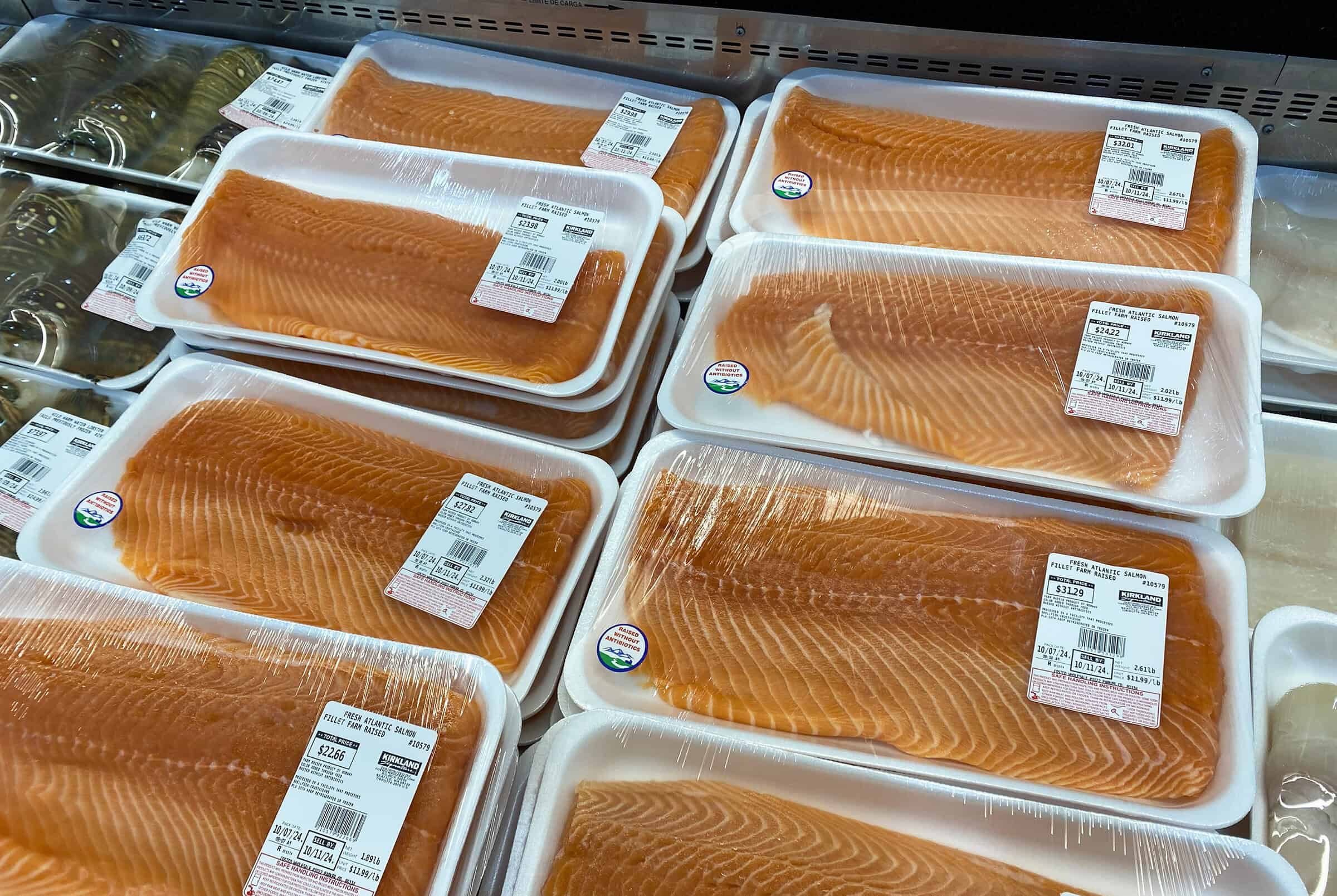
Now that we've covered the safety side of things, let's talk about choosing the right fillet.
Not every package of salmon is worth bringing home. Even at a reputable retailer like Costco, some fillets are better than others.
Knowing how to choose a good one is just as important as knowing where to buy it. Spending an extra minute inspecting the fish can make a noticeable difference in the quality of your sushi.
Here are a few simple things I always look for before a package ever goes into my cart.
1. Look at the Color
Color is one of the first things you'll notice, and while it isn't the only indicator of quality, it can tell you a lot.
I look for salmon that has a bright, vibrant orange color from end to end. It should look fresh and consistent without large pale areas or dark discoloration.
Keep in mind that salmon color naturally varies depending on the fish and its diet, so don't get too caught up trying to find the "perfect" shade of orange. Instead, compare the packages in front of you and choose the one that looks the freshest overall.
If a fillet looks dull, has dark spots, or appears dried out around the edges, I'd keep looking.
💡Good to Know?
You may notice Costco's farm-raised Atlantic salmon says "Color Added Through Feed" on the package. That doesn't mean the salmon was dyed or injected after harvest. Farm-raised salmon don't eat the same shrimp and krill that give wild salmon their pink color, so producers add the same type of pigment to the feed, allowing the salmon to naturally develop the familiar orange color people expect.
2. Check the Flesh
Next, take a closer look at the flesh itself.
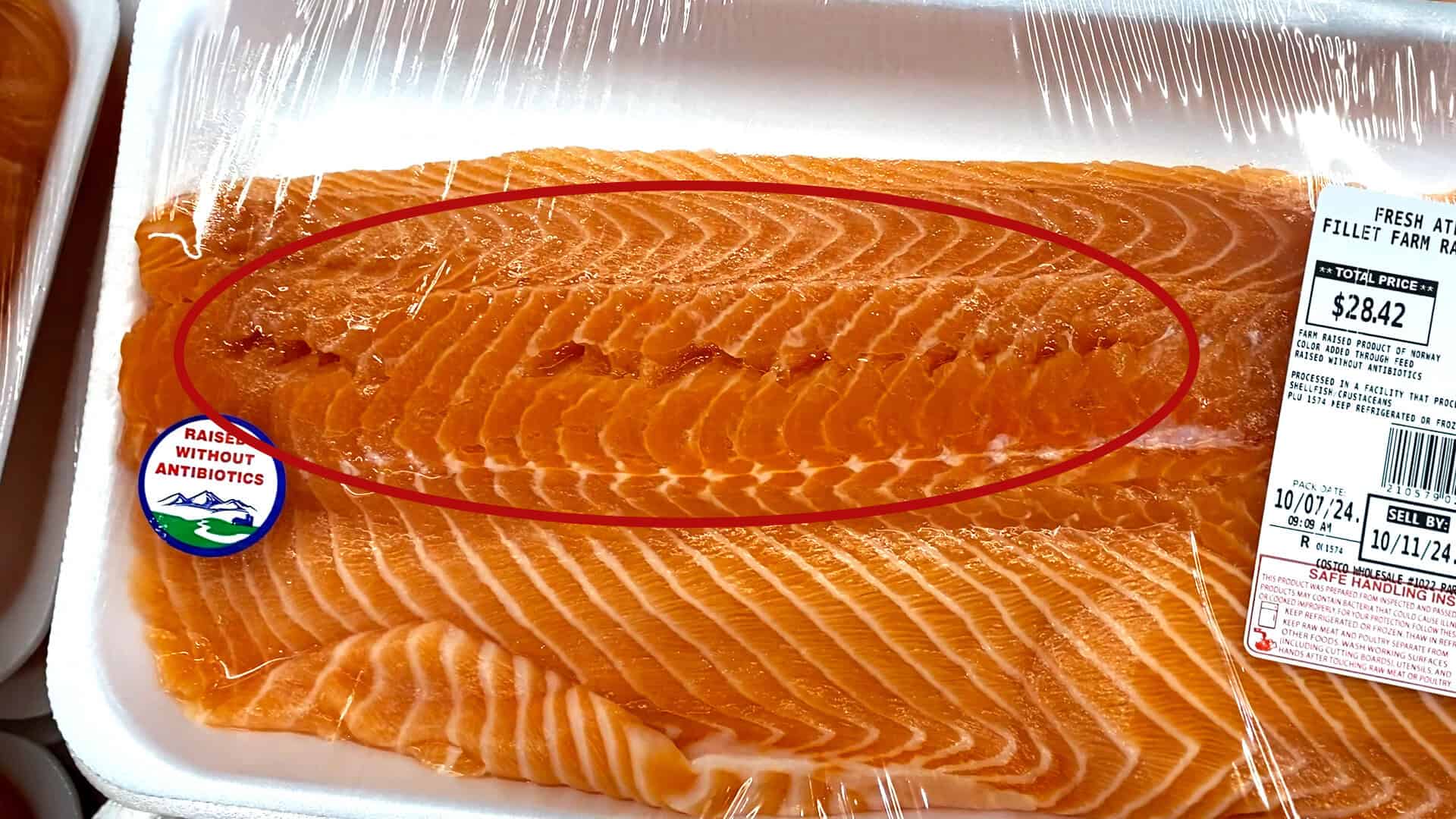
A good fillet should look smooth and hold together well. I try to avoid ones with excessive miware (tears or splits in the flesh), especially if large sections of the fillet have started separating.
Minor imperfections are completely normal, but the cleaner the flesh looks, the better.
Not only does a well-kept fillet usually indicate better handling, but it also makes slicing for sushi and sashimi much easier later on.
3. Do the "Tilt Test"
This is one of my favorite little tricks.
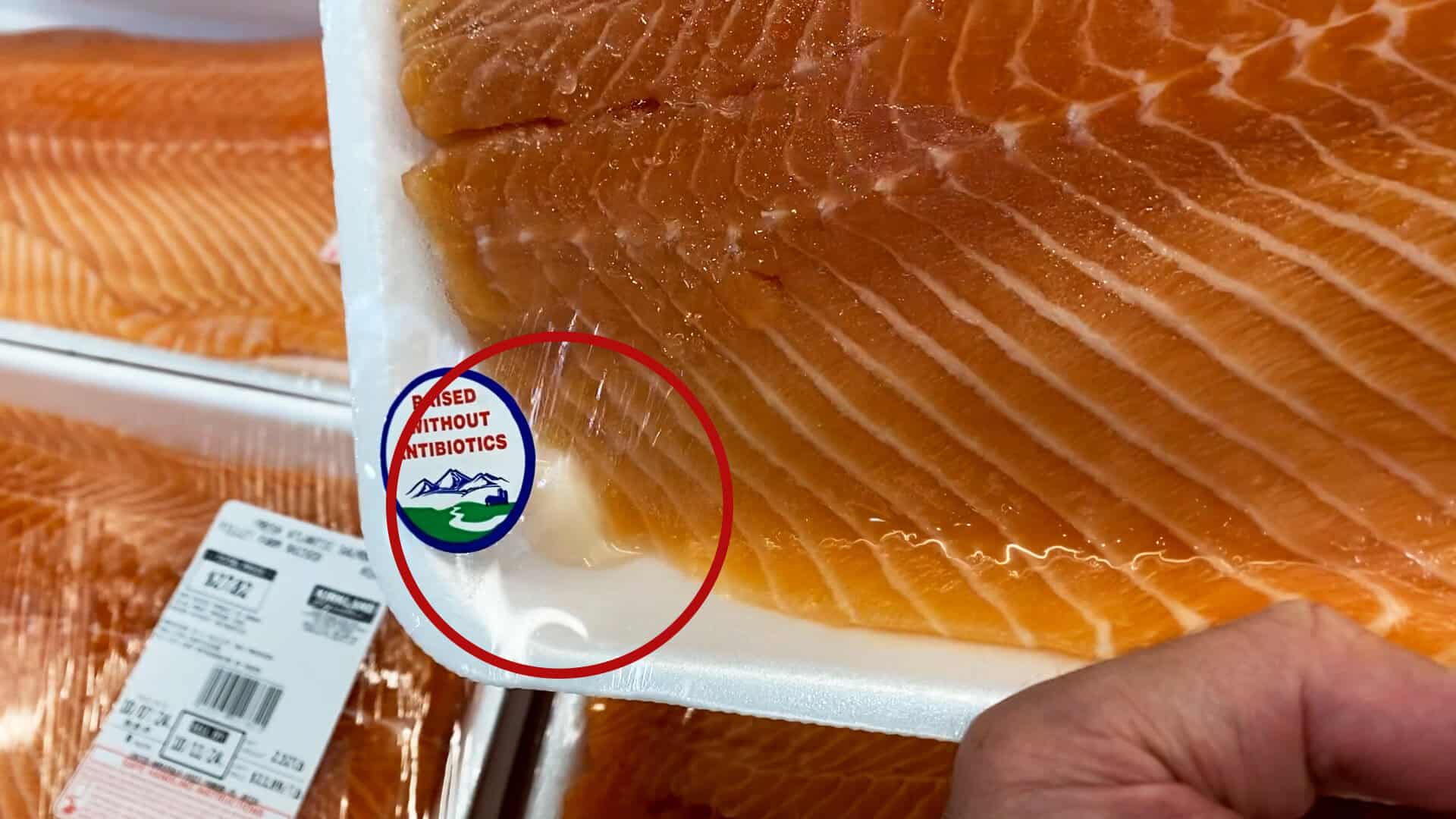
I simply pick up the package and gently tilt it so the liquid runs toward one corner.
Ideally, there won't be much liquid in the package, but a small amount is completely normal. If I see a large puddle of liquid, I usually reach for a different package.
Why?
As fish sits in the package over time, it naturally releases moisture. While some liquid is expected, excessive liquid can be a sign that the fish has been sitting longer or has lost more moisture than I'd like.
It's not a perfect test by itself, but when you combine it with everything else, it's another helpful clue. Sometimes the difference between two packages is surprisingly obvious.
4. Check the Packed Date
Another thing I always do is compare the packed dates.
Costco usually has several packages to choose from, so I'll almost always grab the one that was packed most recently. The difference might only be a day, but when you're planning to eat salmon raw, I'll gladly take the freshest option available.
Every once in a while, I'll choose an older package if it looks noticeably better than the others. But as a general rule, I avoid anything that was packed two or more days earlier. Fortunately, I rarely see that at my local Costco.
5. Trust Your Nose
This is the one thing you can't really check until you get home.
As soon as I open the package, I give the salmon a quick smell.
Fresh salmon shouldn't have a strong fishy odor. Instead, it should smell clean and mild, almost like a cool ocean breeze.
If you notice a strong, sour, or unpleasant smell, I wouldn't use it for sushi or sashimi.
This is where your own judgment becomes very important.
When it comes to raw fish, if something doesn't seem right, don't try to convince yourself otherwise. It's simply not worth the risk.
Things That Aren't Deal Breakers
There are a few things people often ask me about that usually aren't a problem.
White lines in the salmon
Those thin white lines running through the salmon are simply fat.
In fact, more marbling usually means a richer, buttery texture, which is exactly what many people enjoy in salmon sushi.
Small imperfections
A tiny tear or minor scrape on the surface doesn't automatically mean the salmon is bad.
Remember, these fish are processed by people and machines before they reach the store. Minor cosmetic imperfections happen.
I focus much more on the overall freshness of the fillet than trying to find one that's visually perfect.
A little liquid
As I mentioned earlier, some liquid in the package is completely normal.
The key word is some.
If there's only a small amount, I wouldn't think twice about it. It's when there's an excessive amount that I start looking at another package instead.
🛒Before Costco Salmon Goes Into My Cart
Before I put a package of salmon into my cart, I mentally run through these five things:
✓ Is the color bright and consistent?
✓ Does the flesh look smooth and firm?
✓ Does it pass the tilt test?
✓ What's the pack date?
✓ Can I keep it cold on the drive home?
It only takes a couple of extra minutes, but these simple habits can make a big difference when you're planning to eat salmon raw.
Keep It Cold on the Way Home
One thing that often gets overlooked is what happens after you've picked out your salmon.
It's easy to pick up a fresh package, toss it into your cart, and then spend another hour shopping. Then it sits in a warm car during the drive home.
Whenever I go to Costco, I always bring an insulated cooler bag with plenty of ice packs (yes, into the store and in the cart) so I can keep any raw seafood (and meat) as cold as possible from the moment I take it out of the refrigerated case until I get home. It's a simple habit, but one that goes a long way toward proper food handling.
If you're curious, I've linked the cooler bag and ice packs I personally use below.
🧊 The Cooler Setup I Use
Once you get home, it's time to prepare the salmon properly. I'll start by portioning it into manageable pieces before moving on to curing and storing it.
🔪 How to Prepare Costco Salmon for Sushi
Now that you've picked out a good fillet, it's time to prepare it.
The process itself isn't difficult, but taking a few extra minutes here will make the salmon easier to store, easier to slice, and ultimately produce better sushi.
Here's exactly how I prepare Costco salmon at home.
Step 1: Portion the Salmon
One of the nice things about Costco salmon is that most of the hard work has already been done for you.
The skin has already been removed, the pin bones are typically gone, and you're left with a large side of salmon that's ready to portion.
Rather than storing the whole fillet, I like to cut it into smaller sections first.
There are two ways I like to portion it.
The first is to cut the fillet in half crosswise, then split each half lengthwise. This gives you four larger portions that work well if you're planning to make sushi for several people or know you'll use a larger amount at one time.
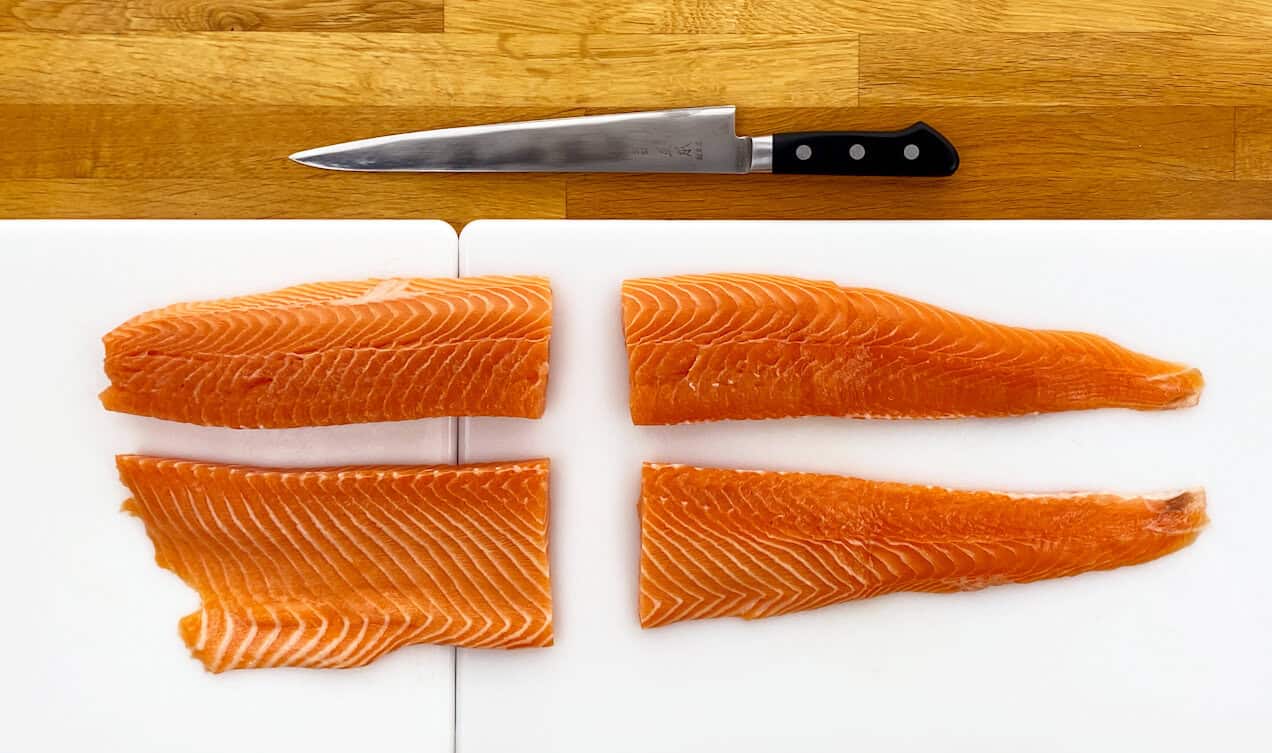
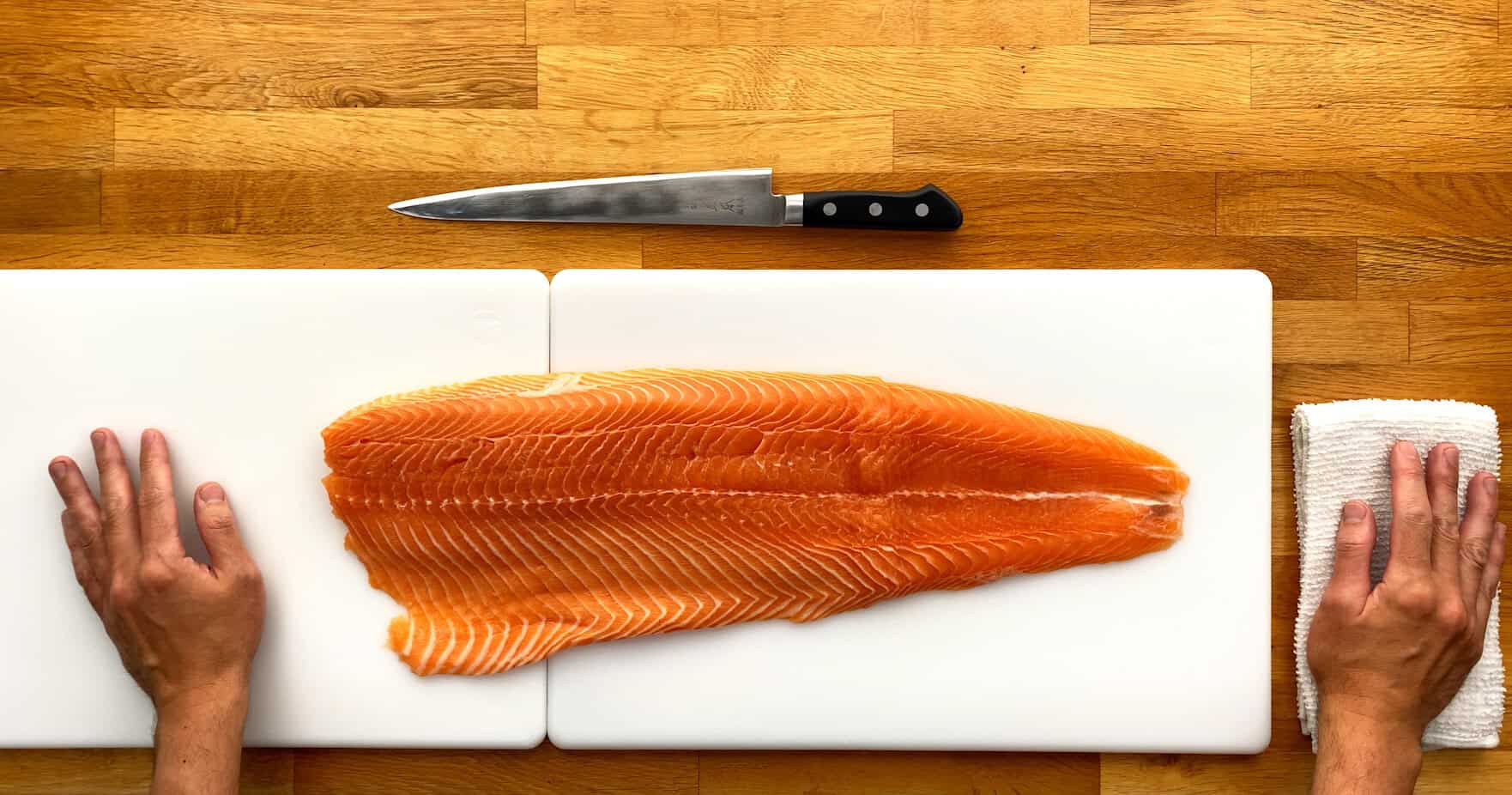
The second method is what I call the four-finger method. Starting from the thicker head end of the fillet, measure about four fingers across, make a cut, then repeat until you reach the tail. This creates smaller portions that are convenient if you're only making sushi for one or two people.
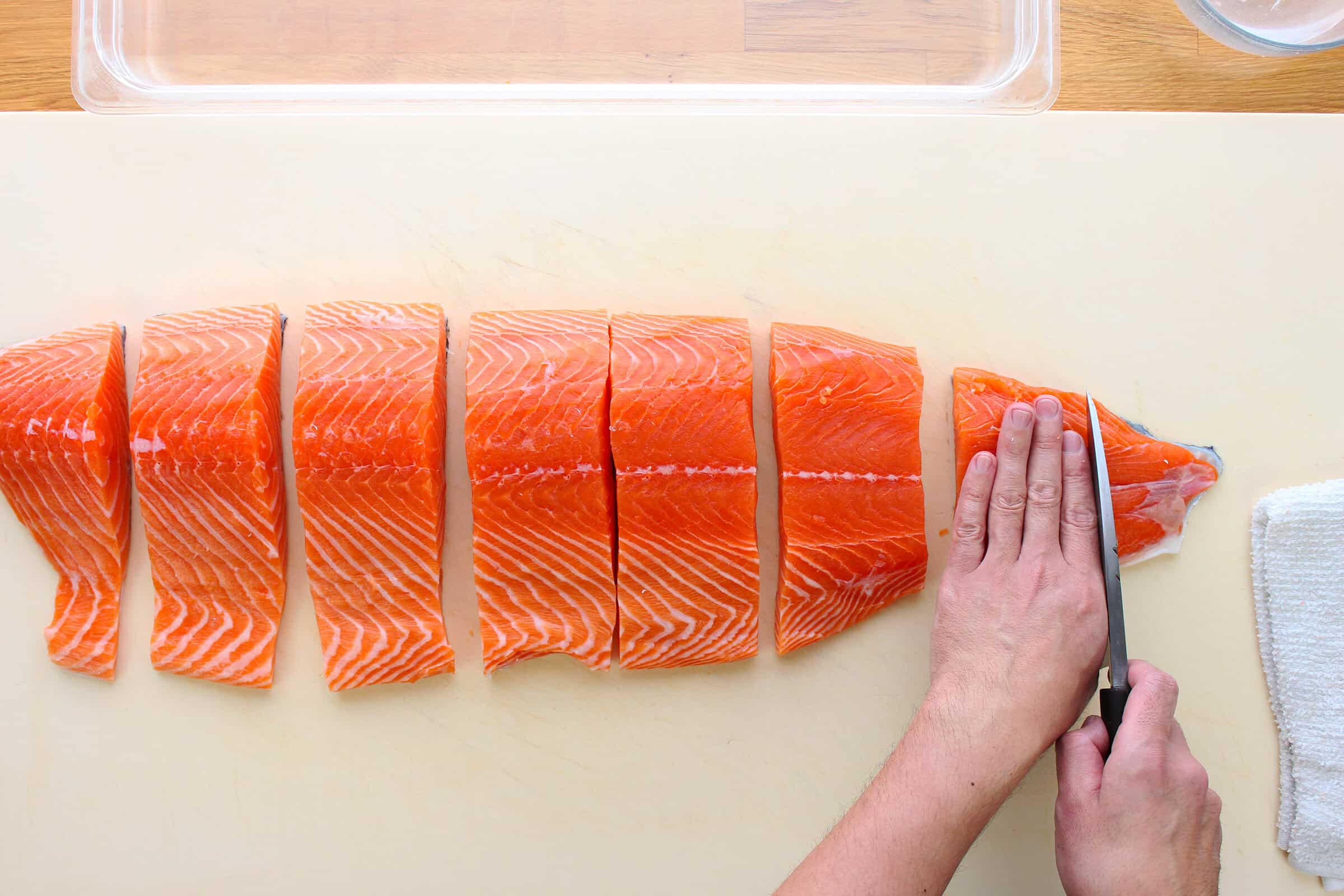
Neither method is better than the other. It simply depends on how much salmon you typically use at one time.
If you've ever heard the term saku block, this is essentially what you're creating. A saku block is simply a rectangular piece of fish that's easier to store and slice evenly for sushi and sashimi.
Before deciding how to use each piece, it helps to understand how the different areas of the fillet compare.
Which Parts Are Best for Sushi?
Not every part of the fillet has the same texture.
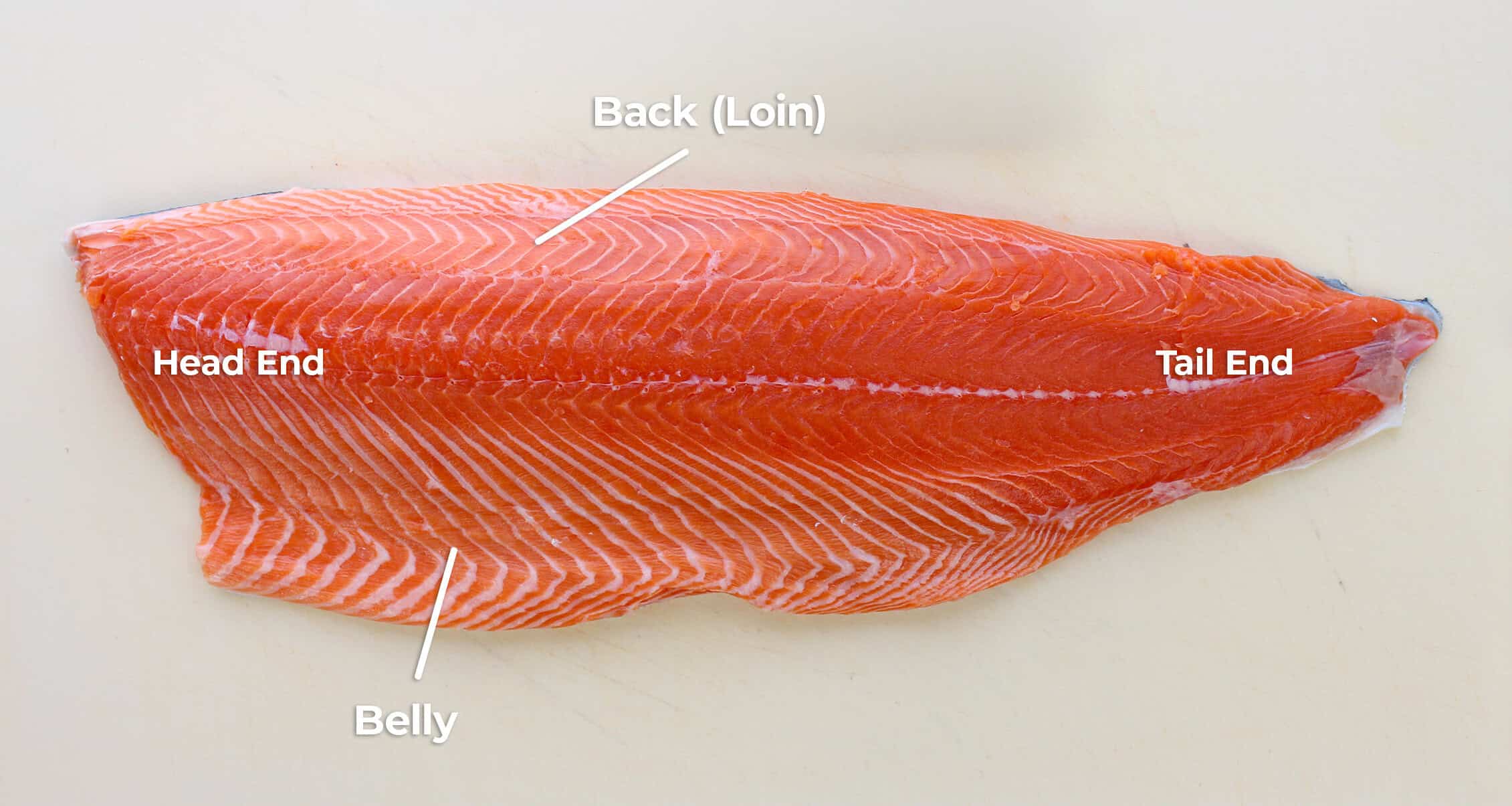
The thicker head end, especially the belly portion, is richer in fat and has a soft, buttery texture. Those are my favorite sections for sushi and sashimi because they almost melt in your mouth.
The back (loin) near the head end is another excellent section for sushi and sashimi. While it isn't quite as rich as the belly, it still has plenty of fat and a smooth, tender texture that makes it one of the most versatile parts of the fillet.
As you move toward the tail, the meat becomes leaner and firmer. It's still great salmon, and I use it all the time, just not for the same purpose.
If I'm making nigiri or sashimi, I'll usually save the belly and the thicker sections closer to the head. The leaner tail pieces are perfect for sushi rolls, poke bowls, or cooked dishes.
One salmon fillet can easily give you the best of both worlds.
If you want to learn more about the different sections and how I cut them for sashimi, nigiri, and rolls, check out my complete guide on How to Cut Salmon for Sushi & Sashimi.
Step 2: Give It a Simple Salt Cure
Once I've portioned the salmon, the next thing I do is give it a quick salt cure.
There are a lot of different opinions when it comes to curing salmon. Ask ten sushi chefs, and you'll probably get ten different answers.
Some chefs use only salt. Others use salt and sugar. Some add vinegar, while others skip curing altogether. It really comes down to personal preference, and there's no single right way to do it.
Over the years, though, I've found myself coming back to the same simple method: a 25-minute dry salt cure.
For me, it consistently produces the texture I like best for sushi and sashimi.
Why I Cure Salmon
A lot of people think curing is mainly about food safety, but that's really just one small part of it.
The biggest reason I cure salmon is because it improves the texture.
The salt draws out some of the excess moisture, which firms up the flesh slightly without drying it out. That firmer texture makes the salmon easier to slice cleanly and gives it a more enjoyable bite when you're eating sushi or sashimi.
It's a subtle difference, but one I think is worth the extra 25 minutes.
What Kind of Salt Should You Use?
You don't need anything fancy.
I usually use kosher salt because it's what I always have on hand, but sea salt works as well.
The goal isn't to season the salmon like you're preparing dinner.
You're simply coating the fish well enough for the curing process to do its job.
How to Salt Cure the Salmon
Find a tray or container with a little depth. As the salmon cures, it will release moisture, so you'll want something that can catch the liquid.
Sprinkle a generous layer of salt on the bottom of the tray, place the salmon on top, then evenly coat every side with more salt.
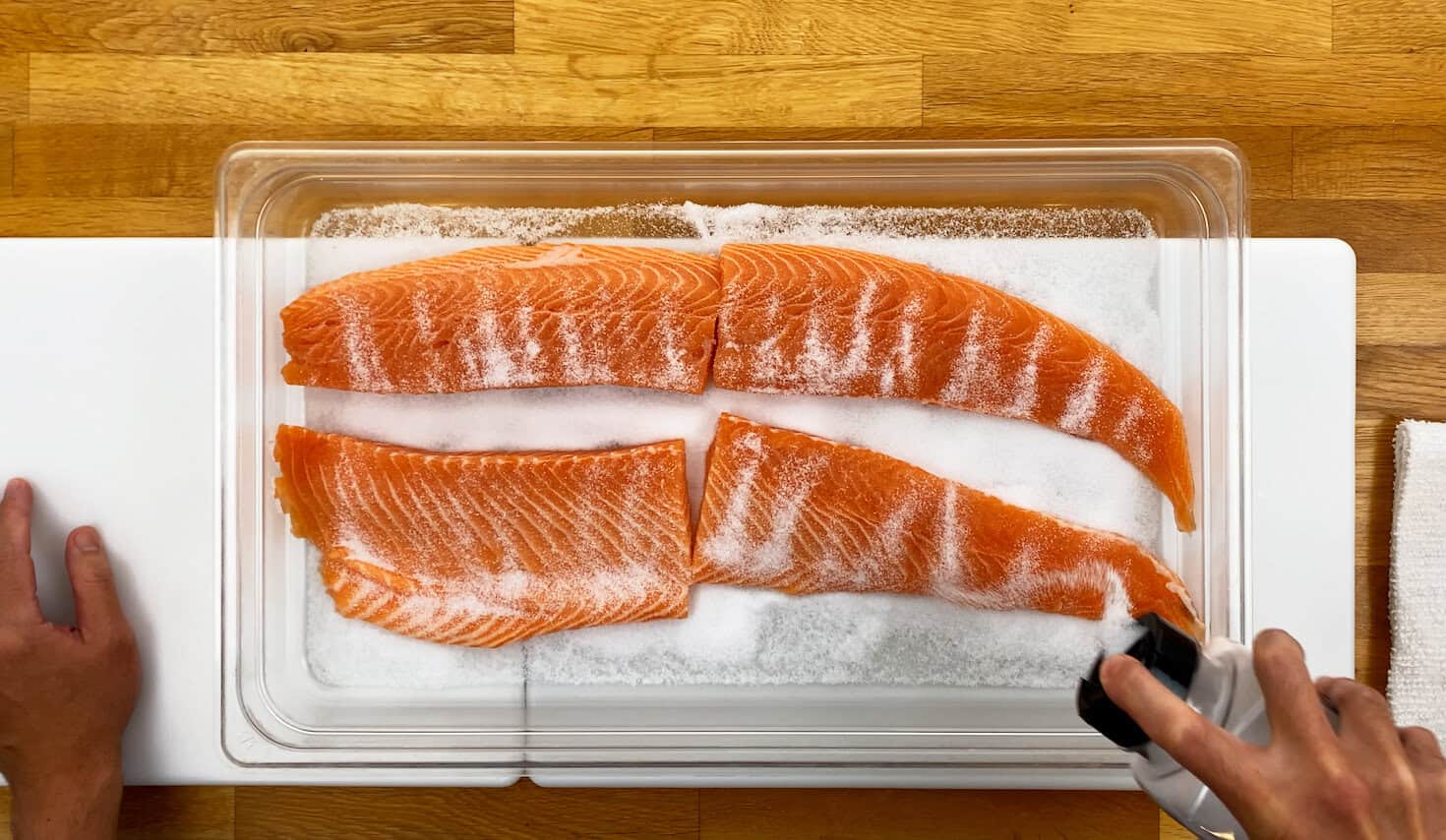
Don't worry, you'll rinse it off later.
Cover the tray with plastic wrap and let it sit in the refrigerator for 25 minutes.
When the time is up, you'll probably notice liquid has collected in the bottom of the tray and the salmon has taken on a deeper, more vibrant color. That's exactly what you want to see.
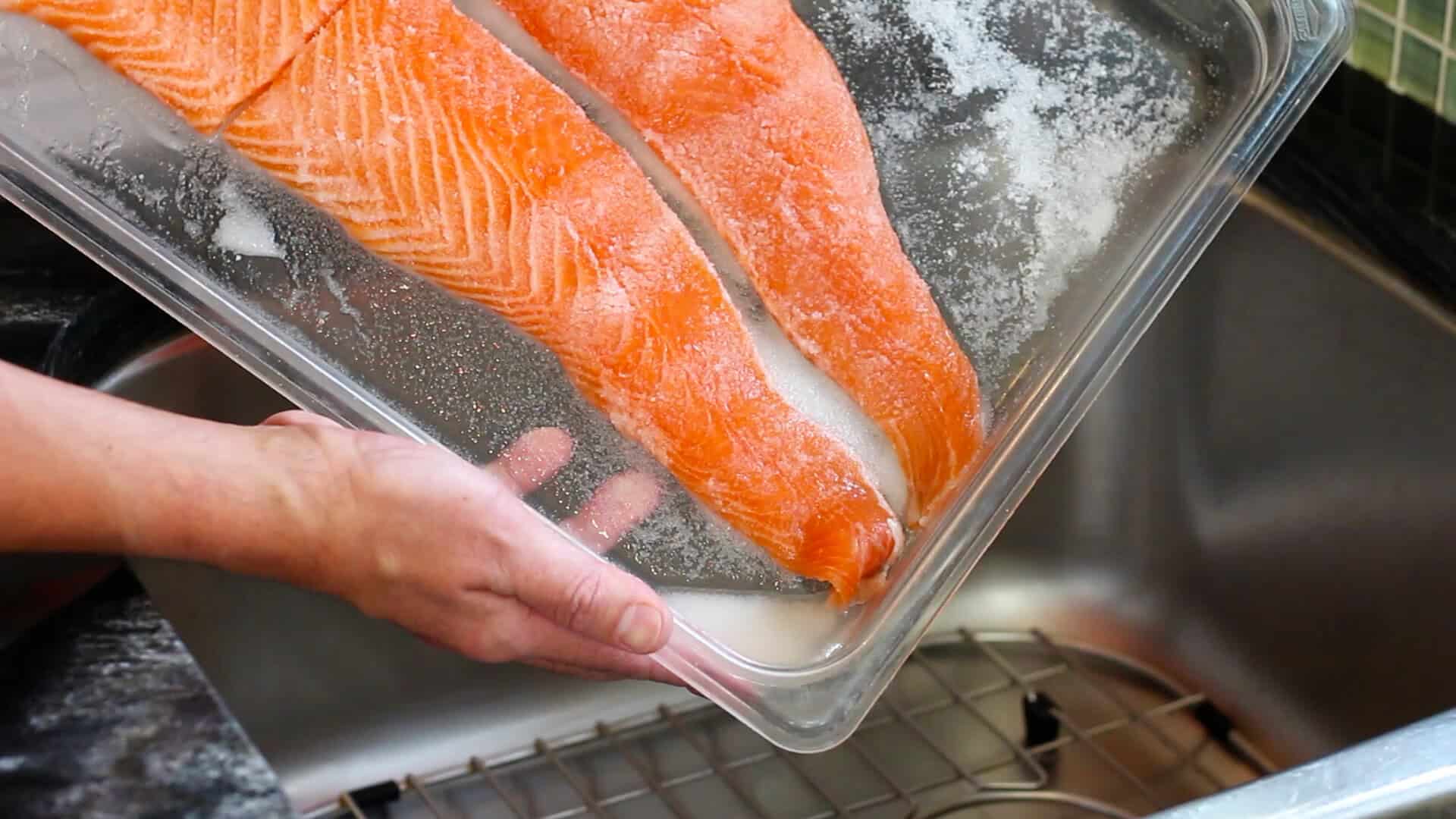
Step 3: Rinse and Dry
After 25 minutes, rinse the salmon thoroughly under cold running water to remove the salt. One tip I recommend is using gentle water pressure. If the stream is too strong, it can tear some of the flesh as you're rinsing the salt away.
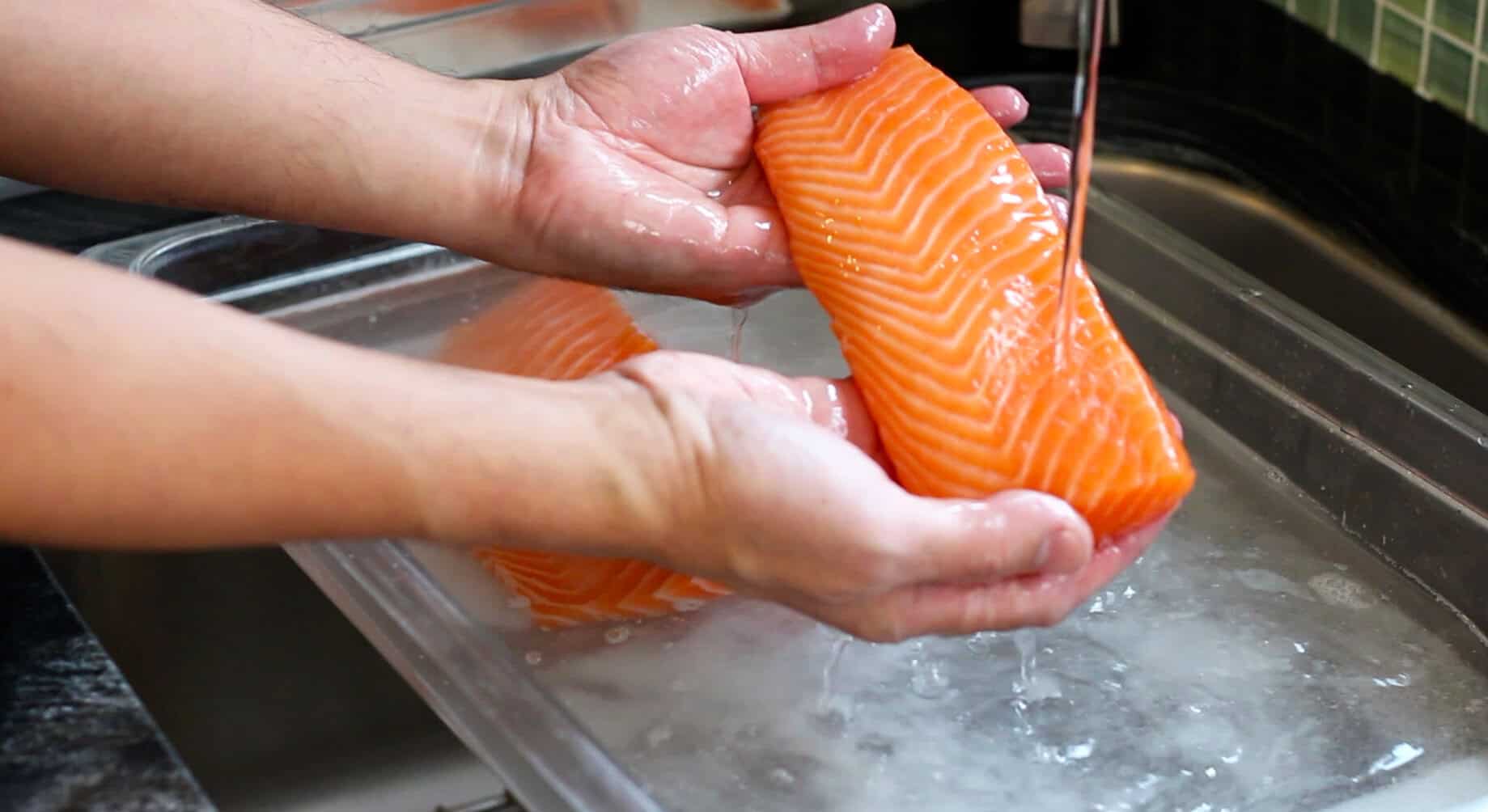
Once it's rinsed, pat every piece completely dry with paper towels.
This step is easy to overlook, but it's important.
Removing as much surface moisture as possible helps preserve the salmon's quality, especially if you're planning to store or freeze it.
Take an extra minute here.
It makes a difference.
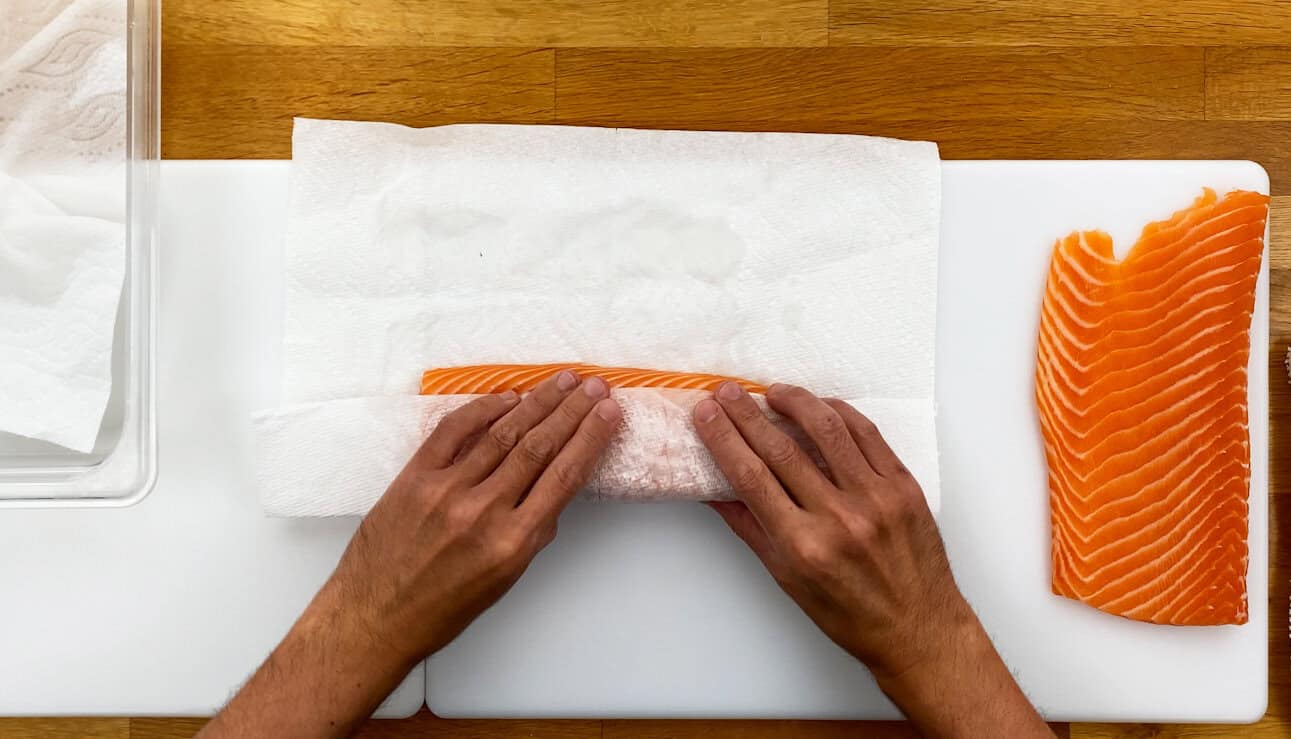
At this point, your salmon is ready to use or freeze.
If you're freezing it, here's how I recommend storing it to keep it in the best possible condition.
❄️ How to Store and Freeze Costco Salmon
Most of the time, I don't use an entire side of salmon all at once. I portion it into smaller pieces, use what I need, and freeze the rest for later. One of the biggest advantages of buying a whole side from Costco is that it gives you the flexibility to do exactly that.
When stored properly, salmon freezes surprisingly well, so you can have sushi-ready fish whenever the craving hits.
Do You Need to Freeze Costco Salmon?
This is probably one of the most common questions I get.
Compared with many wild fish, farm-raised Atlantic salmon has a much lower risk of parasites because it's raised in a controlled environment.
You may have also heard that Costco's salmon has been frozen somewhere during processing or shipping. While parts of the supply chain may involve freezing or superchilling, I don't assume every fresh fillet has undergone an FDA-approved parasite destruction treatment.
Because of that, I generally recommend freezing Costco salmon before using it for sushi or sashimi, especially if you're new to preparing raw fish at home. It's a simple extra step that helps reduce the risk even further.
You'll probably come across the FDA's freezing recommendations while researching raw fish. Those recommendations include certain exemptions for properly raised aquacultured fish, such as farm-raised Atlantic salmon. That's a much deeper topic than I want to get into here, but it's one of the reasons there's so much confusion surrounding whether Costco salmon should be frozen before eating it raw.
Personally, whether I freeze it depends on the situation. After preparing salmon for many years, I'm comfortable making that judgment call based on the quality of the fish, how it's been handled, and when I plan to use it. For most people making sushi at home, though, I think freezing it first is the safest and most straightforward approach.
If I do freeze it, I like to leave it in the freezer for at least seven days before thawing and using it. It gives me additional peace of mind, especially when I'm serving raw fish to family and friends.
Wrap It Well
Before freezing the salmon, the goal is to protect it from air as much as possible.
Air is one of the biggest causes of freezer burn, which can dry out the fish and affect both its texture and flavor.
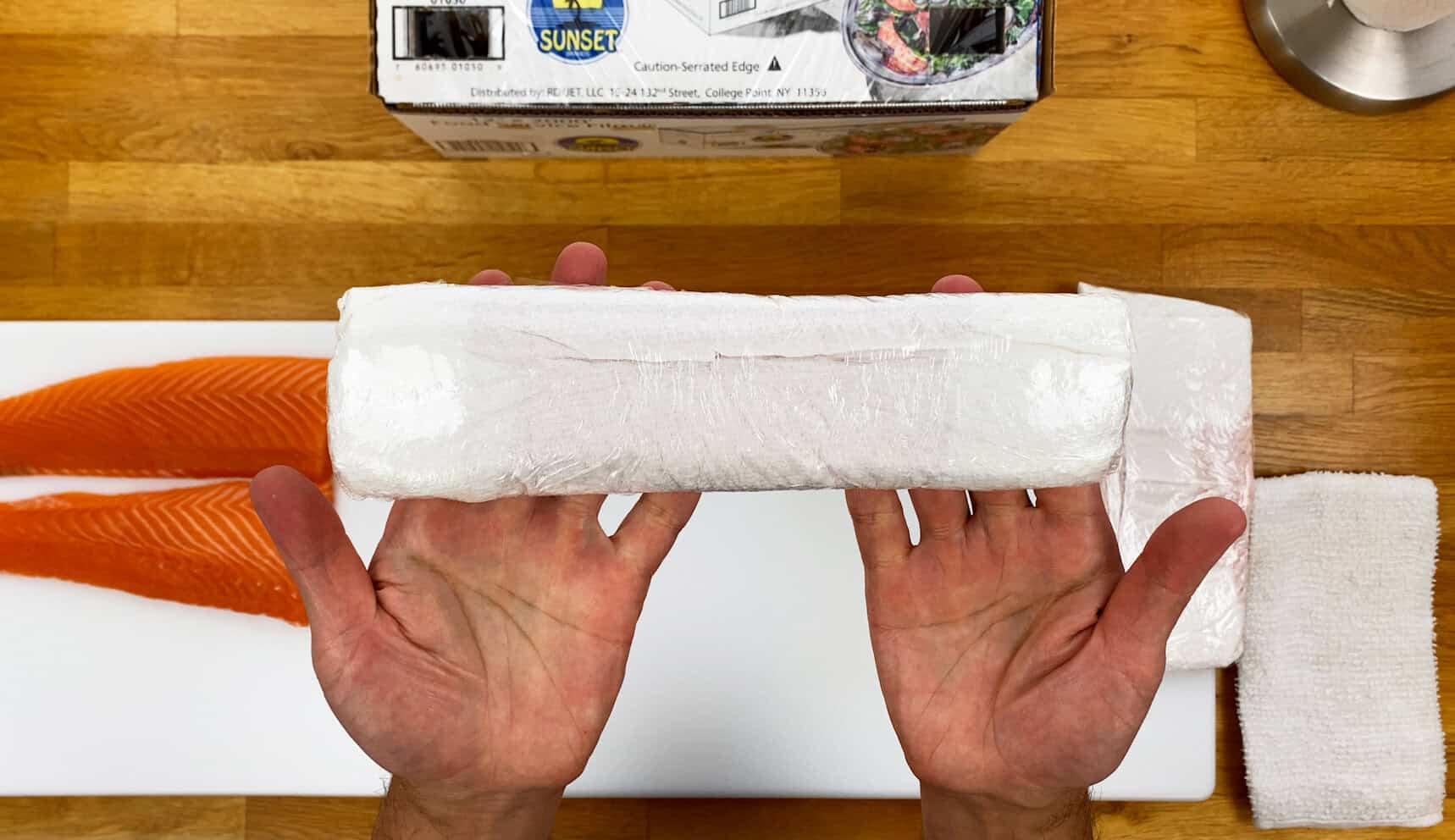
After the salmon has been cured, rinsed, and patted completely dry, I wrap each portion in a paper towel before wrapping it tightly in plastic wrap. The paper towel absorbs any remaining moisture, while the plastic wrap helps keep air away from the fish. Taking an extra minute here goes a long way toward preserving the salmon's quality.
Vacuum Seal If You Can
If you own a vacuum sealer, this is the best time to use it.
Removing the air helps protect the salmon from freezer burn and keeps it in excellent condition while frozen.
Don't worry if you don't have one, though.
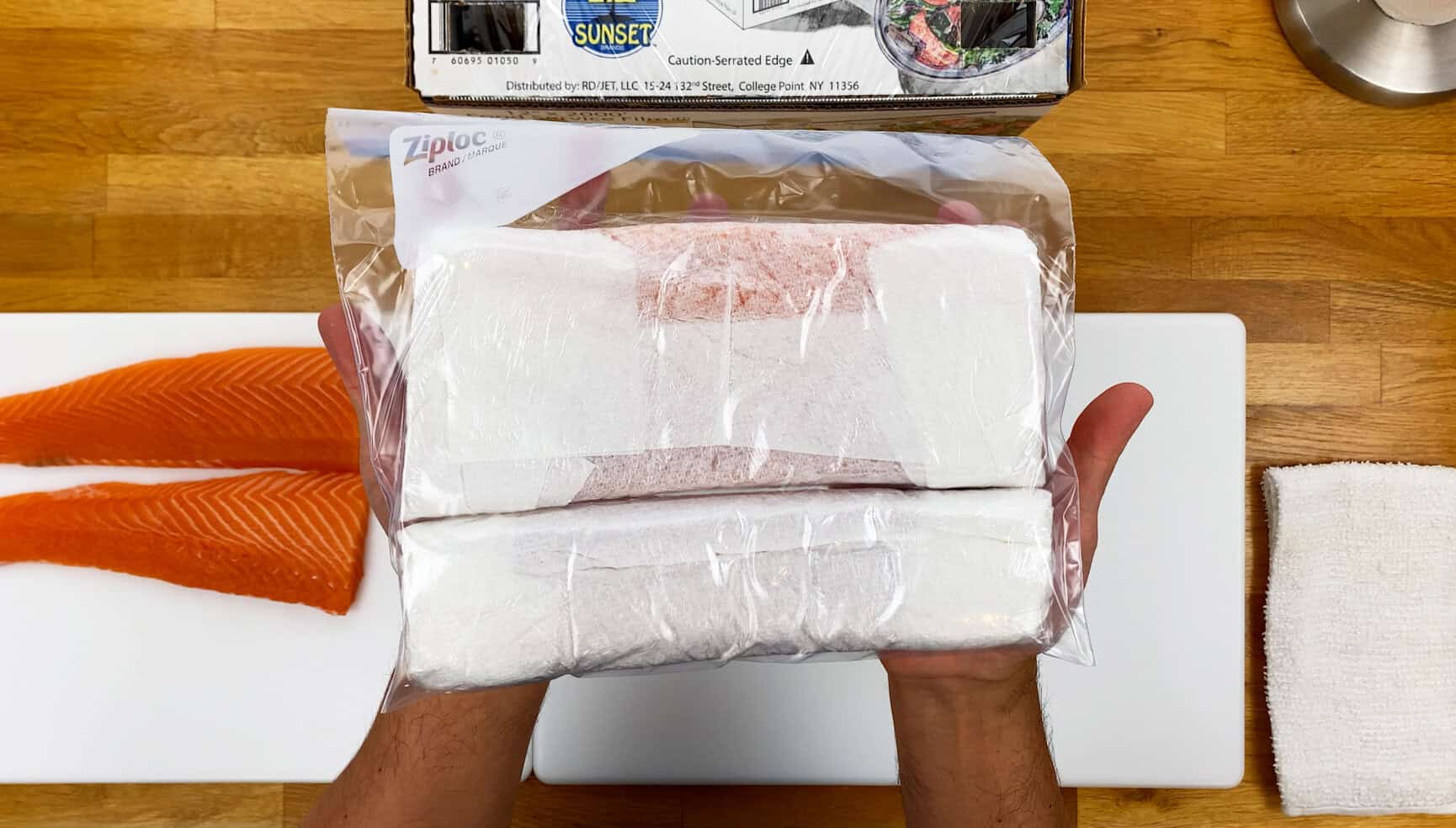
A freezer-safe Ziploc bag works perfectly well for most home cooks.
Simply place the wrapped salmon inside the bag and press out as much air as you can before sealing it.
No special equipment required.
Don't Forget to Label It
It sounds simple, but don't skip this step. I always write the date directly on the bag before putting it in the freezer so I know exactly how long it's been stored and can use the oldest pieces first.
Your future self will thank you.
How Long Does Costco Salmon Last in the Freezer?
While salmon freezes surprisingly well, it's still best enjoyed sooner rather than later.
Personally, I like to use mine within about a month, and no more than a couple of months, for the best quality.
It will generally remain safe longer if it's been stored properly, but over time the texture and flavor will gradually begin to decline.
Since you're planning to enjoy it raw, I think it's worth using it while it's still at its best.
How to Thaw Frozen Salmon
When you're ready to use it, avoid thawing the salmon on the kitchen counter.
Instead, transfer it from the freezer to the refrigerator the night before.
Allowing it to thaw slowly in the refrigerator helps preserve its texture and gives much better results than trying to speed up the process.
Once it's fully thawed, remove the wrapping and gently pat the salmon dry with paper towels if needed.
At this point, your salmon is ready to use.
Now that we've covered how to choose, prepare, and store Costco salmon, I'd like to share a few thoughts from my own experience using it over the years, including where I think it shines and where premium salmon still has the edge.
💭 My Honest Thoughts on Using Costco Salmon
So where does Costco salmon fit in?
Honestly, I think it's one of the best options available for people making sushi at home.
It's easy to find, reasonably priced, and consistently produces great sushi and sashimi when it's handled properly.
🔪The Sushi Man Tip
Always Keep One Portion in the Freezer
One thing I almost always have in my freezer is a portion of Costco salmon.
That way, whenever I'm in the mood to make sushi... or, more accurately, whenever my wife requests sushi, I'm already halfway there.
Having a few portions ready to go makes homemade sushi feel much more realistic even on a busy weeknight.
One of the biggest lessons I've learned over the years is that making great sushi isn't about buying the most expensive ingredients.
It's about understanding the ingredients you have and using them well.
Of course, freshness and quality matter. But I'd argue that properly made sushi rice, paying attention to the little details, using a sharp knife, and taking your time have an even bigger impact on the final result.
I've also seen some incredibly expensive fish go to waste because those basics were overlooked.
Good technique almost always matters more than buying the most expensive fish.
That's one of the reasons I continue recommending Costco salmon. It strikes a great balance between quality, convenience, and price, making it a great choice for anyone learning to make sushi at home.
Now that you know how I approach Costco salmon, let's look at a few common mistakes I see people make and, more importantly, how to avoid them.
🚫 Common Mistakes to Avoid
Preparing Costco salmon for sushi isn't difficult, but there are a few common mistakes that can affect the final result. Fortunately, they're all easy to avoid once you know what to look for.
Choosing the First Package You See
It can be tempting to grab the first package you see and keep moving. I almost never do. Instead, I'll spend an extra minute (or, more realistically, five) comparing several fillets before deciding which one to bring home. It's surprising how much they can vary, even when they're sitting right next to each other.
Letting the Salmon Get Too Warm
Once you've picked out a great fillet, don't forget that keeping it cold is just as important.
I actually bring an insulated cooler bag into Costco with me and put the salmon inside as soon as it goes into my cart. That way, it stays cold from the moment I pick it up until I get home.
It may seem like a small thing, but maintaining that cold chain helps keep your salmon in the best possible condition.
Not Drying the Salmon Thoroughly
After rinsing off the salt cure, make sure to pat the salmon completely dry with paper towels. This is especially important if you plan to freeze it.
Excess moisture can affect the salmon during freezing and can also cause the paper towel to stick like glue after it's thawed. Trust me, it's a pain in the butt. It can also affect the overall texture of the fish.
It's a simple step, but one that's easy to overlook.
Leaving Too Much Air in the Packaging
Whether you're using a vacuum sealer or a freezer-safe bag, try to remove as much air as possible before freezing.
The less air surrounding the salmon, the better it'll hold its quality and the less likely it is to develop freezer burn.
Expecting Every Part of the Fillet to Be the Same
A salmon fillet isn't the same from end to end. Each section has its own texture and fat content, making it better suited for certain types of sushi and sashimi. Knowing how to use each part is one of the easiest ways to get the most out of the entire fillet.
The fattier belly and mid-section are my favorite for nigiri and sashimi, while the back portion works well for sushi rolls, hand rolls, and poke. I usually save the tail end for cooked dishes, although it also works well in rolls or poke.
Rather than expecting every piece to be identical, use each section where it performs best.
Trying to Make Everything Perfect
This is probably the biggest mistake of all.
I've seen so many people spend weeks researching every little detail before they ever make their first roll.
Learning the basics is important, but don't let the pursuit of perfection keep you from getting started.
Making sushi is a skill, and like any skill, the only way to get better is by practicing.
Your first batch doesn't have to look like it came from a high-end sushi bar.
If it tastes good and you learned something along the way, that's a success.
🍣 Final Thoughts
Costco salmon isn't the most expensive salmon you can buy, nor does it need to be.
For many home cooks, it's one of the easiest and most affordable ways to make quality sushi at home. By following the simple steps in this guide, you can make sushi you're genuinely proud to share with family and friends (or eat it all yourself, no judgment here).
Remember, every sushi chef starts somewhere, and the goal isn't perfection. Just focus on getting comfortable working with the fish and enjoying the process.
Every time you make sushi, you'll learn something new, and before long you'll be making it with far more confidence than you ever expected.
I hope this guide answered your questions about Costco salmon for sushi and, more importantly, gave you the confidence to make homemade sushi for yourself.
Happy sushi making!
📚 Continue Your Sushi Journey
Ready to keep learning? Here are a few more guides that'll help you continue building your sushi skills.
- How to Cut Salmon for Sushi & Sashimi
- What Does Sushi Grade Actually Mean?
- How to Make Sushi Rice
- Best Fish for Homemade Sushi
- Top Beginner Sushi Mistakes
- Best Sushi Knives for Beginners
🎥 Related Videos
Prefer watching instead? These videos pair well with what you learned in this guide.
❓Common Questions (FAQ)
Yes, Costco's farm-raised Atlantic salmon can be a good option for sushi when it's selected carefully and prepared properly. That said, no raw seafood is completely risk-free. Buying from a reputable retailer, choosing a fresh fillet, and handling it properly all help minimize that risk.
If something doesn't look, smell, or feel right, don't use it for raw preparations. It's always better to be cautious.
No. Costco doesn't label its salmon as "sushi-grade."
It's also important to know that "sushi-grade" isn't an official or regulated term. A label alone doesn't determine whether salmon is suitable for raw preparations. The quality of the fish and how it's handled are much more important.
If you'd like to learn more, I explain what the term actually means in my complete guide to What Does Sushi Grade Actually Mean?
Not necessarily.
Because farm-raised Atlantic salmon generally has a lower parasite risk than wild-caught salmon, some people choose to use it for sushi without freezing it first. If I'm using a fresh piece of salmon the same day I buy it, I'll sometimes skip the freezing step myself.
That said, I generally recommend freezing it for at least seven days before using it for sushi or sashimi. It's an extra precaution that gives me peace of mind, especially when serving it to family and friends.
Not always.
Some sushi chefs cure salmon, while others don't. I personally use a simple 25-minute salt cure because I like the way it slightly firms the texture and prepares the fish for sushi. It's a simple step, but one that I've found consistently improves the final result.
I recommend Costco's farm-raised Atlantic salmon. Its rich fat content gives it a buttery texture that's excellent for sushi, and it's generally my first choice for beginners because it's affordable, widely available, and easy to work with. Another advantage is that farm-raised Atlantic salmon generally has a lower parasite risk than wild-caught salmon.
Generally, no.
If you're looking for the very best salmon, premium options like fresh king salmon or Bakkafrost Scottish salmon will generally offer a better flavor and texture.
That said, Costco salmon provides an excellent balance of quality, convenience, and value. For most people making sushi at home, it's one of the best places to start.
Yes, but I generally don't recommend it.
As long as the salmon was thawed safely in the refrigerator and wasn't left out at room temperature for an extended period, it can be refrozen. Just keep in mind that each freeze-and-thaw cycle can affect the texture and overall quality of the fish.
That's one of the reasons I recommend portioning the salmon before freezing it. You can thaw only what you need, which helps preserve quality and minimizes both waste and the need to refreeze.

Leave a Reply