
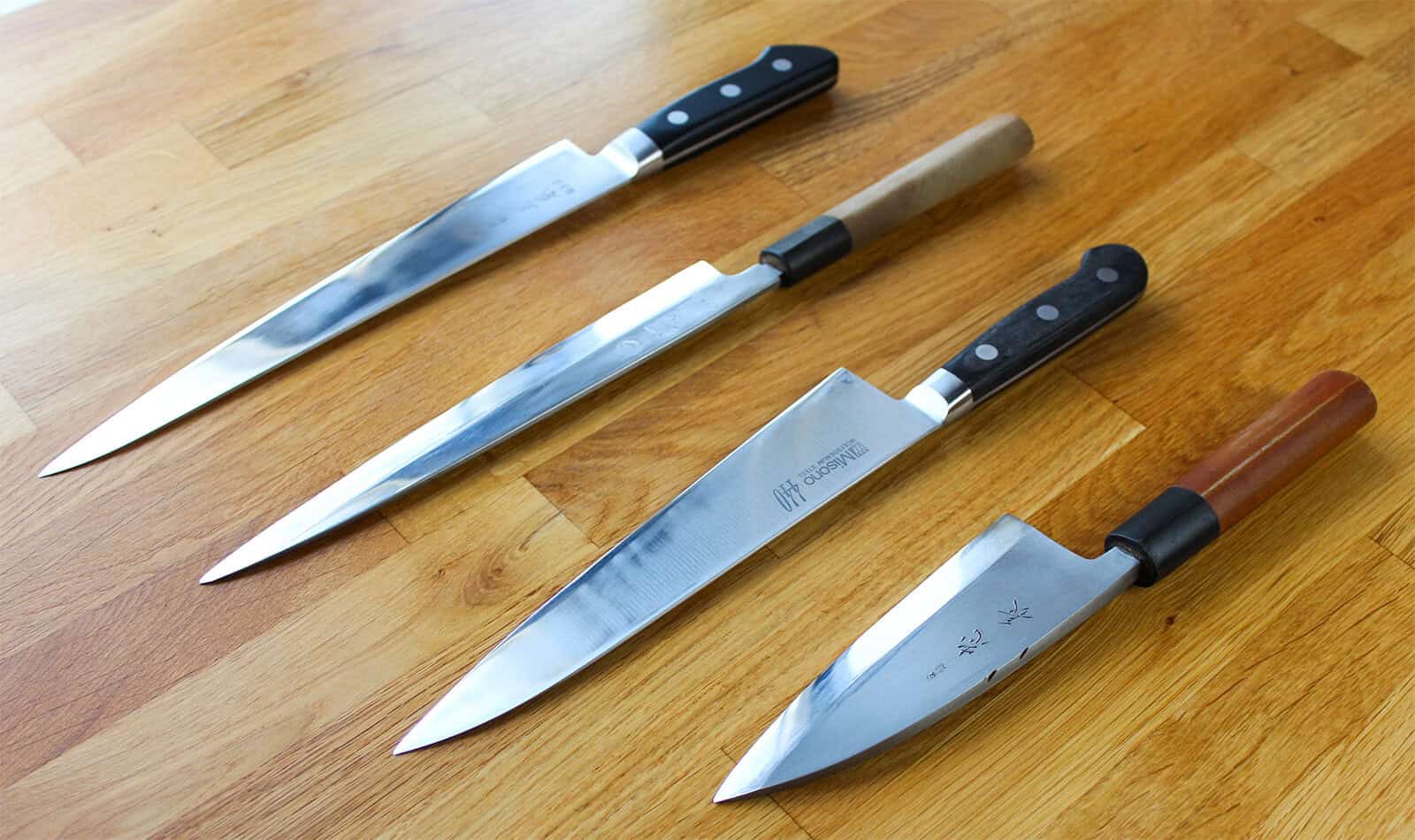
If you've ever shopped for a sushi knife, you've probably noticed there's no shortage of options. Yanagiba, sujihiki, gyuto, deba, santoku... and that's before getting into different steels, blade lengths, bevels, and prices ranging from surprisingly cheap to well over $1,000.
But here's the good news: you don't need a traditional Japanese sushi knife to make great sushi at home.
If you already have a good, sharp chef's knife, that's perfectly fine to start with. And if you're looking to buy something new, the best knife really depends on what you're going to use it for.
I've used plenty of different knives throughout my years cooking and making sushi, from basic restaurant knives to traditional yanagiba and the sujihiki I still use today. And while you don't necessarily need a specialized sushi knife, some knives are definitely better suited for the job than others.
So instead of giving you a long list of "best sushi knives," I'll help you figure out which type of knife actually makes sense for you, what to look for when buying one, and where I think it's worth spending your money.
Jump to:
- ⚡ Quick Answer: Which Knife Should You Use for Sushi?
- 🔪 Do You Actually Need a Sushi Knife?
- 🎯 What Actually Makes a Knife Good for Sushi?
- 🔪 Four Japanese Knives Commonly Used for Sushi
- ⚔️ Yanagiba vs. Sujihiki: Which One Should You Choose?
- 🤔 How to Choose the Right Sushi Knife
- ⭐ The Sushi Knives I Actually Use and Recommend
- 🪨 Sharpening and Caring for Your Sushi Knife
- 🍣 Final Thoughts
- 👉 Continue Your Sushi Journey
- ❓ Frequently Asked Questions
⚡ Quick Answer: Which Knife Should You Use for Sushi?
For most people making sushi at home, you probably don't need to run out and buy a specialized sushi knife. A sharp chef's knife can handle a lot more than you might think. A longer slicing knife can make the job easier, especially when cutting fish, but a sharp gyuto or regular chef's knife works perfectly fine when you're getting started.
If you are looking for a new knife, here's the easiest way I'd break it down:
| If this sounds like you... | I'd start with... |
|---|---|
| You already own a good, sharp chef's knife | Use what you have |
| You want one versatile knife for sushi and everyday cooking | Gyuto |
| You regularly make sushi and want a dedicated fish slicer | Sujihiki |
| You specifically want the traditional Japanese sushi/sashimi knife experience | Yanagiba |
| You plan to break down fish yourself | Deba |
For slicing fish for sashimi and nigiri, my personal favorite today is my Masamoto VG Series Sujihiki (240 mm). I've had mine for close to ten years and used it heavily during my sushi catering years, and it's still the knife I prefer for the job. The long, narrow blade is great for getting a smooth, clean slice through the fish, and the double-bevel edge makes it easy to control.
For everyday cooking, though, I reach for my Misono 440 Gyuto (210 mm) far more often. It's the knife I use for just about everything at home, and it's more than capable of handling sushi too. That versatility makes a gyuto a much more practical first purchase for someone who wants one good knife rather than a dedicated sushi slicer.
And if you're interested in a traditional yanagiba, there's absolutely a place for one. I used one for years and still love the feel of a freshly sharpened yanagiba. But a single-bevel knife handles differently and comes with a steeper learning curve, so I wouldn't recommend one simply because it looks like the knife you're "supposed" to use for sushi.
We'll get into those differences below, but the important thing to remember is that the right knife is the one that fits how you actually cook.
🔪 Do You Actually Need a Sushi Knife?
No, you don't need a special sushi knife to make sushi at home. But if the sharpest tool you have in your drawer is an Outback steak knife that's somehow been there since college, then yes, you'll definitely need one.
Now, if you already have a solid chef's knife that's sharp and long enough to slice through the fish cleanly, you can absolutely start with that. In fact, I'd much rather use a sharp chef's knife than a dull yanagiba or sujihiki just because it's technically a "sushi knife."
That said, there's a reason knives like the yanagiba and sujihiki are commonly used by sushi chefs. When it comes to making sushi, especially slicing fish, they're simply better suited for the job. The long, narrow blade moves through the fish more smoothly and makes it easier to get a clean slice in one single motion.
I'll get into each of these knives in more detail below, but if you're the visual type and want to see some of them in action, you can check out my video where I break down four different types of Japanese knives commonly used for sushi.
🎯 What Actually Makes a Knife Good for Sushi?
When it comes to sushi, the most important thing isn't whether your knife is Japanese, expensive, or specifically labeled as a "sushi knife." It needs to be sharp.
Of course, sharpness isn't the only thing that matters. The length and shape of the blade can make certain sushi tasks easier, and how you use the knife matters just as much.
Sharpness
A knife doesn't have to be completely dull before it starts causing problems with sushi. It might still cut through most foods perfectly fine, but when you're slicing fish, you'll start to notice that the blade doesn't move through quite as smoothly. You might leave a small piece of fish attached at the bottom or end up lumberjacking back and forth just to finish the cut.
Cutting sushi rolls can also become a struggle. A dull knife can catch on the nori, tear the roll, or squish the ingredients rather than slicing cleanly through everything.
You can usually tell during everyday cooking too. There's a reason cutting a tomato is such a common test for knife sharpness. If my knife starts struggling to get through the skin, I know it's probably time to sharpen it. And if you don't like tomatoes, the skin of a ripe mango is a good indicator too.
Blade Length and Shape
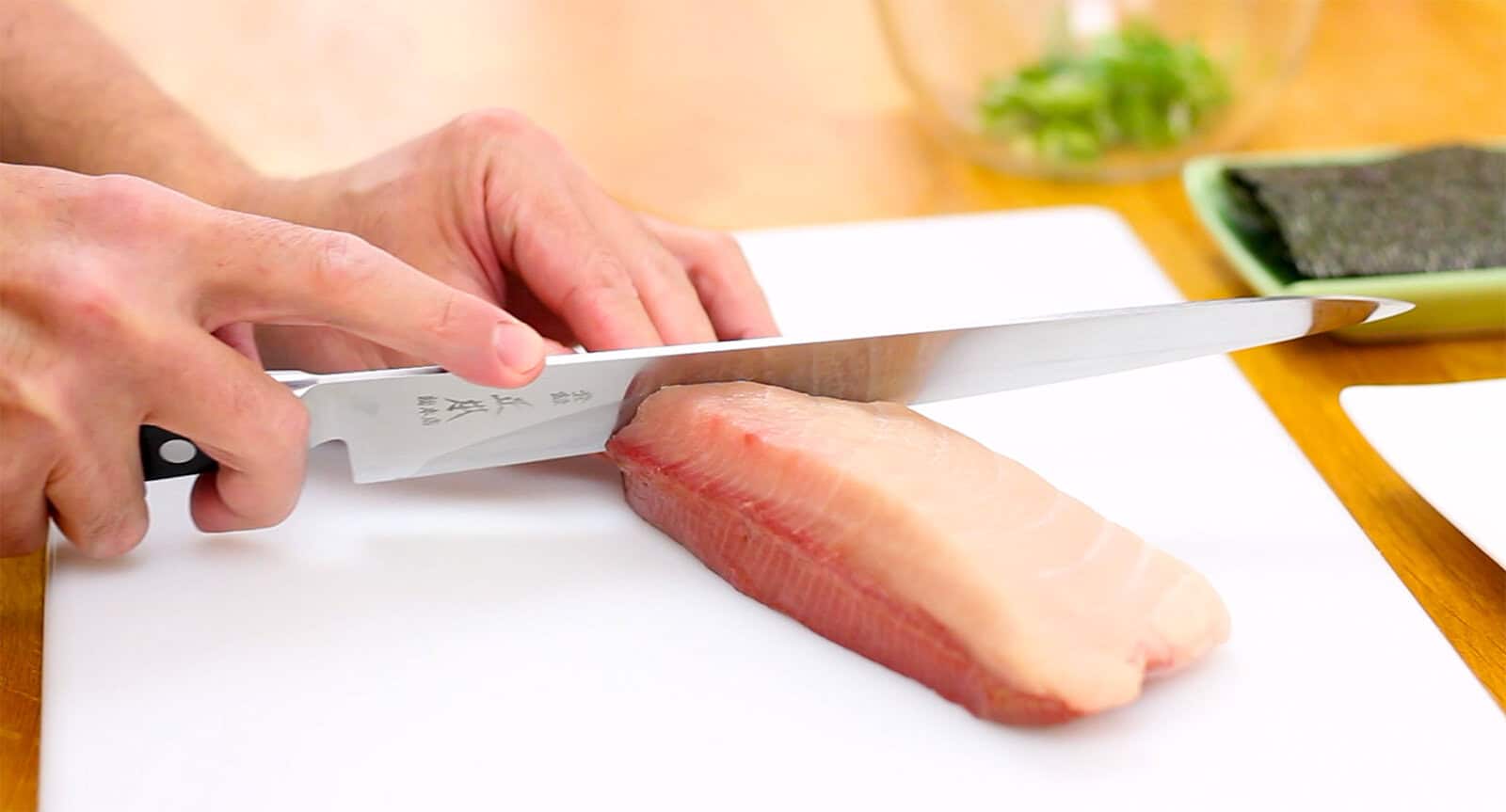
For slicing fish, a longer blade allows you to use more of the knife and get through the fish in one continuous pull. That's one of the big advantages of a sujihiki or yanagiba.
The narrower blade can also move through the fish with less resistance than a wider chef's knife. Now, that doesn't mean you need to go out and find a full-blown katana. For most people making sushi at home, somewhere around 210-270 mm (8-10.5 inches) is a good range, depending on the type of knife and how you're using it. Go much longer than that and it can actually become awkward, especially if you're working with a smaller cutting board or limited counter space.
Technique Still Matters
Even the best knife won't do all the work for you.
When slicing fish for sashimi or nigiri, I use as much of the blade as possible and make one long pulling cut rather than pressing straight down or sawing back and forth. Keeping the blade clean and slightly damp between cuts can also help it glide through the fish more easily.
If you want to see how I put that technique into practice, I go into much more detail in my guide to cutting salmon for sushi and sashimi.
🔪 Four Japanese Knives Commonly Used for Sushi
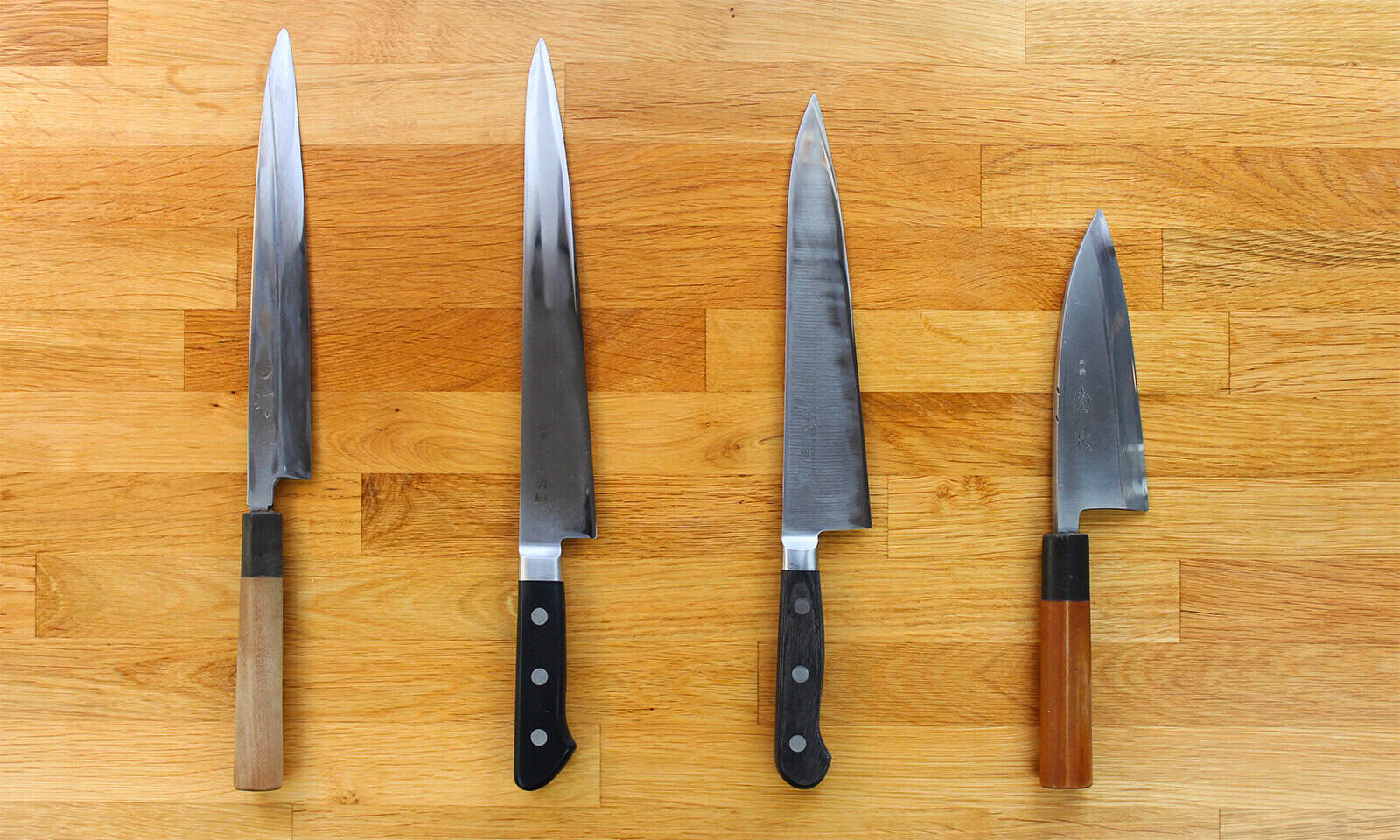
There are plenty of Japanese knives out there, but when it comes to making sushi at home, there are four that I think are particularly useful to understand: gyuto, sujihiki, yanagiba, and deba.
They each serve a different purpose, and you definitely don't need all four. Depending on how you make sushi and what else you cook at home, you may only ever need one of them.
Gyuto - Best for Versatility
If you're looking for one knife that can handle sushi and just about everything else in the kitchen, a gyuto is probably your best bet.
A gyuto is essentially the Japanese version of an all-purpose chef's knife. You can use it for fish, meat, vegetables, and most of your everyday prep, which is why it's the knife I reach for the most at home. In fact, if I could only keep one knife in my kitchen, it would probably be a gyuto.
For sushi, the wider blade isn't quite as nice for slicing fish as a sujihiki or yanagiba, but a sharp gyuto is still more than capable of slicing fish for sashimi and nigiri, as well as cutting sushi rolls. And if you're buying your first good knife, I think the versatility makes a lot more sense than spending the same money on a specialized slicer that you may only pull out when you're making sushi.
Sujihiki - My Go-To Sushi Knife
If you make sushi regularly and want a knife that's better suited for slicing fish, a sujihiki is a great option.
A sujihiki is a long, narrow Japanese slicing knife with a double-bevel edge. It's perfect for cutting fish for sashimi and nigiri, but it can also be quite versatile when it comes to sushi prep, such as cutting rolls and prepping vegetables. And outside of sushi, it's great for carving boneless meats as well.
I've used my Masamoto VG sujihiki for close to ten years now, including throughout my sushi catering years, and it's still my preferred knife for making sushi. Compared to a gyuto, there's a noticeable difference in how smoothly it glides through the fish.
For most home cooks who make sushi regularly and want a dedicated sushi knife, I'd lean toward a sujihiki. The double-bevel edge will feel more familiar to most people and doesn't come with the same learning curve as a traditional single-bevel knife.
Yanagiba - Traditional, Rewarding, but More Demanding
If you want to learn sushi using a traditional Japanese knife, the yanagiba is the classic choice. It's a long, narrow slicing knife specifically designed for cutting raw fish for sashimi and sushi.
Unlike a sujihiki, a traditional yanagiba has a single-bevel edge, meaning it's sharpened primarily on one side of the blade. It typically has a traditional Japanese-style handle, which gives it a different feel and balance compared to most Western-style knives. The single-bevel blade also handles differently and naturally wants to steer as you cut, so there's definitely a learning curve to getting consistently even slices.
I used a yanagiba for years in both restaurant and catering settings, and there's really nothing quite like using one that's freshly sharpened. Once you get used to how the single-bevel edge handles, it becomes second nature, and the knife can make incredibly smooth, precise cuts through fish.
These days, I tend to reach for my sujihiki instead. That's less about one knife being sharper or "better" than the other and more about convenience. My yanagiba is an older high-carbon knife that requires more care, while my sujihiki is easier to maintain and a little more versatile for the way I use it.
I wouldn't necessarily recommend a yanagiba to everyone. But if you're super serious about learning traditional sushi techniques and don't mind putting some time into learning how to use and maintain one properly, it can be an incredibly rewarding knife to use.
Deba - Best for Breaking Down Fish
The deba is quite different from the other knives we've covered. It's a thick, heavy Japanese knife designed primarily for breaking down fish. It's great for tasks like removing the head, filleting, and cutting through small fish bones, but don't let the heft fool you. It's not a cleaver, so you want to avoid chopping through any large bones.
Like the yanagiba, a traditional deba has a single-bevel edge and takes some practice to use properly. And despite how heavy the knife feels, the fine tip makes it surprisingly good for more delicate work as you fillet and work through the fish.
I've used a deba primarily for breaking down salmon and hamachi, and it's a great tool when you're doing that kind of fish prep. But for most people making sushi at home, it's probably not a knife you'll need. If you're buying pre-cut fillets or portions of salmon, tuna, or other fish, you can probably skip the deba altogether.
⚔️ Yanagiba vs. Sujihiki: Which One Should You Choose?
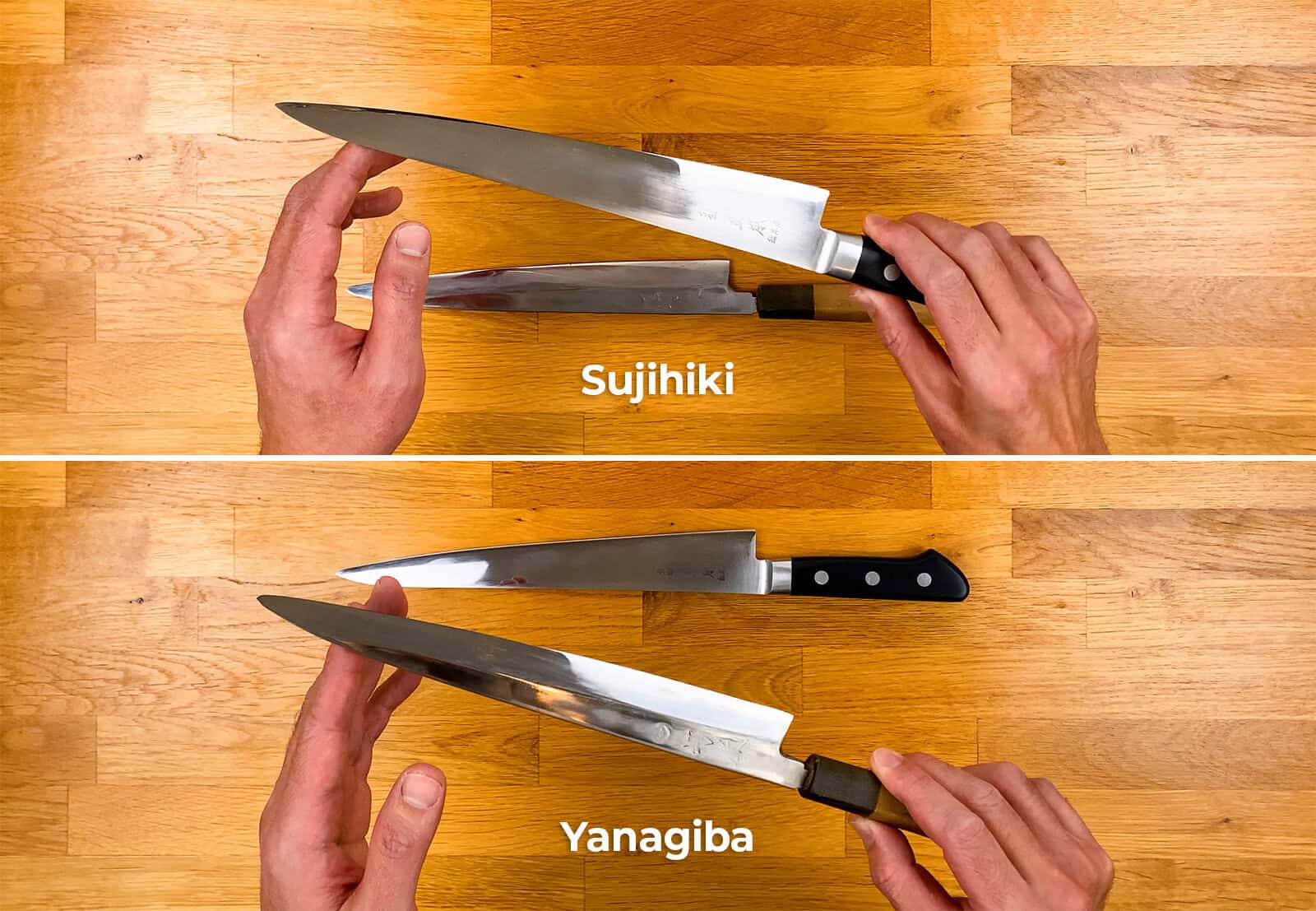
So after getting to know these different knives a little better, let's say you've decided you want a dedicated knife for slicing fish and you've narrowed it down to a yanagiba or sujihiki. Which one should you choose?
Both are excellent options for sashimi and nigiri, but there are some important differences that can make one a better fit for you than the other.
| Sujihiki | Yanagiba | |
|---|---|---|
| Edge | Double bevel | Single bevel |
| Feel | More familiar if you're used to Western-style knives | Different feel that takes some getting used to |
| Learning curve | Easier to pick up | Steeper |
| Versatility | Sushi prep, slicing fish, and boneless meats | Primarily slicing and preparing fish |
| Best for | Home cooks who want a dedicated sushi knife | Those interested in traditional Japanese sushi techniques |
I've spent years using both, and these days I personally prefer my sujihiki. For me, it comes down mostly to convenience and versatility rather than one being better at cutting fish. A well-sharpened yanagiba is an amazing knife to use, but for the way I make sushi today, the sujihiki simply makes more sense.
If you're choosing between the two for your first dedicated sushi knife, I'd lean toward a sujihiki for most home cooks. But if part of the appeal is learning how to use a traditional Japanese sushi knife, that's where I'd seriously consider the yanagiba.
🤔 How to Choose the Right Sushi Knife
Once you've figured out which type of knife makes the most sense for you, there are still a few things to consider before buying one. You can easily get lost comparing different steels, blade lengths, bevels, brands, and price points, but try not to overcomplicate it.
Start With How You'll Actually Use It
Before worrying about steel types, brands, or how a knife looks, think about what you'll actually be using it for most of the time.
Are you looking for one good knife that you'll use every day, including when you make sushi? Or do you already have your everyday knives covered and want something specifically for slicing fish? Maybe you're starting to buy larger cuts of fish that require more breakdown.
You've already seen which knives are better suited for each of those jobs, but this is where I'd start before spending any money. Buy for what you actually do in the kitchen, not what you think a sushi knife is supposed to look like.
Consider the Learning Curve
Another thing to consider is how much time you want to spend getting used to your new knife.
If you've spent years using a regular chef's knife, a double-bevel gyuto or sujihiki will probably feel pretty natural right away. A traditional single-bevel yanagiba or deba handles differently and takes some practice to use properly. But that's not necessarily a reason to avoid one. If learning how to use it is part of the appeal, the learning curve might actually be something you enjoy. Just know what you're getting into before spending the money.
Think About Maintenance
Be realistic about how much maintenance you're willing to deal with too. Now, if you're the type who just tosses your knives into the dishwasher, you might want to rethink that habit first. Because regardless of what type of knife you choose, you're going to have to take basic care of it.
My older yanagiba, for example, is made from high-carbon steel and needs to be cleaned and dried carefully after each use. Leave a knife like that wet for too long and rust can become an issue pretty quickly.
That said, I absolutely love using my yanagiba, especially when it's freshly sharpened, but for most home cooks, a more corrosion-resistant steel like stainless is simply easier to take care of. And there are plenty of excellent knives made from both. What's more important is choosing something you're actually willing to maintain properly. That includes sharpening, which we'll get into a little later.
How Much Should You Spend?
You can find "sushi knives" for less than $30 and others that cost well over $1,000, so how much should you actually spend?
If you're just getting into sushi and want to try an inexpensive dedicated knife, I don't think there's anything wrong with staying under $30. I've used some very inexpensive knives over the years that were perfectly capable of getting the job done. Just keep your expectations realistic when it comes to the overall quality and how often it may need sharpening.
If you're looking for a quality gyuto that you'll use for sushi and everyday cooking, somewhere around $100-200 is a reasonable budget. For a dedicated Japanese-made sujihiki or yanagiba that you plan to keep and use for years, I'd personally budget around $200-400.
Of course, you can spend much more than that. As prices go up, you may be paying for different steels, more specialized construction or finishing, particular makers, or even the aesthetics of the knife. But I've never needed a $500 or $1,000+ knife to make professional-quality sushi, so I definitely wouldn't consider spending that kind of money necessary, especially for making sushi at home.
A Quick Note on Blade Length
For slicing fish, you want enough blade length to make one long pulling cut without having to saw back and forth. But that doesn't mean longer is always better.
My Masamoto sujihiki is 240 mm (about 9.5 inches), and I've found that to be plenty long enough for the majority of fish I've worked with while still being comfortable to use at home. For a sujihiki or yanagiba, somewhere around 240-270 mm is a practical range to consider.
For a gyuto, 210-240 mm gives you enough length for most sushi work while still being a comfortable size for everyday cooking.
And don't forget about your cutting board and workspace. That 300 mm yanagiba might look pretty badass, but if half the blade is hanging off your board every time you use it, you might wish you'd gone with something a little shorter.
⭐ The Sushi Knives I Actually Use and Recommend
There are hundreds of great Japanese knives out there, and I definitely haven't tried enough of them to tell you which one is objectively the "best." What I can tell you is which knives I've personally used for years and would feel comfortable recommending based on that experience.
For me, that comes down to two knives: my Masamoto VG Sujihiki (240 mm) for sushi and slicing fish, and my Misono 440 Gyuto (210 mm) for everyday cooking.
Both have been in my knife collection for close to a decade, and they've held up extremely well over the years. But they're also very different knives, so which one I'd recommend depends on what you're looking for.
Masamoto VG Sujihiki (240 mm) - My Pick for Sushi
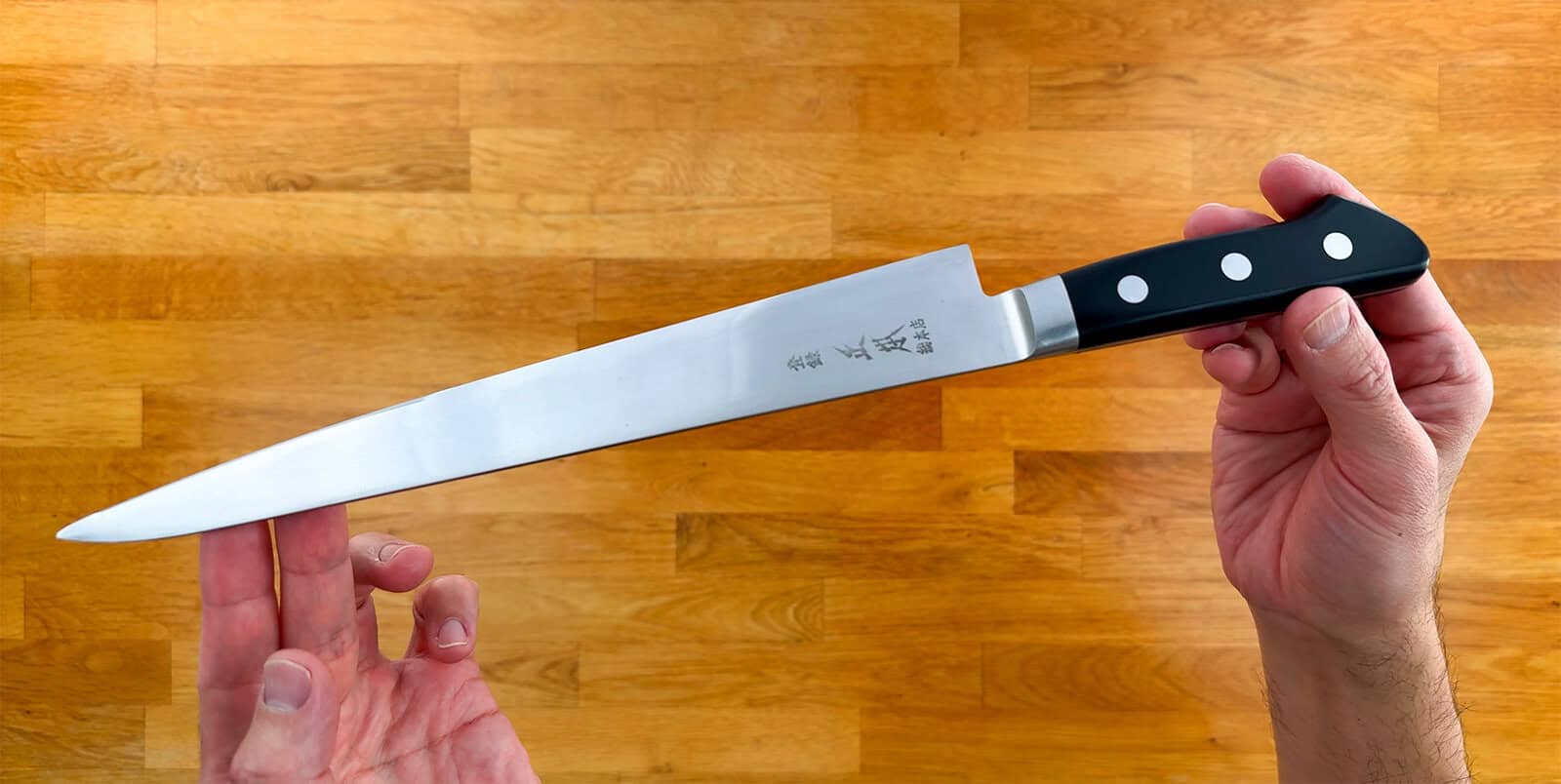
I've had my Masamoto VG sujihiki since 2017, and it became my workhorse during my sushi catering years. When I was working on-site and didn't want to switch between a bunch of different knives, this was the one I relied on by far the most.
The 240 mm blade is long enough to get through most pieces of fish in one smooth pull without feeling overly long or awkward to control. The narrow blade glides through fish beautifully, and the double-bevel edge cuts straight and feels very natural to use. It's also very well-balanced and comfortable to use, even for long hours at a time.
After close to ten years, it's still my go-to knife when I'm slicing fish for sashimi or nigiri. It's held up incredibly well, it's easy to sharpen, and I've never really had any major complaints about it.
At around $300, it's obviously not a knife I'd recommend to someone who makes sushi twice a year. But if you make sushi regularly and want a dedicated slicing knife that you could potentially use for decades, this is the one I'd personally recommend.
Misono 440 Gyuto (210 mm) - My Pick for Versatility
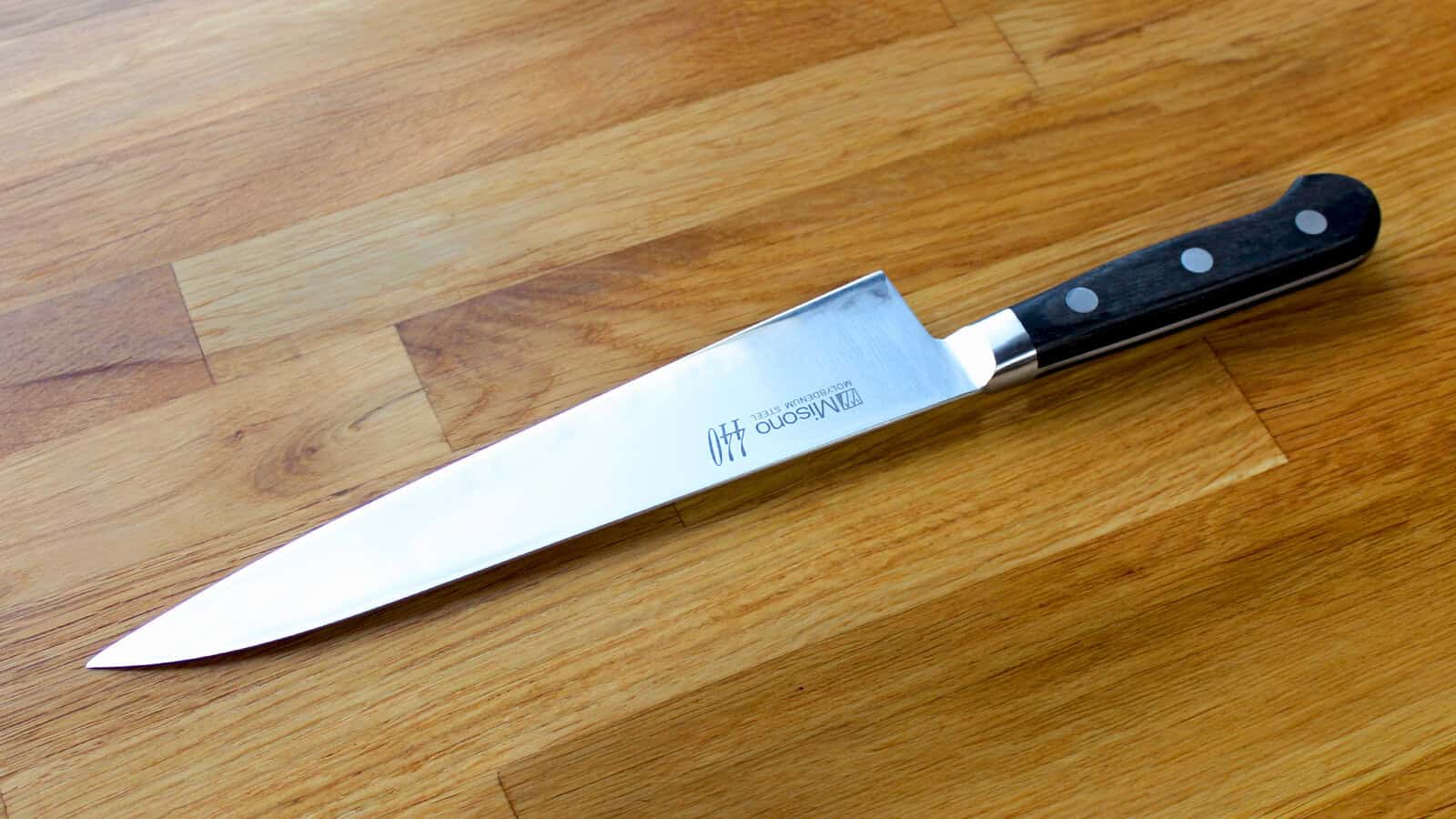
When it comes to everyday cooking, my Misono 440 gyuto is easily the knife I use the most. I've had it for about eight years now, and it's become my all-around workhorse for just about everything I cook at home.
If I'm making a full sushi meal, I'll usually reach for my sujihiki. But if I'm already using my gyuto for a variety of prep, sometimes I'm honestly just too lazy to switch knives. And that's also a pretty good example of why I like the gyuto so much. It's not quite as nice for slicing fish as my Masamoto sujihiki, but the 210 mm blade is long enough to handle most sushi tasks, and as long as it's sharp, it's more than capable of getting the job done.
Mine has seen a lot of use over the years, including being my guinea pig for different sharpening stones, honing rods, and compounds. Despite all of that, it's held up extremely well and is still going strong after years of almost daily use. It's also been very easy to maintain. The stainless steel is corrosion resistant, and I've always found it easy to sharpen.
If you already have a good chef's knife at home, I don't think you necessarily need to replace it with a gyuto just for making sushi. But if you're looking to invest in one quality Japanese knife that you can use for sushi and just about everything else in the kitchen, the Misono 440 is one I'd definitely recommend.
🪨 Sharpening and Caring for Your Sushi Knife
No matter how much you spend on a knife, eventually it's going to get dull. And as we talked about earlier, keeping your knife sharp is one of the most important things you can do when making sushi.
Now, you don't need to go full Haganezuka from Demon Slayer and spend days obsessively sharpening your blade, but learning how to properly use a whetstone is definitely worth the effort.
I've accumulated a few different sharpening stones and tools over the years, but the one I use most often is still my King 1000/6000 combination whetstone. The 1000-grit side does the majority of the sharpening, while the 6000-grit side refines and polishes the edge. I even have a 10,000-grit finishing stone, but honestly, I rarely use it. For most home cooks, the King combination stone is really all you need to get started.
And you don't need a fancy sharpening setup either. I have a whetstone holder and sink bridge that make the process easier and less messy, but they're definitely not necessities. A wet towel or rubber mat underneath your stone works perfectly fine for keeping it from sliding around.
The actual sharpening takes some practice, especially finding the right angle and keeping it consistent as you work your way along the blade. But like most things, it gets easier the more you do it. Just keep in mind that the technique I use for a double-bevel knife like my Misono gyuto is different from sharpening a traditional single-bevel yanagiba or deba.
For everyday care, keep things simple. Hand wash your knife, dry it after use, and please don't put it in the dishwasher. If you're using a high-carbon steel knife, you'll want to be especially diligent about keeping it clean and dry to prevent rust.
If you want to see exactly how I sharpen double-bevel Japanese knives, I have a full video showing the process step-by-step.
🍣 Final Thoughts
It's easy to overthink buying a sushi knife. Once you start comparing different steels, blade styles, brands, and prices, something as simple as buying a knife can turn into a pretty deep rabbit hole.
But after years of making sushi and using all kinds of knives along the way, one thing I've learned is that the fundamentals still matter more than anything else. A sharp knife you know how to use will always serve you better than an expensive knife you don't.
That doesn't mean the knife itself doesn't matter. A quality knife from a reputable Japanese maker can last you for decades if you take care of it, and having the right knife for the job can make the process a lot easier and more enjoyable. But you don't need to spend a fortune or own every traditional Japanese knife to make great sushi at home.
So don't get too caught up trying to find the "best" sushi knife. Whether you're starting with the chef's knife you already own or investing in a quality Japanese knife that you'll hopefully still be using 20 years from now, choose something that fits the way you cook. Keep it sharp, take care of it, and spend some time learning how to use it properly. That's going to make a much bigger difference than simply buying the most expensive knife or the one you think you're "supposed" to use for sushi.
👉 Continue Your Sushi Journey
Now that you've got a better idea of which knife is right for you, here are a few more guides and videos to help you put it to use and keep building your sushi skills.
More Sushi Guides
- How to Cut Salmon for Sushi & Sashimi
- Best Fish for Homemade Sushi
- What Does Sushi Grade Actually Mean?
- Easy Sushi Rolls for Beginners
Related Videos
- How to Prepare Costco Salmon for Sushi and Sashimi
- Essential Tools for Making Sushi at Home
- Top 5 Beginner Sushi Mistakes
❓ Frequently Asked Questions
There isn't one "best" sushi knife for everyone. If you want a dedicated knife for slicing fish, my personal choice is a sujihiki. If you want something more versatile for sushi and everyday cooking, I'd go with a gyuto. And if you already have a good, sharp chef's knife at home, you can absolutely start with that.
Yes. You don't need a traditional Japanese knife to make sushi at home. A sharp chef's knife can handle slicing fish for sashimi and nigiri, cutting sushi rolls, and most other basic sushi prep. A longer, narrower slicing knife can make cutting fish easier, but it's definitely not a requirement.
A traditional yanagiba has a single-bevel edge and is designed primarily for slicing and preparing fish. A sujihiki typically has a double-bevel edge, making it feel more familiar to people who are used to Western-style knives. Both are excellent for slicing fish, but for most home cooks, I think a sujihiki is easier to learn and a little more versatile.
For a sujihiki or yanagiba, somewhere around 240-270 mm (9.5-10.5 inches) is a practical range for most home cooks. For a gyuto, I'd look somewhere around 210-240 mm (8-9.5 inches). Just remember that longer isn't always better. Your cutting board, workspace, and what you're actually cutting should all factor into the size you choose.
If you're just experimenting with sushi and want an inexpensive dedicated knife, staying under $30 is perfectly reasonable. For a quality gyuto that you'll also use for everyday cooking, I'd budget around $100-200. If you want a Japanese-made sujihiki or yanagiba that you plan to keep for years, I'd personally look somewhere around $200-400.
You can certainly spend much more, but you don't need a $500 or $1,000+ knife to make great sushi at home.
There's no set schedule because it depends on the knife, how often you use it, and what you're cutting. Instead, pay attention to how the knife feels. If you start struggling to get through tomato skin, find yourself sawing through fish, or notice that your slices aren't cutting all the way through in one pass, it's probably time to sharpen.

Leave a Reply